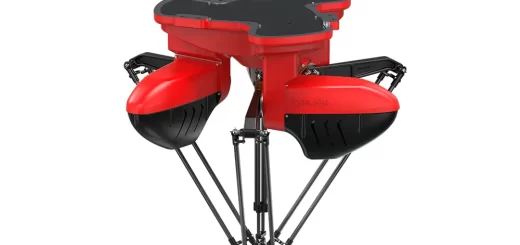
MiroSurge Review 2026: Can This Surgical Robot Really Replace Surgeons?
MiroSurge is an advanced robotic telesurgery system developed by the German Aerospace Center (DLR). It is designed to assist surgeons in performing minimally invasive surgeries using robotic arms controlled remotely through a specialized console. The system follows a master-slave principle, where the surgeon controls robotic instruments with high precision while receiving real-time visual and haptic (touch) feedback.
MiroSurge Review
MiroSurge is an advanced robotic surgical system developed by the German Aerospace Center (DLR). It is designed to assist surgeons in performing minimally invasive operations using robotic arms controlled remotely through a specialized console. It is especially valuable in complex surgeries such as heart, abdominal, and thoracic procedures, where accuracy is critical.
The system works on a master–slave principle, where the surgeon (master) controls robotic instruments (slave) with high precision. It also provides 3D visualization and haptic feedback, allowing the surgeon to “feel” the tissues during the procedure, which improves accuracy and safety.
MiroSurge is considered a research-focused surgical robot, not yet widely used in hospitals like commercial systems (e.g., da Vinci). However, it stands out for its precision, flexibility, and advanced feedback technology.
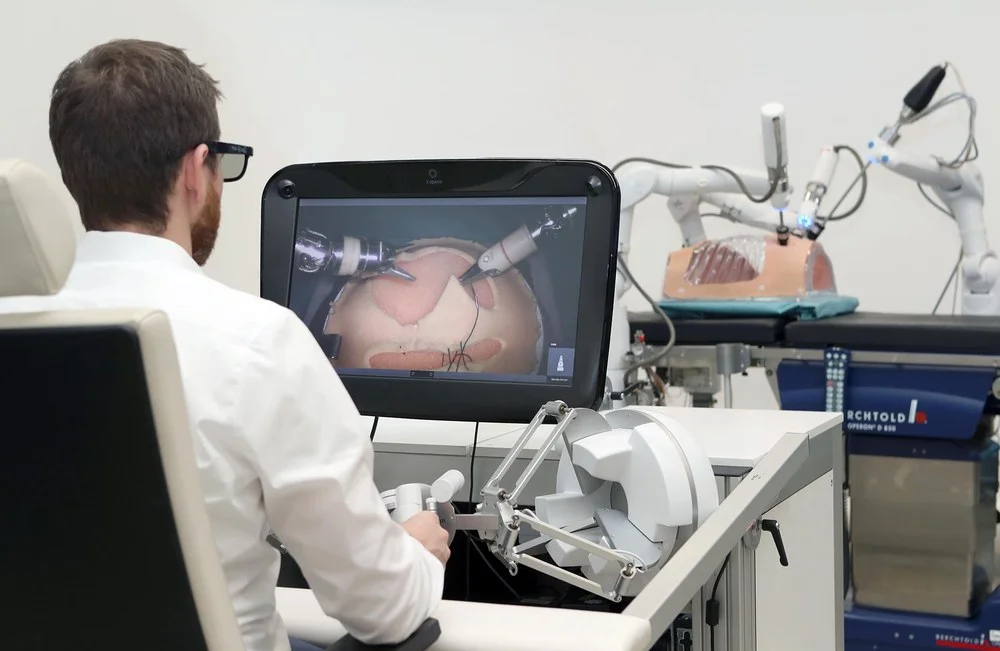
MiroSurge
Uses of MiroSurge
MiroSurge is mainly used in robot-assisted and telesurgery applications, including:
- Minimally invasive surgery: It helps perform operations through very small incisions, reducing pain and recovery time.
- Complex surgical procedures: It is used in delicate surgeries such as cardiac, abdominal, and thoracic operations.
- Telesurgery (remote surgery): It allows surgeons to operate on patients from a distant location using robotic control.
- Precision tasks: It assists in cutting, suturing, and tissue manipulation with high accuracy and reduced hand tremor.
- Medical research and training: It is widely used in research settings to develop and test new robotic surgical techniques.
Features of MiroSurge
- Multiple robotic arms (MIRO) for surgical manipulation.
- Minimally invasive instruments (MICA) with high dexterity.
- 3D HD stereo vision system for precise visualization.
- Haptic feedback system (force/torque sensing).
- Remote surgeon console with intuitive controls.
- High degrees of freedom (≥48 DoF) for flexibility.
- Pre-operative planning and positioning system.
What Can MiroSurge Do?
MiroSurge enables surgeons to:
- It can perform minimally invasive surgeries with tiny incisions.
- It can operate on delicate organs like the heart.
- It can conduct remote (telesurgery) procedures.
- It can execute precise cutting, suturing, and tissue manipulation.
- It can reduce human tremor for enhanced accuracy.
- It can assist in biopsies and endoscopic procedures.
Advantages of MiroSurge
- High precision and control.
- Haptic feedback restores a sense of touch.
- Reduced patient trauma and faster recovery.
- Improved surgeon ergonomics.
- Flexible and modular system.
- Potential for remote surgery (telemedicine).
Disadvantages of MiroSurge
- Still largely experimental/research-based.
- High cost of development and implementation.
- It requires highly trained surgeons.
- It is not fully autonomous (depends on human control).
- Limited availability in hospitals.
FAQ About MiroSurge
1. Is MiroSurge used in real hospitals?
Not widely. It is mainly a research and prototype system, though its technology influences modern surgical robots.
2. Can MiroSurge perform surgery on its own?
No. It is a telemanipulator, meaning the surgeon controls every movement.
3. What makes MiroSurge different from other surgical robots?
Its haptic feedback system and lightweight robotic arms provide more natural control and precision.
4. What types of surgeries can it assist with?
It can assist in cardiac, abdominal, thoracic, gynecological, and urological surgeries.
5. Does it reduce surgical risks?
Yes, by improving precision and minimizing human error, but outcomes still depend on the surgeon.
You can subscribe to Science Online on YouTube from this link: Science Online
Robotic-assisted spine surgery importance, risks, and Is robotic spine surgery better?
Robotic Surgery vs. Laparoscopic Surgery, Robot-assisted surgery features, benefits and drawbacks
Surgical robot types, advantages, disadvantages, How is robotic surgery different from traditional
Healthcare robotics, Nursing care robots review, types, advantages, disadvantages and uses
Robot-Assisted Heart Surgery types, benefits, risks, Robotic heart vs. open-heart surgery
Interventional radiology types, Robotic endovascular systems advantages and disadvantages