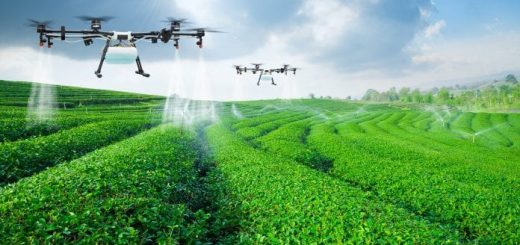
Seed sowing robot features, advantages, disadvantages, How to make an automatic seed dispenser?
A seed-sowing robot is an automated agricultural machine designed to plant seeds in the soil with precision, consistency, and minimal human effort. It’s a type of agricultural robot (agrobot) used in smart farming to increase efficiency and reduce labor in the sowing process.
What is a Seed-sowing robot?
A seed-sowing robot is a robotic system equipped with mobility, navigation, and seed-dispensing mechanisms that can automatically plant seeds at desired locations, depths, and intervals in a farming field.
Main Components:
- Mobility System: Wheels or tracks to move across the field.
- Navigation System: GPS, cameras, or sensors for path planning and obstacle avoidance.
- Seed Dispenser: A mechanism that drops seeds into the soil with controlled spacing and depth.
- Actuators: Used to control motion and seed depth.
- Sensors: For detecting soil conditions (moisture, temperature, hardness).
- Control System: Microcontroller or onboard computer to automate processes.
- User Interface: A screen, app, or remote control to set parameters and monitor progress.
Purpose
- Improve planting accuracy.
- Reduce manual labor.
- Save time and resources.
- Support sustainable and precision agriculture.
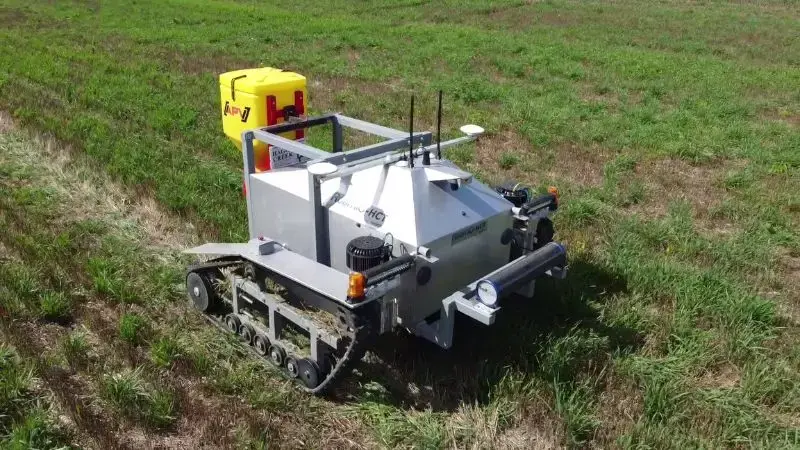
Seed sowing robot
Seed-sowing robot features
A seed-sowing robot is an agricultural automation tool designed to increase efficiency, accuracy, and productivity in planting crops.
1. Automated Navigation:
- GPS or RTK-GPS-based path planning.
- Obstacle detection using LiDAR, ultrasonic sensors, or cameras.
- Row detection and alignment.
2. Seed Dispensing Mechanism:
- Precision seed metering (controls the number of seeds dropped).
- Adjustable seed spacing and depth.
- Multi-seed compatibility.
3. Mobility System:
- All-terrain wheels or tracks.
- Electric or hybrid drive systems.
- Suspension or leveling for uneven ground.
4. Depth and Spacing Control:
- Servo motors or actuators to adjust planting depth.
- Sensors to maintain consistent row spacing.
5. AI and Machine Learning:
- Crop type identification and adaptive sowing.
- Soil condition analysis to adjust sowing parameters.
6. Soil Monitoring Sensors:
- Moisture, temperature, and pH sensors.
- Real-time feedback to optimize seed placement.
7. Data Logging & IoT Connectivity:
- Cloud-based data storage and monitoring.
- Real-time updates via mobile or web apps.
- Integration with farm management software.
8. Solar Panels or Battery Packs
- Renewable energy support for eco-friendliness.
- Long battery life with swappable batteries.
9. Touchscreen Display or Mobile App
- Manual override options.
- Custom sowing pattern inputs.
- Progress monitoring and diagnostics.
10. Autonomous & Manual Modes
- Remote control capability for tricky areas.
- Fully autonomous for standard field tasks.
Seed-sowing robot advantages
- Seeds are sown at exact depths and spacing, improving germination rates and crop yield.
- Seed-sowing robots reduce dependence on manual labor, especially in areas with labor shortages.
- Seed-sowing robots can cover large areas quickly and consistently, saving valuable planting time.
- Seed-sowing robots eliminate human error; every seed is planted with the same precision.
- Seed-sowing robots can collect real-time soil and planting data for future planning and monitoring.
- Though initial investment may be high, it saves on labor and increases productivity over time.
- Seed-sowing robots reduce waste (seeds, fertilizers) and minimize soil disturbance compared to traditional methods.
- Seed-sowing robots can operate in hot, cold, or toxic environments where human labor would be unsafe.
Disadvantages of Seed-sowing robots
- Purchasing or developing the robot and its components can be expensive.
- Seed-sowing robots require technical know-how and spare parts for troubleshooting and upkeep.
- Seed-sowing robots may struggle with irregular terrain or fields not designed for automation.
- GPS or sensor failures could result in misplanting or equipment damage.
- Battery life may restrict continuous operation in large fields.
- Farmers may need training to operate, monitor, and troubleshoot the system.
- Extreme weather (heavy rain, snow, mud) can hinder movement or operation.
You can follow Science Online on Youtube from this link: Science online
Agricultural robot advantages and disadvantages
Automatic milking or Robotic milking advantages and disadvantages
Artificial Intelligence in Agriculture advantages, disadvantages & uses