Whiz Robot features, advantages, disadvantages, Are vacuum robots worth it?
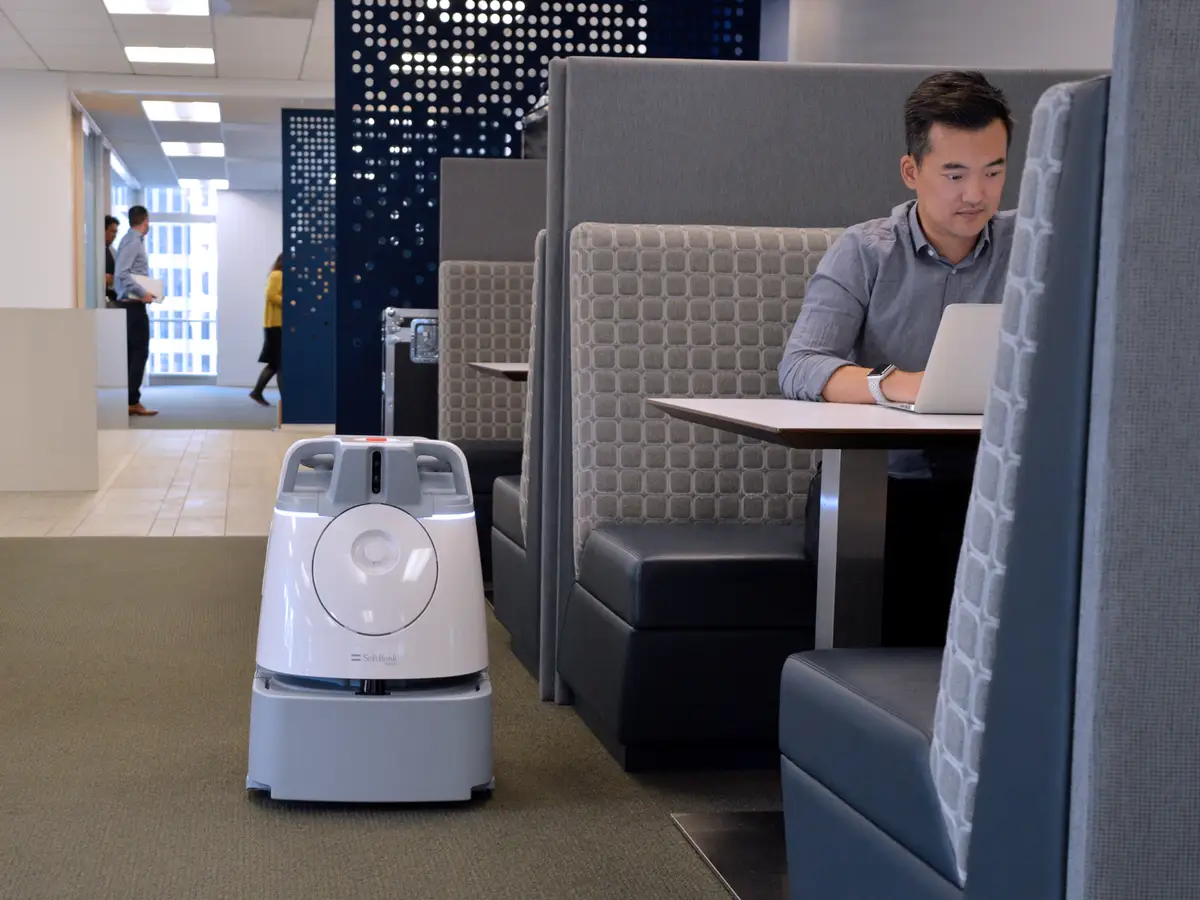
The Whiz Robot is a commercial-grade autonomous vacuum cleaning robot developed by SoftBank Robotics in collaboration with Brain Corp. It is designed to support human cleaning staff in environments like offices, hotels, hospitals, and airports by automating the repetitive task of vacuuming large floor areas.
Whiz Robot
Whiz Robot is an effective, autonomous “cobot” (collaborative robot) that helps reduce janitorial workload, improve cleaning consistency, and enhance air quality in large indoor environments. It’s not meant for homes, but it’s one of the most advanced and widely adopted commercial cleaning robots in the world.
Whiz Robot has AI-powered BrainOS® with LiDAR and 3D cameras for safe, smart pathing. It offers a dry vacuum only, ideal for carpeted and hard floors. It learns and stores up to 600 custom routes. It is equipped with a HEPA filter, which captures 99.97% of PM2.5 particles. Battery Life is up to 3 hours per charge, with a hot-swappable battery for continuous use.
Cleaning Speed Up to 1,500 m² per hour (~16,000 ft²/hr). Whiz Connect dashboard for remote monitoring, alerts, and reports. It features safety obstacle detection, cliff sensors, and an emergency stop. Noise Level is 62–67 dB – quieter than most commercial vacuums. and weight is ~35 kg (77 lbs).
Whiz Robot
Whiz Robot saves time. It automates repetitive vacuuming tasks. It improves cleaning consistency. It follows the same route every time. It boosts air quality. HEPA filter reduces dust, pollen, and bacteria. It tracks performance and logs cleaning history. It avoids obstacles and stops when necessary. It is suitable for use during business hours. It is offered as Robot-as-a-Service (RaaS) with maintenance included.
Use of Whiz Robot
Whiz Robot is used in offices, hotels, hospitals and clinics, airports, retail stores, schools, and universities.
Whiz Robot Features
The Whiz Robot is a smart, reliable, and efficient cleaning robot, ideal for large commercial settings such as offices, airports, schools, and hospitals. However, it’s not suitable for home use and should be seen as a supplement—not a replacement—for full human cleaning teams.
Intelligent Navigation & Automation: Whiz Robot is powered by BrainOS®; Whiz learns and follows custom cleaning routes. After a “teaching run,” it autonomously repeats the path, covering up to 600 complex routes stored in memory. It is equipped with LiDAR, 3D cameras, and bumper/edge sensors to detect obstacles, stairs, and changes in the environment. It navigates safely near people and furniture, stopping or redirecting when needed.
Cleaning Performance: The Whiz Robot covers up to 1,500 m²/hour (roughly 5,000 ft²/hr) on carpets and hard floors with sustained effectiveness. It provides HEPA-level filtration, trapping 99.97% of PM2.5 particles such as dust, pollen, and allergens. Studies show Whiz also reduces airborne bacteria by up to 80%, outperforming manual cleaning. It uses a 4.0 L dust bag, minimizing frequent servicing during large cleans.
Efficiency & Power Management: Battery runtime: about 3 hours per charge (normal mode), with optional turbo mode reducing runtime to ~1.5 hours. Hot-swappable battery ensures near-continuous operation—just swap in a charged battery when needed. Battery charging time averages 4–5 hours, depending on the region.
Monitoring & Remote Control: Whiz Connect app/dashboard enables route setup, real-time progress tracking, cleaning logs, and remote management of multiple units. A handheld notification pager alerts staff when manual intervention is needed.
Implements redundant detection systems: cliff sensors, obstacle detection, impact sensors, and emergency brake protocols to prevent accidents or falls. Noise level is around 62–67 dB, making it quieter than most commercial vacuuming equipment.
Business Model & Deployment: Whiz Robot is offered via a Robot-as-a-Service (RaaS) model—typically around SGD 499/month plus SGD 100/month maintenance, cancellable anytime. It is deployed in hospitals, senior living facilities, hotels, offices, airports, retail stores, universities, and more—anywhere consistent, scalable cleaning is needed.
Whiz Robot advantages
Whiz is a commercial-grade, AI-powered cobotic vacuum, engineered for professional environments, not for residential use. It’s highly regarded for its efficiency, filtration, and autonomy in large spaces like offices, hotels, airports, and healthcare facilities.
- Autonomous Cleaning: Whiz Robot learns and memorizes up to 600 cleaning routes, enabling repeatable autonomous operation after training. It navigates autonomously after an initial “teaching” session, saving staff time.
- Improves Cleaning Efficiency: Whiz Robot can clean 1,500 m² (16,000 ft²) per charge—faster and more consistently than manual vacuuming. It operates up to 3 hours per charge in standard mode. streamlining vacuuming in large hospitality and institutional environments.
- Reduces Labor Costs: Whiz Robot allows human cleaning staff to focus on higher-value tasks while Whiz handles repetitive vacuuming. It is ideal for large facilities like offices, hotels, and hospitals.
- High-Quality Filtration: Whiz Robot uses HEPA filtration, removing up to 99.97% of PM2.5 particles such as dust, allergens, and bacteria. It improves indoor air quality, important in healthcare and office settings. It reduces airborne bacteria by up to 80% compared to manual cleaning, boosting indoor hygiene quality.
- Safe and Human-Friendly: Whiz Robot is equipped with LiDAR, 3D cameras, and sensors to detect people, objects, and stairs. It can stop or reroute when obstacles are detected. It is equipped with bump sensors to detect obstacles and prevent collisions. It works well even in tight corridors.
- Data and Monitoring Tools: Whiz Robot comes with Whiz Connect, a dashboard that provides usage reports, cleaning history, and alerts. It helps facility managers track performance and ensure consistent cleaning. Intuitive set-up and operation with real-time alerts via a handheld pager. Whiz Connect dashboard offers centralized insights: cleaning logs, route management, operational status, and remote monitoring.
- Quiet Operation: Whiz Robot operates at a relatively low noise level (about 62–67 dB), suitable for daytime use.
- Scalable via Robot-as-a-Service (RaaS): Whiz Robot is available as a subscription model, reducing upfront cost. It includes maintenance, upgrades, and support. flexible subscription package with maintenance support (e.g. SGD 499/month plus SGD 100/month maintenance in Singapore). Globally adopted with over 10,000 units sold by mid‑2020, claiming ~55% market share in the autonomous professional cleaning category.
- Minimal Downtime: Battery life of approx. 3 hours per charge, with hot-swappable batteries allowing continuous operations.
Key Benefits
- Hands-free repeatability: Once routes are taught, Whiz handles vacuuming autonomously.
- Cleaner indoor air: Efficient dust and allergen removal reduces airborne contaminants.
- Operational efficiency: Frees staff from repetitive vacuuming, allowing focus on higher‑value tasks.
- Scalable & measurable: Enterprise dashboard gives actionable insights and standardized cleaning logs.
Disadvantages of Whiz Robot
- Not Meant for Home Use: Size, design, and cost make it unsuitable for typical households. Whiz Robot is specifically designed for commercial or institutional environments. Too large and expensive for homes.
- Limited to Dry Vacuuming: No mopping or wet-cleaning capabilities. Whiz Robot cannot clean sticky or wet messes—only dry debris. Clean-up of liquid spills or sticky messes must be done manually. Only handles dry vacuuming.
- Initial Setup Required: Whiz Robot needs a manual “teaching run” to record cleaning routes before it can operate autonomously. Complex environments may require multiple setup sessions. Manual “teaching runs” are required to map cleaning routes. Complex layouts may need multiple training sessions.
- Subscription-Based Cost: The RaaS model may not suit all budgets or business preferences. Cost can accumulate over time compared to one-time purchases. The RaaS approach reduces upfront investment but can be problematic for smaller facilities or users preferring a one-time purchase.
- Can’t Replace All Cleaning Tasks: Whiz Robot handles only vacuuming; still requires human workers for surfaces, corners, bathrooms, etc. It is not a complete replacement for janitorial staff. Handles only floors (vacuuming)—no cleaning of surfaces, corners, bathrooms, or other areas. Still requires a human workforce for comprehensive cleaning regimes, dusting, and mopping.
- Obstacle Sensitivity: Although advanced, it may occasionally stop or reroute unnecessarily in very dynamic environments with constant movement. This can interrupt efficiency in highly active areas.
- Battery Recharge Time: Whiz Robot takes several hours to recharge unless hot-swappable batteries are used. The setup of battery stations and logistic planning is needed for seamless operation.
- Strictly Commercial-Use Hardware: At ~35 kg (77 lbs), and nearly ~0.5 m tall, it’s too large for typical home environments. Ideally suited for wide-open commercial spaces.
You can follow science online on YouTube from this link: Science online
Dyson 360 robot vacuum features, review, advantages and disadvantages
Roxxter robotic vacuum review, advantages, disadvantages and Is the robot vacuum worth it?
Wybot robotic pool cleaner with Solar Power, How does a Wybot work?
Hospital cleaning robots importance, drawbacks and How are robots used in hospitals?
Saul UV disinfection robot review, use, advantages, and disadvantages
Laboratory robotics uses, advantages, and disadvantages
Computers in Medicine use, advantages and disadvantages
Robotic surgery cons, pros, uses and How does robotic surgery work?
Artificial intelligence in medical field advantages & how AI medical diagnosis changes medicine