Powerful Levers Review 2026: 15 Amazing Facts About Types, Functions & Engineering Uses
Levers Review highlights how levers continue to play a powerful role in modern science, engineering, and technology. As one of the oldest and most effective simple machines, levers are widely used in robotics, construction equipment, transportation systems, medical devices, and industrial machinery to reduce effort and improve efficiency. Their ability to multiply force and increase precision makes them essential in both everyday tools and advanced technological applications.
Levers Review
Levers are among the most important simple machines ever invented because they make lifting, moving, and controlling objects easier with less effort. Levers remain essential in engineering, robotics, transportation, construction, and medical technology. From scissors and wheelbarrows to robotic arms and industrial cranes, lever systems continue to improve efficiency and reduce human workload.
The principle of levers has been used for thousands of years, yet modern technology still depends heavily on this simple mechanical concept. Engineers use lever mechanisms to increase force, improve movement precision, and create advanced machines capable of performing complex tasks with remarkable accuracy.
Levers remain one of the most important simple machines in science, engineering, and modern technology. From construction cranes and robotic arms to medical devices and everyday tools, levers continue to improve efficiency, reduce effort, and increase precision in countless applications. Their ability to multiply force and simplify difficult tasks makes them essential in both industrial systems and daily life.
Levers Review
What is a Lever?
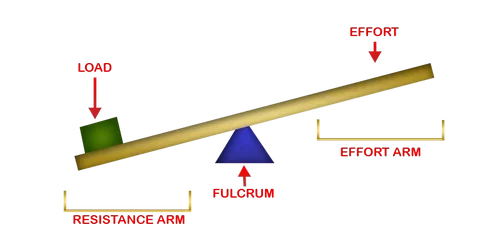
A lever is a rigid bar that rotates around a fixed point known as the fulcrum. It is designed to help lift or move a load using less effort. The three essential components of a lever include:
- Fulcrum: the pivot point.
- Effort: the applied force.
- Load: the object being moved.
Levers work by distributing force across the bar, allowing users to perform tasks more efficiently. This concept is known as mechanical advantage, which helps reduce the amount of effort needed to move heavy objects.
How Do Levers Work?
Levers operate according to the principles of physics and rotational force. When effort is applied to one side of the lever, the lever rotates around the fulcrum and transfers force to the load. The distance between the effort and the fulcrum determines how much force is amplified. A longer effort arm usually requires less force to lift a heavy object. This is why tools with longer handles are often easier to use.
Levers can:
- Increase force.
- Increase speed.
- Change the direction of the force.
- Improve movement precision.
Types of Levers
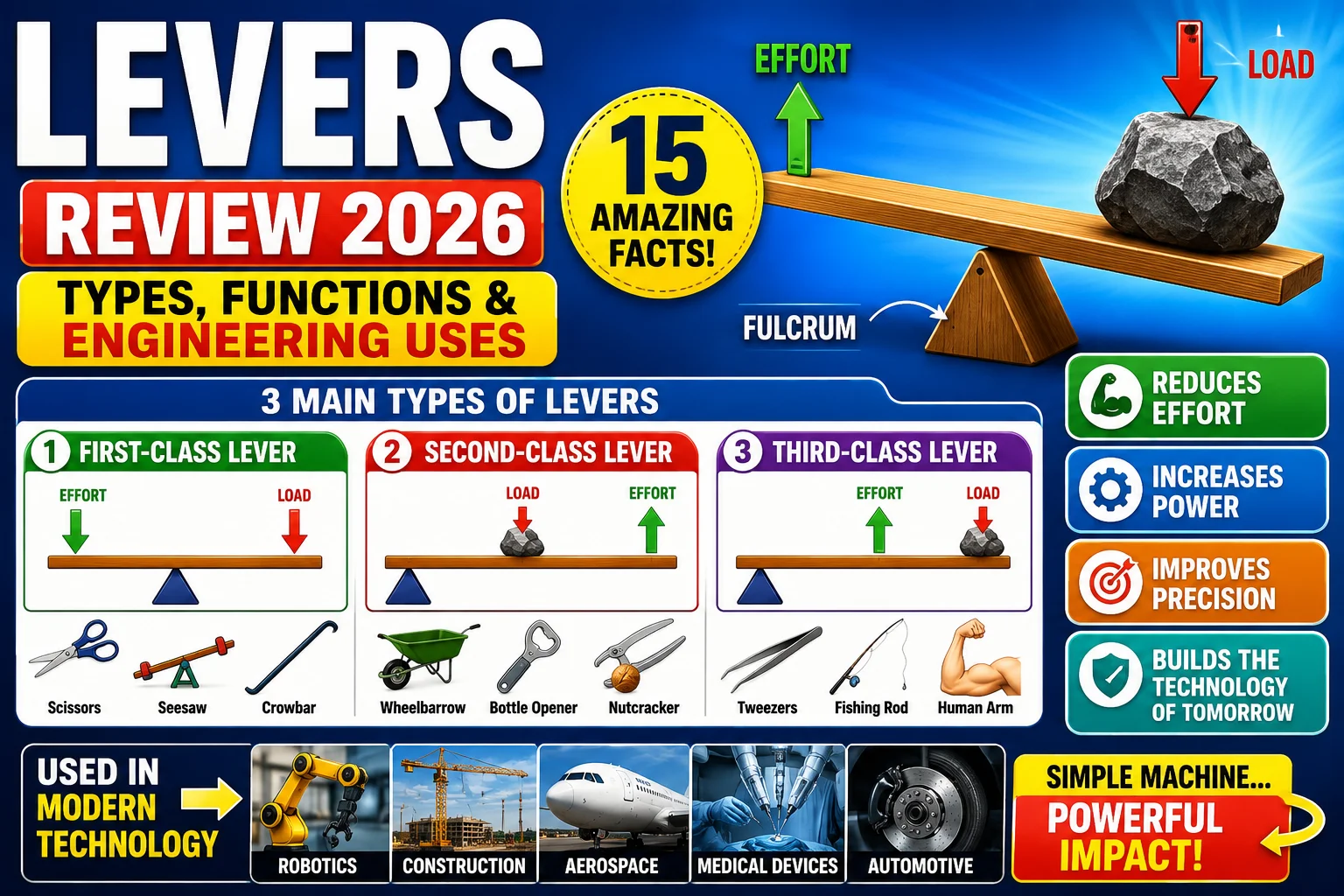
There are three major types of levers, and each type has unique advantages and applications.
First-Class Levers
In first-class levers, the fulcrum is positioned between the effort and the load. These levers can change the direction of force and are commonly used for lifting or balancing.
Examples include:
- Scissors.
- Crowbars.
- Seesaws.
- Pliers.
First-class levers are widely used in construction, engineering, and hand tools because they provide excellent balance and force control.
Second-Class Levers
In second-class levers, the load is located between the fulcrum and the effort. These levers provide strong force multiplication, making them ideal for lifting heavy loads.
Examples include:
- Wheelbarrows.
- Bottle openers.
- Nutcrackers.
- Hand trucks.
Second-class levers are extremely important in industrial equipment and transportation systems because they reduce physical effort significantly.
Third-Class Levers
In third-class levers, the effort is placed between the fulcrum and the load. These levers increase speed and movement range rather than force.
Examples include:
- Tweezers.
- Fishing rods.
- Human arms.
- Brooms.
Third-class levers are commonly used in sports equipment, robotics, and medical devices where speed and precision are essential.
Functions of Levers
Levers perform several critical functions in daily life and modern technology.
- Reducing Effort: The primary function of a lever is to reduce the effort required to move or lift objects. This allows people to perform difficult tasks more easily and safely.
- Increasing Mechanical Advantage: Levers help multiply force, making it possible to lift objects that would otherwise be too heavy.
- Improving Precision: Many machines and tools use lever systems to create accurate movements and fine control.
- Changing Force Direction: Certain lever designs change the direction of applied force, making work more convenient and efficient.
- Enhancing Speed: Some lever systems prioritize movement speed and flexibility, especially in sports and robotics applications.
Importance of Levers in Engineering
Levers are essential in almost every engineering field because they improve machine performance and reduce energy consumption.
- Construction Engineering: Heavy construction machines use powerful lever systems to lift concrete, steel, and building materials efficiently.
- Robotics: Robotic arms rely on lever mechanisms for controlled movement, flexibility, and precision handling.
- Transportation: Vehicle braking systems, steering systems, and lifting devices often use lever principles to improve safety and control.
- Medical Technology: Surgical instruments and prosthetic devices use miniature lever systems for delicate and accurate operations.
- Aerospace Engineering: Aircraft control systems use advanced lever mechanisms to manage movement and stability during flight.
Advantages of Levers
Levers provide numerous advantages in both simple tools and advanced machinery.
Major Advantages:
- Reduce physical effort.
- Increase lifting power.
- Improve movement accuracy.
- Save time and energy.
- Enhance machine efficiency.
- Support technological innovation.
- Increase workplace safety.
Because of these benefits, levers remain one of the most valuable mechanical systems in modern engineering.
Disadvantages of Levers
Despite their advantages, levers also have some limitations.
Common Disadvantages:
- Some systems require large movement distances.
- Improper design may reduce efficiency.
- High stress can damage lever components.
- Certain applications need regular maintenance.
However, modern materials and engineering solutions continue to improve lever durability and performance.
Levers in Modern Technology 2026
Levers are more advanced today than ever before. Engineers combine lever systems with robotics, automation, and artificial intelligence to create highly efficient machines.
Modern applications include:
- Robotic surgery systems.
- Industrial automation equipment.
- Smart manufacturing robots.
- Advanced lifting cranes.
- Aerospace control systems.
- Precision engineering tools.
The future of lever technology is expected to focus on lightweight materials, smart sensors, and AI-powered automation systems.
Future Trends of Levers
In 2026 and beyond, lever systems are expected to become more intelligent and energy-efficient. Scientists are developing robotic lever systems capable of performing complex tasks with minimal energy consumption.
Future innovations may include:
- AI-controlled robotic arms.
- Smart industrial machines.
- Ultra-lightweight mechanical systems.
- High-precision medical tools.
- Automated construction equipment.
These advancements will continue to improve productivity and technological performance worldwide.
FAQ About Levers Review 2026
1. What is a lever?
A lever is a simple machine consisting of a rigid bar that rotates around a fixed point called the fulcrum.
2. What are the three types of levers?
The three types are first-class, second-class, and third-class levers.
3. Why are levers important?
Levers reduce effort, improve efficiency, and increase mechanical advantage in machines and tools.
4. How do levers help in engineering?
Levers help engineers lift heavy objects, improve precision, and optimize machine performance.
5. What is the fulcrum?
The fulcrum is the pivot point around which the lever rotates.
6. Which type of lever is strongest?
Second-class levers usually provide the greatest force multiplication.
7. Are levers still important in 2026?
Yes, levers remain essential in robotics, transportation, manufacturing, and medical technology.
8. How do robotic systems use levers?
Robotic systems use lever mechanisms to control movement, precision, and lifting operations efficiently.
Conclusion
Levers continue to play a major role in modern science, engineering, and technology in 2026. Their ability to reduce effort, improve precision, and increase efficiency makes them essential in everything from basic tools to advanced robotic systems.
As technology advances, lever systems will become even more intelligent, lightweight, and powerful. Whether in construction, transportation, robotics, or medicine, levers remain one of the most valuable inventions supporting innovation and industrial progress worldwide.
You can follow Science Online on YouTube from this link: Science Online
The structure and importance of the levers
Types of levers & Importance of each of them 2026, How do levers help in technology and engineering?