Stock trading bots advantages and disadvantages, What is the best bot for trading stocks?
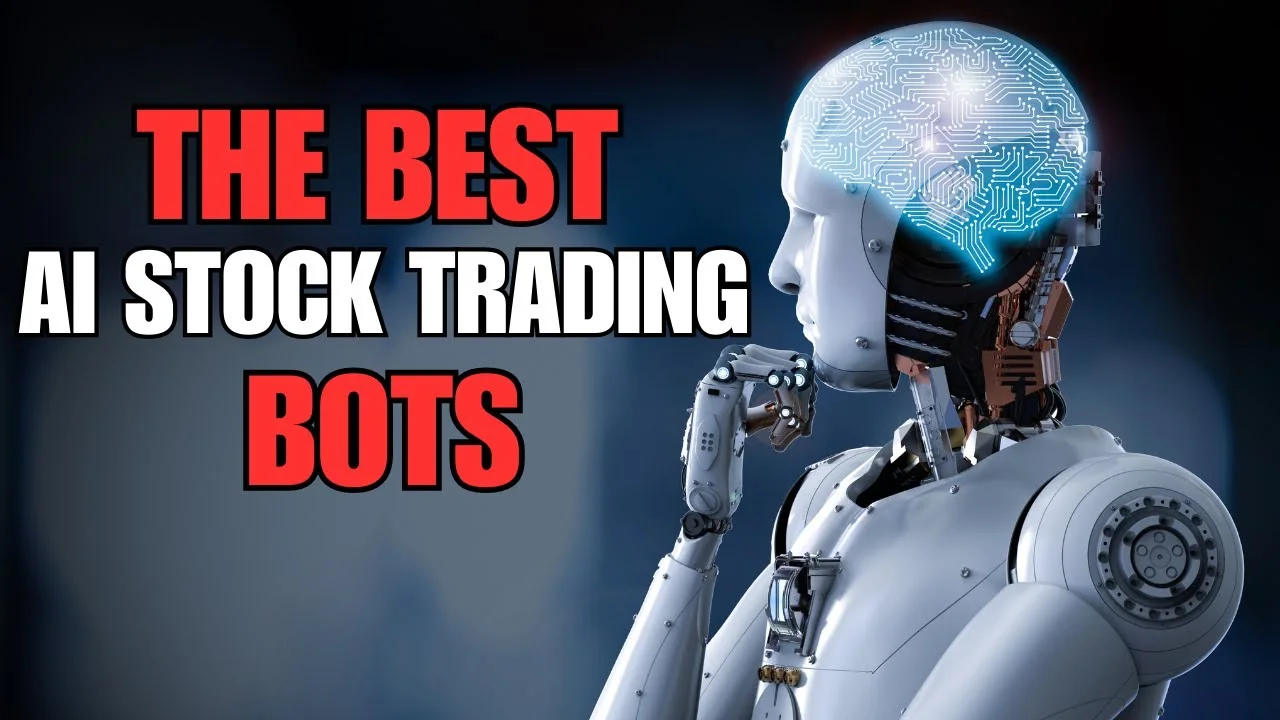
A Stock trading Bot is also called a trading bot or algorithmic trading system. It is a software program that automatically buys and sells stocks based on pre-set rules, strategies, or artificial intelligence.
Stock Bot
A Stock trading Bot is an automated trading tool that uses algorithms, technical indicators, or AI to analyze stock market data and execute trades with minimal or no human intervention. Instead of a human manually analyzing charts and clicking to trade, a stock bot connects to a brokerage account or trading platform and executes trades instantly when certain conditions are met.
A stock bot is like a digital assistant for trading—it follows rules, removes emotions, and works faster than a human, but it still depends on how well it is programmed and the market conditions. Stock bots usually combine automation, analytics, risk control, and speed. The best ones give traders both control (custom rules) and automation (hands-free execution).
Stock bots are powerful for speed, discipline, and efficiency, but they carry risks if poorly designed or left unmanaged. Most traders use them as tools, not as complete replacements for strategy and oversight.
Stock trading bots
How Stock Bots Work
- Data Monitoring – The stock bot scans live stock prices, news, and indicators.
- Signal Detection – It identifies trading opportunities based on predefined rules (e.g., RSI < 30 = buy, RSI > 70 = sell).
- Order Execution – When conditions are met, it automatically sends buy/sell orders.
- Risk Management – Stock Bot uses stop-loss, take-profit, and portfolio balancing features.
Uses of Stock Bot
- Day trading (short-term, quick trades).
- Swing trading (holding for days or weeks).
- Scalping (many small trades per day).
- Portfolio management (balancing investments automatically).
- High-frequency trading (HFT) for institutions.
Features of Stock Bots
- Automated Trading Execution: Stock Bot executes buy/sell orders instantly based on predefined rules and strategies.
- Strategy Customization: Stock Bot lets users set parameters (e.g., entry/exit rules, stop-loss, take-profit, technical indicators).
- Real-Time Market Data Analysis: Stock Bot continuously monitors stock prices, volume, and market trends.
- Technical Indicator Integration: Stock Bot supports tools like Moving Averages, RSI, MACD, Bollinger Bands, Fibonacci retracements, etc.
- Backtesting: Stock Bot tests strategies on historical market data to evaluate performance before live trading.
- Paper Trading (Demo Mode): Stock Bot simulates trades in real market conditions without risking real money.
- Risk Management Tools: Stop-loss, trailing stop, position sizing, portfolio diversification, and risk-reward ratio controls.
- Multi-Asset & Multi-Exchange Support: Some bots can trade across multiple stocks, ETFs, indices, and even crypto.
- 24/7 Market Monitoring: Stock Bot tracks opportunities continuously, even during pre-market and after-hours sessions.
- API & Broker Integration: Stock Bot connects directly with brokerage accounts (e.g., Interactive Brokers, TD Ameritrade, Robinhood APIs).
- Alerts & Notifications: Stock Bot sends updates on trade signals, executions, or unusual market movements via email, SMS, or app.
- Machine Learning & AI Enhancements (in advanced bots): Stock Bot learns from past data, adapts strategies, and may include sentiment analysis from news or social media.
- User-Friendly Dashboard: Stock Bot provides real-time charts, portfolio performance, profit/loss tracking, and trade history.
- High-Frequency Trading (HFT) Support (in premium bots): Stock Bot executes thousands of trades per second for arbitrage or micro-profit strategies.
Advantages of Stock Bots
- Speed & Efficiency: Stock bots can process market data and execute trades much faster than humans, often in milliseconds.
- Emotion-Free Trading: Stock bots follow algorithms, avoiding emotional decisions like fear or greed that often harm traders.
- 24/7 Monitoring: Stock bots can watch the market continuously, even outside of normal trading hours (for crypto and after-hours markets).
- Backtesting & Optimization: Strategies can be tested on historical data before being applied in real-time.
- Consistency: Stock bots follow predefined rules without hesitation or deviation, ensuring disciplined trading.
- Scalability: Stock bots can manage multiple stocks, exchanges, or strategies simultaneously, something a human trader can’t easily do.
- Faster Reaction to News & Signals: Some advanced bots react instantly to indicators, technical signals, or news sentiment.
Disadvantages of Stock Bots
- Technical Failures: Stock bots depend on stable internet, servers, and coding. Bugs or glitches can lead to costly mistakes.
- Over-Optimization Risk: Strategies may perform well on past data but fail in live markets (curve-fitting).
- No Human Judgment: Stock bots lack intuition and can’t adapt well to unexpected events like geopolitical crises or sudden market crashes.
- Market Dependency: Stock bots can’t guarantee profits; in volatile or manipulated markets, they may perform poorly.
- High Competition: Large financial firms use advanced high-frequency bots that often outperform retail-level bots.
- Costs & Fees: Good bots often require subscriptions, VPS hosting, or broker integration fees.
- Regulatory & Broker Limits: Some brokers restrict or flag bot trading, and misuse could violate trading rules.
Types of Stock Bots
- Rule-Based Bots (Basic Trading Bots): They follow simple predefined rules (e.g., buy when RSI < 30, sell when RSI > 70). They are good for beginners and retail traders. Example: Bots on platforms like TradingView or MetaTrader.
- Technical Indicator Bots: They rely heavily on chart patterns and indicators (MACD, Bollinger Bands, Moving Averages, etc.). They automate traditional technical analysis. They are best for swing and day traders.
- Arbitrage Bots: They look for price differences across markets (or brokers) and profit from them. Example: Buy a stock or ETF cheaper on one exchange, sell higher on another. They are mostly used by institutions due to speed and fees.
- High-Frequency Trading (HFT) Bots: They execute thousands of trades per second. They exploit tiny price movements for micro-profits. They require advanced infrastructure and they are mainly used by hedge funds and investment banks.
- AI & Machine Learning Bots: They use artificial intelligence to learn from past data, news sentiment, or social media. They adapt strategies dynamically rather than sticking to fixed rules. Example: QuantConnect AI trading algorithms.
- Market-Making Bots: They provide liquidity by constantly placing buy and sell orders around the market price. They earn profits from bid-ask spreads. They are used by brokers, exchanges, and big firms.
- Copy Trading & Social Bots: They automatically copy the trades of experienced traders. They are often found in retail trading apps (eToro, ZuluTrade). They are easy for beginners, but fully dependent on the trader being copied.
- Portfolio Rebalancing Bots: They focus on long-term investors. They keep portfolios balanced according to risk level (e.g., 60% stocks, 40% bonds). They automatically sell overweight assets and buy underweight ones.
You can subscribe to Science Online on YouTube from this link: Science Online
Importance of Pocket Option AI Trading Bot, Is it legal to use AI bots for trading?
Advantages and disadvantages of using robots in our life
Robot Software and the Best Programming Language for Robotics
Humanoid robots use, risks, advantages, and disadvantages
Robotics uses, Robotic programs types, Artificial Intelligence importance, and risks