Microsoft incorporates OpenAI’s GPT-5 into consumer, How is GPT-5 better? and Is GPT-5 free?
GPT-5 is OpenAI’s fifth-generation Generative Pre-trained Transformer model, released in August 2025, designed to understand and generate human-like text (and sometimes other media) with improved reasoning, accuracy, and customization compared to earlier versions.
What is GPT-5?
GPT-5 is OpenAI’s fifth-generation large language model, released in August 2025 as the successor to GPT-4 and GPT-4o. It’s part of the Generative Pre-trained Transformer family. It is designed to understand and generate natural language, and in some cases, other media—at a higher level of accuracy, reasoning, and versatility than previous versions. GPT-5 marks a refinement and evolution—pushing AI capabilities further, especially in reasoning, creativity, and usability.
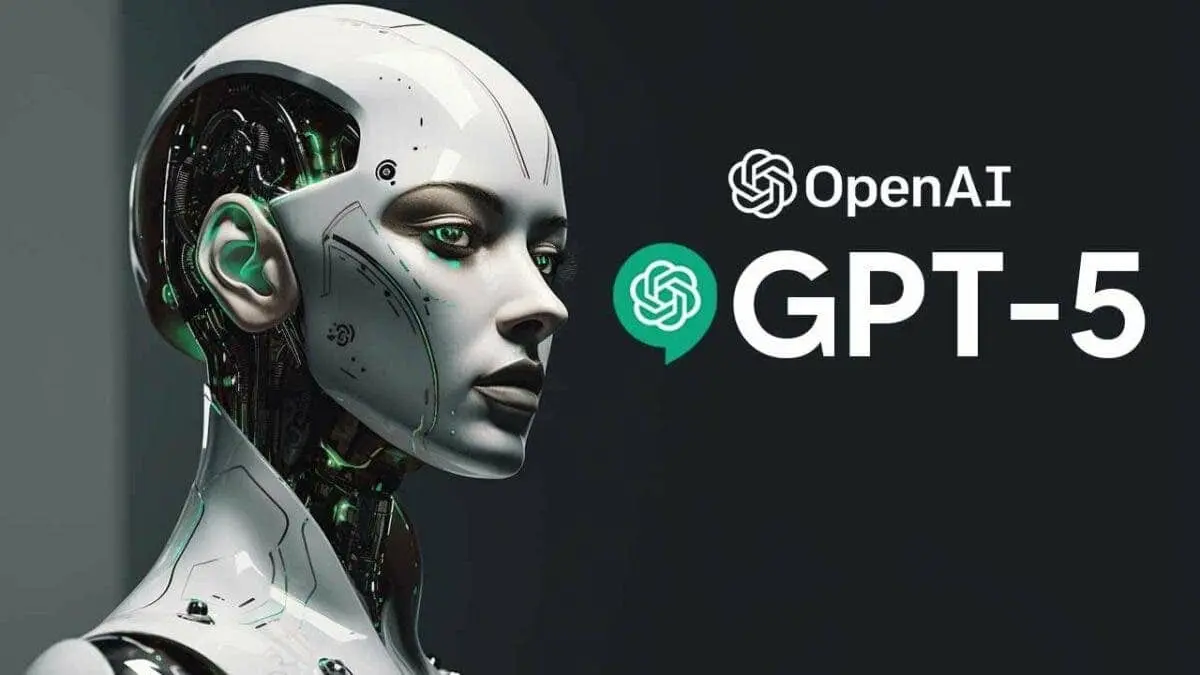
GPT-5
GPT-5 review
- Type: Large language model (LLM) based on transformer architecture.
- Developer: OpenAI.
- Release date: August 7, 2025.
- Purpose: Natural language understanding and generation for tasks like answering questions, writing, coding, summarizing, translation, reasoning, and multimodal interpretation.
Key Advancements Over GPT-4
- Higher reasoning ability – especially in complex, multi-step problem solving.
- Reduced hallucinations – up to 45% fewer than GPT-4o, with further improvement in its “Thinking” mode.
- Unified model routing – GPT-5 automatically picks the right underlying model for speed or reasoning depth.
- Longer memory – GPT-5 can handle conversations and documents up to 256,000 tokens in length.
- Safer outputs – improved refusal handling, bias mitigation, and transparency about uncertainty.
- Custom personalities – GPT-5 allows users to choose tones like “Cynic,” “Listener,” or “Nerd.”
- Integration features – GPT-5 connects with tools like Gmail, Google Calendar, and developer APIs.
- Multimodal capabilities – GPT-5 is better at working with images, audio, and potentially video.
GPT-5 Use
- Writing and editing content.
- Coding and debugging.
- Data analysis and summarization.
- Customer service automation.
- Education and tutoring.
- Creative brainstorming.
- Business productivity through integrations.
GPT-5 features
- Unified Model with Real-Time Routing: GPT-5 consolidates multiple previous models into one cohesive system, featuring variants like GPT-5 (standard), GPT-5 Thinking, and GPT-5 Pro. A real-time router dynamically selects the right variant based on task complexity, user intent, and required tool usage. Users can also manually choose the “Thinking” model for deeper, longer reasoning.
- Tiered Versions: Mini, Nano, and Pro: GPT-5 comes in multiple variants catering to different needs: Mini and Nano versions offer faster, cost-efficient options. Pro tier (around $200/month) provides extended reasoning and higher usage caps. All users get access to GPT-5, but usage limits vary by tier, with autoswitching to more efficient variants as limits are reached.
- Enhanced Reasoning, Accuracy, and Safety: GPT-5 integrates advanced reasoning capabilities—the blend of GPT-series with the “o-series” models—resulting in faster, more accurate responses, especially in coding, health, and multi-step tasks. It shows notably lower hallucination rates and delivers safer completions by explaining issues instead of outright refusals.
- Massive Context Window: GPT-5 supports context lengths up to 256,000 tokens, allowing for much longer and more coherent interactions. It is ideal for in-depth conversations or lengthy documents.
- Multimodal & Task-Aware Capabilities: While official sources emphasize text and reasoning improvements, reporting also highlights multimodal ambitions like image, audio, and video processing, agentic behavior, and enhanced context-awareness.
- Custom Personalities & UI Personalization: Users can now tailor GPT-5’s persona and look: Personality presets include Cynic, Robot, Listener, and Nerd. You can also choose accent colors to personalize your chat interface.
- Tool and Calendar Integration: GPT-5 can connect to Gmail and Google Calendar, making recommendations and automating tasks like scheduling. Developers gain access to features like the verbosity parameter and minimal reasoning in the API for finer control.
- Expert-Level Intelligence: Positioned as “PhD-level experts on demand,” GPT-5 excels across coding, creative writing, health advice, analysis, law, and more. It’s being integrated across businesses and developers and embedded into Microsoft products like Copilot.
GPT-5 advantages
- Improved accuracy & reduced hallucinations: GPT-5 cuts hallucinations by roughly 45% compared to GPT-4o, and up to 80% in its “Thinking” mode. Across enterprise documents, it demonstrated a 90% accuracy rate, and even acknowledged when data wasn’t present instead of fabricating an answer.
- Smarter internal model-switching: A real-time routing system selects the most suitable model (e.g., fast or reasoning-intensive) behind the scenes—simplifying user experience.
- Enhanced multitasking & multimodal reasoning: GPT-5 supports unified handling of text, images, video, and more complex queries (like coding or structured reasoning).
- Superior coding and developer support: GPT-5 excels at generating and debugging code, crafting complete app interfaces, and providing developer-friendly outputs.
- Custom personalities and improved user tone control: Users can choose from presets like “Cynic,” “Robot,” “Listener,” or “Nerd” to tailor the model’s tone.
- Better speed, coherence, and memory: Faster responses, smoother dialogue flow, and support for very long contexts (up to ~1 million tokens).
- Safety enhancements and transparency: Over 5,000 hours of red-teaming, better content filtering, and more transparent uncertainty signaling. Improvements in fairness, bias mitigation, and privacy compliance (e.g., GDPR).
Disadvantages of GPT-5
- Still not AGI (Artificial General Intelligence): GPT-5 remains dependent on pattern recognition, not true comprehension, and lacks continuous autonomous learning.
- Hallucinations and errors persist: Not completely hallucination-free—high-stakes or sensitive use cases still require human oversight.
- Inconsistent output quality due to routing: Some users reported occasional declines in response quality when the model-switching router malfunctioned.
- Limited model choice and user control: GPT-5 replaced legacy models by default, causing backlash over losing access to favorites like GPT-4o (though OpenAI plans to restore them for some subscribers).
- More accessible—but may underwhelm advanced users: A focus on usability for casual users; everyday improvements may feel incremental rather than groundbreaking to power users.
- Resource and access limitations: Full capabilities (like GPT-5 Pro) are gated behind paid tiers; free users face usage caps and may get downgraded after limits. Computational demands remain high, potentially limiting availability or affordability for small teams.
- Opaque reasoning and “black box” nature: Despite improvements, GPT-5 remains largely non-explainable—challenging for use in transparent or regulated domains.
- Residual bias and fairness issues: While improved, GPT-5 can still reflect biases from training data, posing risks in sensitive contexts.
You can follow science online on YouTube from this link: Science online
Claude AI advantages, disadvantages, features and Is Claude better than GPT 4?
Difference between Google Gemini AI and ChatGPT, Is Gemini AI better than ChatGPT?
ChatGPT review, features, advantages and disadvantages
Google Bard AI chatbot advantages, disadvantages, review, features and Bard vs ChatGPT
Artificial intelligence marketing (AI Marketing) importance, features & Chatbots
Applications of Artificial intelligence marketing, How ai is changing marketing and advertising