Can NASA’s Valkyrie Robot Replace Humans? (Full Review + Features)
Can a robot really replace humans in dangerous missions? NASA’s Valkyrie Robot (R5) is trying to do exactly that. The Valkyrie Robot (R5) is a humanoid robot developed by NASA to assist in space exploration and hazardous environments. It is designed to perform tasks that are dangerous or difficult for humans, especially in future missions to the Moon and Mars.
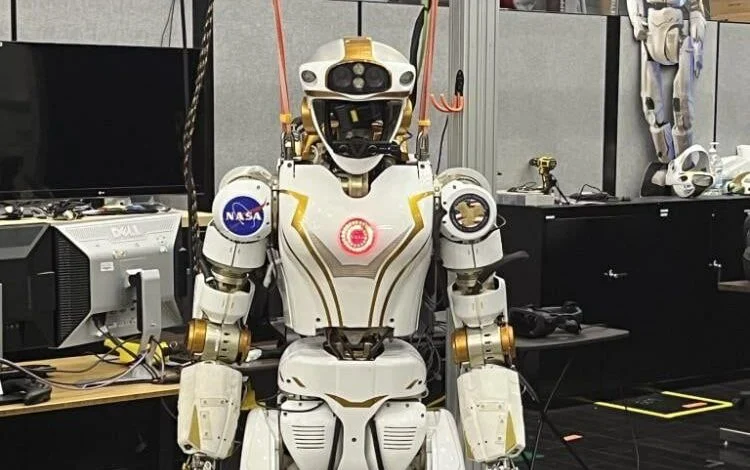
Valkyrie Robot (R5)
The Valkyrie Robot (R5) is a humanoid robot developed by NASA. It is designed to resemble the human body in shape and movement, allowing it to perform tasks in environments that are too dangerous or inaccessible for humans—especially in space and disaster zones.
Valkyrie, also known as R5, was developed at NASA’s Johnson Space Center starting in 2012. It stands about 1.87 meters tall, weighs around 129 kg, and features 44 degrees of freedom, allowing it to move similarly to a human. The robot was initially built for the DARPA Robotics Challenge and later improved for advanced space missions and disaster-response scenarios.
Valkyrie is a multi-purpose humanoid robot built to work alongside humans or replace them in risky environments, making it a key technology for the future of space exploration and safety operations. It is one of the most advanced humanoid robots developed for space exploration, but it is still in the research and development stage. While it shows huge potential, especially for Mars missions, it is not yet fully autonomous or widely deployed.
Valkyrie Robot (R5)
Uses of Valkyrie Robot
- Space Exploration: Valkyrie Robot assists in preparing habitats on the Moon and Mars. It repairs equipment and infrastructure before astronauts arrive. It supports astronauts during missions.
- Disaster Response: Valkyrie Robot operates in dangerous areas like earthquakes or nuclear accidents. It helps in search and rescue missions. It handles hazardous materials safely.
- Industrial and Technical Tasks: Valkyrie Robot uses tools designed for humans. It performs maintenance and repair work. It lifts and carries heavy objects.
- Scientific Research: Valkyrie Robot is used to develop advanced robotics and AI technologies. It helps scientists study human-robot interaction.
Features of Valkyrie Robot
- Humanoid Design: Two arms, two legs, and a head like humans. Valkyrie Robot can use human tools and operate in human-designed environments.
- Advanced Sensors: Cameras and 3D sensors for navigation. Hazard detection cameras in the torso.
- High Mobility: 44 joints enable walking, climbing, and balancing. Valkyrie Robot is designed to move in rough terrain.
- Powerful Computing: Valkyrie Robot uses Intel Core i7 processors for decision-making and control.
- Dexterous Hands: Each hand has 3 fingers + thumb for gripping objects.
- Battery System: Valkyrie Robot operates for about 1 hour autonomously. It can also run via external power.
What Can Valkyrie Do?
Valkyrie is designed for both space missions and Earth-based operations:
- Space Applications: Valkyrie can prepare habitats on Mars before astronauts arrive. It can repair equipment and infrastructure. It can assist astronauts during missions.
- Earth Applications: Disaster response (earthquakes, nuclear accidents), Search and rescue missions, and handling hazardous materials.
- Functional Tasks: Valkyrie can walk on uneven terrain. It can lift and carry heavy objects. It can use tools and open doors. It can perform maintenance and repairs.
Valkyrie Advantages
- Safety for Humans: Valkyrie handles dangerous tasks instead of astronauts or workers.
- Human-Like Interaction: Valkyrie works with human tools and environments easily.
- Strong and Durable: Valkyrie is built to withstand harsh conditions (space, disasters).
- Remote Operation: Valkyrie can be controlled from a distance.
- Multi-Purpose: Valkyrie is useful in space, industry, and emergency response.
Valkyrie Disadvantages
- High Complexity: Many moving parts make maintenance difficult.
- Limited Autonomy: Valkyrie still relies on human control in complex situations.
- Heavy and Bulky: Valkyrie is not very fast or agile compared to smaller robots.
- Expensive Development: High cost limits widespread use.
- Reliability Challenges: Complex systems may fail under extreme conditions.
FAQ about Valkyrie
1. What is Valkyrie used for?
It is used for space exploration, disaster response, and research in humanoid robotics.
2. Can Valkyrie go to space?
It is designed for future missions, but currently operates mainly on Earth for testing.
3. How tall is Valkyrie?
About 1.87 meters (6 feet 2 inches).
4. Is Valkyrie fully autonomous?
No, it still requires human supervision and control.
5. Why is Valkyrie humanoid?
To use human tools and work in human-designed environments.
6. How long can it operate?
Around 1 hour on battery power.
7. What makes Valkyrie special?
Its ability to combine human-like movement with advanced AI and robotics.
NASA Valkyrie robot advantages, disadvantages and What does the NASA Valkyrie do?