Infrared Sensors (Infrared Detectors) uses, features, advantages & disadvantages
Infrared Sensors
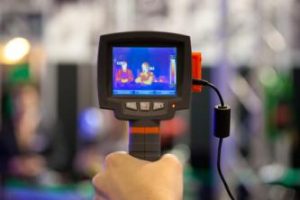
They are the modern technology used to pick up an area of the light spectrum which the eyes are not capable of seeing , They also known as thermography , infrared detectors are used in construction , public service and science .
The infrared sensors emit and/or receives the infrared waves in the form of the heat , While most the infrared sensors transmit and receive infrared waves , some can receive them only , These types of infrared sensors are known as Passive Infrared Sensors (PIR sensors) or motion detectors .
The infrared detectors are the pyroelectric sensors which detect the light spectrum’s infrared wavelength , They are usually emitters as well , They can be made of a phototransistor , photodiode , or photoresistor as these are basically the same device , They have many uses and they are essential to the transference of infrared light .
Infrared Detector advantages
Infrared detectors has the ability to be applied to a large area , They are operating in the real time , They pick up the movement , So , They are very useful in a variety of circumstances , They are used by many fire departments and they help the firefighters to see through the smoke .
Infrared Sensors
Infrared detectors can receive the infrared light which is irradiated from both living and non-living objects which is very important for many of the applications that infrared sensors are used for .
Infrared sensors can detect the infrared light from far distances over a large area , They detect the movement , making them ideal for the security purposes , They help the humans see what the other devices do not allow them to see , such as the leaks in underground pipes .
Infrared Detector disadvantages
As Infrared detectors detect the infrared images based on the temperature variants of the objects , They cannot detect differences in the objects which have a very similar temperature range , So , They leads to the inaccuracy in many circumstances .
The infrared sensors are incapable of distinguishing between the objects which irradiate similar thermal energy levels , Infrared Sensors are extremely expensive that limits their use in many sectors , So , they are not as widely used as they could be .
How does Infrared Sensor work ?
Although infrared detectors can be designed to perform different functions , all infrared detectors are made of pyroelectric materials , whether natural or artificial , The pyroelectric material produces an electrical voltage whenever it is heated or cooled .
Most infrared detectors are coated with either parabolic mirrors or Fresnel lenses to retrieve the infrared waves from an entire room or area , As the infrared waves reach the sensor from different areas , they cause the sensor to generate a voltage in different waves , that can be used to trigger an alarm or activate some other type of system .
Infrared Sensors uses
Infrared detectors are used in a wide variety of applications , They can be used in any situation that requires thermal energy detection , They are most used in the conjunction with an infrared emitter to transfer the infrared light .
Infrared detectors are used as motion detectors to open the doors , track the objects , or activate specific systems based on the thermal energy which is irradiated from the people , the animals and moving objects .
Infrared detectors are used in night-vision applications , laser range finding and heat-seeking missiles , Television remotes emit infrared light to change the channels and the television itself has a built-in infrared sensor to receive the remote’s signals .
Infrared detectors are used in the construction of the skyscrapers & large structures to detect leaks in the pipes which otherwise would not have been possible to see .