Adaptation and continuity of life by hibernation and aestivation, How does hibernation help in the continuity of life?
Many species had adapted to the environmental changes, so they had succeeded in the continuation of life. Some of the organisms could not adapt to the environmental changes, so they perished as dinosaurs and mammoths. There are many forms of adaptation of living organisms, such as hibernation, aestivation, adaptation for hiding, bird migration, and adaptation in aquatic and desert plants.
Adaptation
Adaptation is one of the most important processes that helps living organisms survive and continue life in different environments. As environmental conditions change, such as extreme cold or intense heat, organisms develop effective strategies to cope with these challenges.
Among the most important of these strategies are hibernation and aestivation. Some animals, such as the Bear and the Snail, reduce their metabolic activity to conserve energy and survive unfavorable conditions until the environment becomes suitable again.
Adaptation is the process that enables living organisms to survive in changing environmental conditions, ensuring the continuity of life. One important form of adaptation is hibernation, where animals such as the Bear and Bat enter a deep sleep during cold winter months. During this period, their body temperature, heart rate, and metabolism decrease significantly, helping them conserve energy when food is scarce. This allows them to survive harsh conditions and resume normal activities when the environment becomes suitable again.
Another important adaptation is aestivation, which occurs during hot and dry conditions. Animals like the Snail and Lungfish reduce their activity and often burrow into the ground or form protective coverings to prevent water loss. This process helps them avoid dehydration and extreme heat. Both hibernation and aestivation are temporary survival strategies that play a crucial role in maintaining life and ensuring the survival and continuity of species in different environments.
Difference Between Aestivation And Hibernation
Hibernation
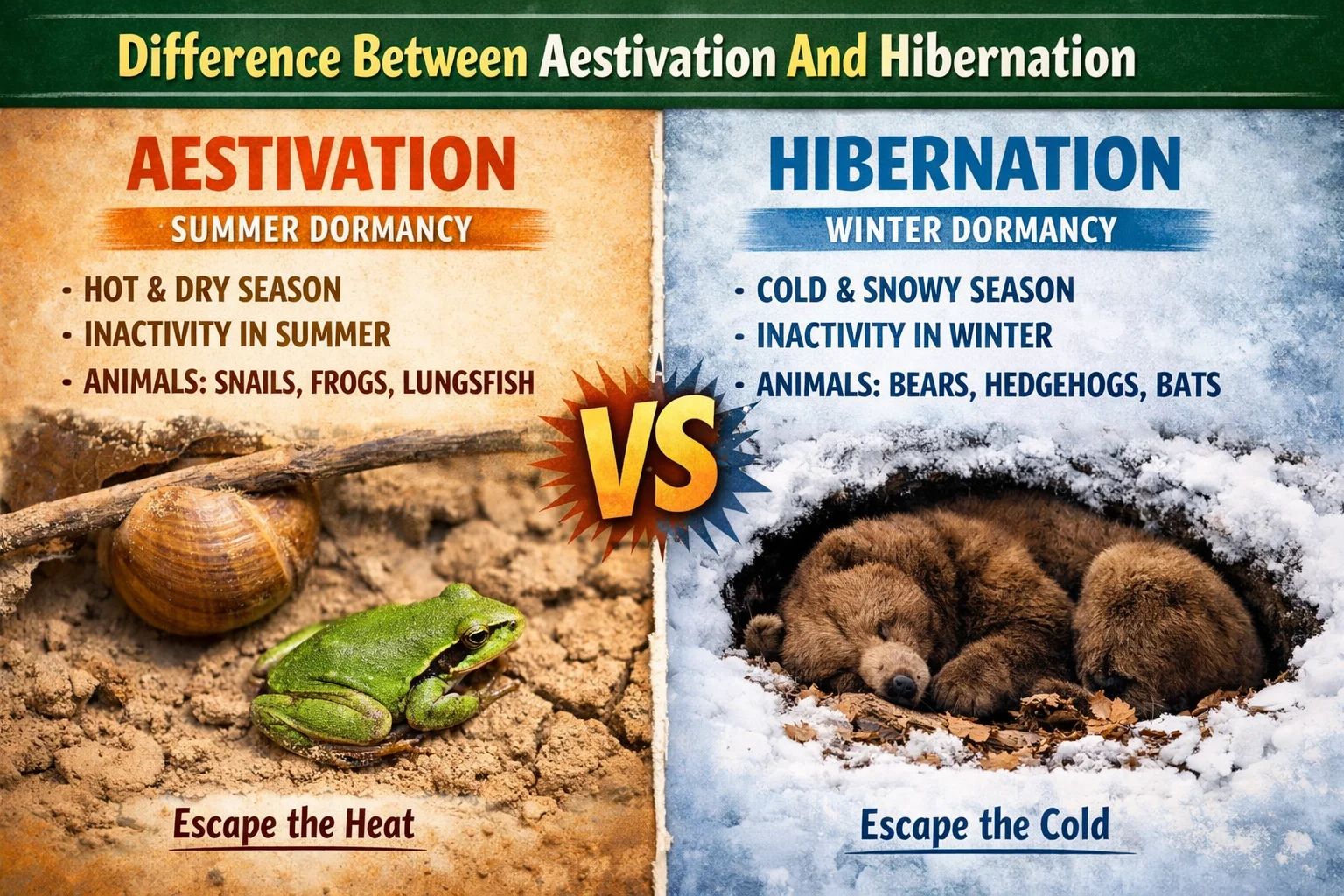
Hibernation is the behaviour that some animals exhibit by hiding in burrows to avoid the low temperatures in the winter. When the temperature decreases in the winter, some animals hide in the burrows as some reptiles and some insects.
Some animals bury themselves in the mud. They stop feeding, and their activities decrease to overcome the decrease in temperature, like the frogs and the toads. When the environmental conditions in the spring become favourable, these organisms return to their normal activities.
Aestivation
Aestivation is the behaviour that some animals exhibit by hiding in humid burrows to avoid the extreme rising of the temperature in the summer. When the temperature rises in the summer, especially in desert areas, the living organisms face an extreme rise in temperature and a shortage of water and rain.
They become dormant and hide in the humid burrows, avoiding the effect of the high temperature to keep the constancy of their body temperatures, such as the jerboa, the desert snail, and some insects.
The animals that hibernate or aestivate store an amount of food as fats in their bodies to provide them with the energy needed to keep their life during the period of dormancy.
The fats are characterized more than the other kinds of food by the production of large quantities of water on their reabsorption. So, these animals store the food and the water together in the form of fats.
FAQ about Adaptation
1. What is adaptation?
Adaptation is the process by which living organisms adjust to their environment to survive and reproduce successfully.
2. What is hibernation?
Hibernation is a state of deep sleep during winter where animals reduce their body activities to conserve energy when food is scarce, and temperatures are low.
3. What is aestivation?
Aestivation is a state of dormancy during hot and dry conditions, helping organisms survive extreme heat and lack of water.
4. How does hibernation help in the continuity of life?
Hibernation allows animals to survive harsh winter conditions, ensuring they live longer and reproduce later, which supports the continuity of their species.
5. How does aestivation support survival?
Aestivation helps organisms avoid dehydration and overheating, allowing them to survive until environmental conditions improve.
6. Which animals undergo hibernation?
Examples include:
- Bear.
- Bat.
- Hedgehog.
7. Which animals undergo aestivation?
Examples include:
- Snail.
- Lungfish.
- Frog.
8. What changes occur in animals during hibernation?
- Body temperature drops.
- Heart rate and breathing slow down.
- Metabolism decreases significantly.
9. What happens during aestivation?
- Reduced metabolic activity.
- Water conservation.
- Animals may burrow or form protective coverings.
10. What is the main difference between hibernation and aestivation?
- Hibernation occurs in cold conditions (winter).
- Aestivation occurs in hot, dry conditions (summer).
11. Are these processes temporary or permanent?
They are temporary survival strategies. Animals return to normal activity when conditions become favorable.
12. Why are these adaptations important?
They help organisms survive extreme environmental conditions, ensuring the continuity of life and survival of species.
Hibernation and aestivation are important adaptive strategies that allow organisms to survive unfavorable conditions, conserve energy, and maintain the continuity of life across different environments.
You can follow science online on YouTube from this link: Science online
Adaptation in insectivorous and birds, Hibernation, Aestivation, Birds migration and Camouflage
Adaptation reasons, types, diversity of living organisms and motion in mammals
Adaptation of the aquatic submerged plants