Telepresence Robots: Definition, Features, Advantages, What Can a Telepresence Robot Do?
Telepresence robots represent the ongoing evolution of remote communication technologies, offering a more immersive way to be present in physical spaces without being physically present. They can integrate with Zoom, Teams, or similar conferencing software, letting users communicate through familiar interfaces.
What is a Telepresence Robot?
A telepresence robot is a remotely controlled mobile system that allows a user to communicate, move, and interact in real-world environments through video, audio, and integrated mobility. Unlike traditional video calls, telepresence robots enable physical navigation inside offices, hospitals, classrooms, or homes, giving users the ability to turn, move, observe, and interact naturally.
It is a remotely controlled mobile device that enables a user to appear and interact in a distant location through live video, audio, and navigable mobility. It’s like a movable video-call system: you log in from your device (laptop, tablet, or phone) and drive the robot around a physical space to see, hear, and speak to people as though you were there in person.
Telepresence Robots
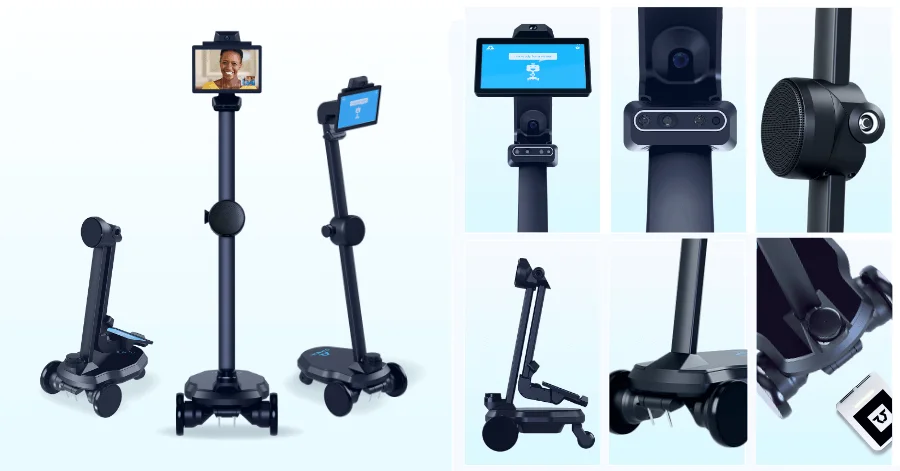
Telepresence robots typically include:
- High-resolution cameras.
- Microphones and speakers.
- A mobile robotic base.
- A control interface through a laptop, tablet, or smartphone.
- This technology supports remote participation, collaboration, and accessibility, making it increasingly relevant in hybrid work environments.
What Can a Telepresence Robot Do?
Telepresence Robots would allow remote users to:
- Move through indoor spaces using real-time controls.
- Interact with individuals via two-way audio and video.
- Participate in meetings, consultations, classes, or events.
- Observe environments with wide-angle or PTZ cameras.
- Conduct remote inspections or supervision tasks.
These capabilities make telepresence robots useful in offices, educational institutions, healthcare facilities, and industrial settings.
Features of the Telepresence Robot
- Mobility and Navigation: A motorized base allows the robot to move independently through indoor environments. Advanced units may include collision avoidance sensors and automatic speed adjustments for user safety.
- High-Quality Video and Audio: Telepresence robots rely on HD video streams and clear audio systems to enable realistic communication. Wide-angle lenses or PTZ cameras enhance the field of view and environmental awareness.
- Remote Control Interface: Users would likely control the Remo 2 via a web browser or mobile app, enabling easy access from anywhere in the world with an internet connection.
- Integration With Communication Platforms: Modern robots integrate with popular tools such as Zoom, Teams, or WebRTC platforms to support business meetings and classroom participation.
Advantages of Telepresence Robot
Telepresence robots introduce several significant benefits:
- Enhanced Remote Engagement: Instead of being stuck on a static screen, users can move around and interact freely, creating more natural social and professional experiences.
- Reduced Travel Costs: Remote employees, educators, doctors, or consultants can attend facilities virtually, reducing travel time, accommodation expenses, and carbon footprint.
- Participation and Accessibility: Telepresence robots enable people with mobility challenges or geographic limitations to participate in activities they would otherwise miss.
- Global Collaboration: Teams across different countries can communicate in real environments, strengthening collaboration without logistical barriers.
Disadvantages of Telepresence Robot
Like any technology, telepresence robots also present drawbacks:
- Higher Investment Cost: Premium models can cost between $2,000 and $10,000+, making them more suitable for corporate or institutional budgets.
- Internet Dependence: Connectivity issues can affect video quality, navigation, and communication reliability.
- Limited Autonomy: Most models require manual driving, although some offer partial autonomous navigation.
- Privacy and Security Concerns: Mobile cameras and remote access require strict cybersecurity protocols to prevent unauthorized access.
Use of Telepresence Robots
Telepresence robots are already used across multiple sectors:
- Business and Hybrid Offices: Remote employees can attend meetings, navigate offices, and collaborate with teams without flying across countries.
- Education: Students who cannot attend physically can join classrooms, labs, and group activities more naturally than traditional video calls.
- Healthcare: Doctors and specialists may conduct remote patient visits, consultations or facility rounds while reducing travel and infection risk.
- Home and Social Use: Families and caregivers can maintain personal interaction with distant or elderly relatives.
You can subscribe to science online on YouTube from this link: Science Online
Ava Telepresence Robots review, features, advantages, disadvantages and How do Ava robots work?
Web Conferencing (Video Conferencing) use, advantages and disadvantages
RP-VITA telemedicine robot review, features, advantages and disadvantages
Telepresence robots uses, advantages & disadvantages
Online marketing uses, advantages and disadvantages
Robot teachers uses, advantages and disadvantages
Humanoid robots use, types, risks, advantages and disadvantages