Erosion of ozone layer, and protection from ozone layer pollutants
The ozone hole is a thinning or losing part of the ozone layer above the South Pole. Scientists have noticed that there was an erosion of the ozone layer above the South Pole, since 1978, and it is known as the ozone hole.
Erosion of the ozone layer
The ozone hole increases in September each year, Because all the pollutants assemble as black clouds, and they are pushed by the wind towards the South Pole to increase the ozone depletion from year to year.
The most dangerous pollutants of the ozone layer
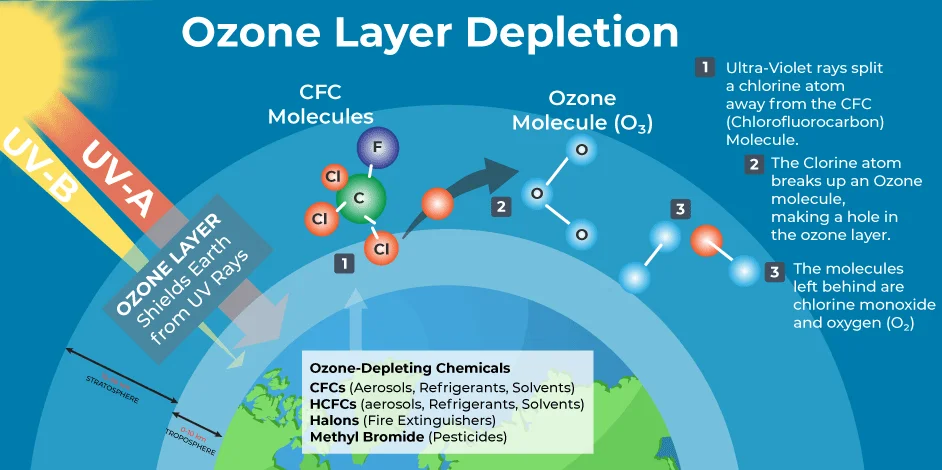 |
| The most dangerous pollutants of the ozone layer |
Chlorofluorocarbon compounds, which are known as Freon, are used as a cooling substance in air conditioning sets. They are used as a Propellant substance in aerosols. They are used as a flating substance in making foam backing. They are used as a solvent substance for cleaning the electrical circuit slides.
Halons are used in fire extinguishers.
Nitrogen oxides are produced from the burning of the fuel of ultrasonic airplanes (Concorde).
Methyl bromide gas is used as an insecticide to preserve the stored agricultural crops.
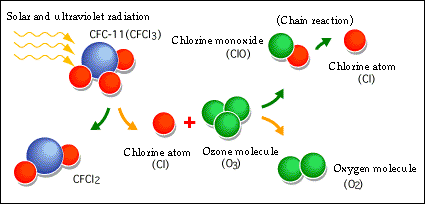 |
| Steps of the erosion of the ozone layer |
How to Protect the Ozone Layer?
There was an international conference in Canada, It was held in 1987 to discuss how to protect the ozone layer which is known as Montreal Protocol, and they reached a group of recommendations. It was signed by 191 nations.
Some of these recommendations are to reduce the use of chlorofluorocarbon compounds, and we must find safer alternatives. We must stop producing ultrasound Concorde planes as their exhausts affect the ozone layer.
The Montreal Protocol was modified in London in 1990 in a way that all nations must ban the production or handling of chlorofluorocarbon compounds.
FAQ about Ozone Layer Erosion
1. What is ozone layer erosion (ozone depletion)?
Ozone layer erosion, also called ozone depletion, is the gradual thinning of the ozone layer in the stratosphere caused mainly by chemical pollutants released into the atmosphere.
2. What are the main causes of ozone layer erosion?
The main causes include ozone-depleting substances (ODS) such as:
- Chlorofluorocarbons (CFCs) are used in refrigerators and air conditioners.
- Halons are used in fire extinguishers.
- Carbon tetrachloride.
- Methyl bromide is used in agriculture.
3. How do pollutants destroy the ozone layer?
When ozone-depleting chemicals reach the stratosphere, ultraviolet radiation breaks them down, releasing chlorine or bromine atoms. These atoms react with ozone molecules and destroy them, reducing the concentration of ozone.
4. What is the ozone hole?
The ozone hole is a large area where the ozone layer becomes extremely thin, especially over Antarctica during spring due to chemical reactions involving chlorine and bromine compounds.
5. What are the harmful effects of ozone depletion?
Ozone depletion can lead to:
- Increased skin cancer and sunburn.
- Eye diseases such as cataracts.
- Weakening of the human immune system.
- Damage to plants and crops.
- Harm to marine life, especially plankton.
6. What are ozone layer pollutants?
Ozone layer pollutants are chemicals that break down ozone molecules, including CFCs, halons, nitrogen oxides, and other industrial gases released into the atmosphere.
7. How can individuals help protect the ozone layer?
People can help by:
- Using CFC-free appliances and products.
- Properly maintaining refrigerators and air conditioners.
- Avoiding aerosol sprays that contain harmful chemicals.
- Supporting environmentally friendly technologies.
8. What role do governments play in protecting the ozone layer?
Governments enforce environmental regulations and international agreements such as the Montreal Protocol, which aims to reduce and eliminate ozone-depleting substances worldwide.
9. How does the Montreal Protocol help the ozone layer?
The Montreal Protocol limits the production and use of chemicals that damage the ozone layer, helping the atmosphere gradually recover.
10. Are there environmentally friendly alternatives to ozone-depleting chemicals?
Yes. Many industries now use eco-friendly refrigerants, natural cooling systems, and safer propellants that do not harm the ozone layer.
11. Can the ozone layer recover completely?
Yes. Scientists believe that if global regulations continue, the ozone layer may recover to near-normal levels by the middle of the 21st century.
12. Why is protecting the ozone layer important for future generations?
Protecting the ozone layer ensures safer living conditions, healthier ecosystems, and protection from harmful ultraviolet radiation for future generations.
Ozone layer erosion is mainly caused by human-made pollutants that break down ozone molecules in the stratosphere. Through international cooperation, safer technologies, and reduced use of harmful chemicals, the ozone layer can gradually recover and continue protecting life on Earth.
You can subscribe to Science Online on YouTube from this link: Science Online
Erosion of Ozone layer, Global warming phenomenon and Greenhouse effect