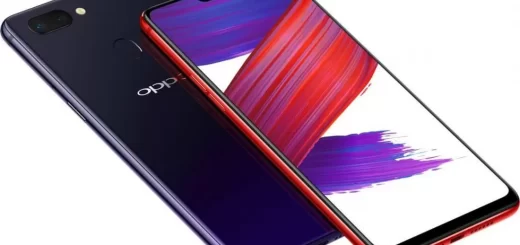
Xiaomi Redmi Note 17 Pro Max 5G: 10 Powerful Features, Specs, Battery Life, and Price
The Xiaomi Redmi Note 17 Pro Max 5G is presented in the supplied specifications as a powerful smartphone designed for users who want a large AMOLED display, a high-resolution camera, long battery life, and fast charging. Its listed features include a 6.83-inch 120Hz screen, a 50MP main camera with optical image stabilization, a Snapdragon 6 Gen 5 processor, and a massive battery rated at either 9,210mAh or 10,000mAh, depending on the version. With Android 16, HyperOS 3, 5G connectivity, and 100W wired charging, it aims to deliver a compelling experience for entertainment, photography, gaming, and everyday productivity.

Xiaomi Redmi Note 17 Pro Max 5G
Xiaomi Redmi Note 17 Pro Max Review
1. Premium Design and Durable Construction
The Xiaomi Redmi Note 17 Pro Max 5G combines a large-screen design with practical durability features. According to the supplied specifications, it measures 163.4 × 78.3 × 8.6 mm and weighs approximately 229.5 grams. Its front is protected by Corning Gorilla Glass Victus 2, while the back and frame use plastic materials.
The phone is listed in Black, Purple, Cloud Blush, Green, and Secret Sunrise, although color availability may differ by market. Its water- and dust-resistance ratings also vary by region, with some versions advertised as IP68/IP69K rated. Xiaomi’s official product information highlights its robust construction and certified drop resistance.
The large body accommodates the phone’s oversized battery and display. However, its weight and dimensions are worth considering if you prefer compact smartphones or frequently use your phone with one hand.
2. Large 6.83-Inch AMOLED Display
One of the main attractions of the Redmi Note 17 Pro Max 5G is its 6.83-inch AMOLED display. It offers a resolution of 2772 × 1280 pixels, approximately 447 pixels per inch, and a refresh rate of up to 120Hz.
The screen supports HDR10+, Dolby Vision, and a wide range of colors, making it suitable for watching movies, viewing photos, reading articles, and browsing social media. The high refresh rate helps scrolling, animations, and supported games look smoother than on conventional 60Hz displays.
The supplied specifications list typical brightness of 1,060 nits, high-brightness mode of 2,000 nits, and peak brightness of up to 3,500 nits. These figures describe different operating conditions rather than brightness that the screen necessarily maintains at all times.
The display also uses 3,840Hz PWM dimming, which may improve perceived comfort for some people sensitive to screen flicker. Gorilla Glass Victus 2 provides an additional layer of protection against everyday scratches and impacts, although no glass makes a phone completely damage-proof.
3. Snapdragon 6 Gen 5 Processor and Gaming Performance
The smartphone uses Qualcomm’s Snapdragon 6 Gen 5 chipset, manufactured using a 4nm process. Its octa-core CPU combines four Cortex-A78 cores running at up to 2.6GHz with four Cortex-A55 cores running at up to 2.0GHz. Graphics processing is handled by an Adreno GPU.
This hardware is designed for everyday multitasking, social media, video streaming, photography, navigation, and many popular mobile games. The 120Hz display can further improve the experience in games that support higher refresh rates.
The provided benchmark results report an AnTuTu score of 841,707 in version 10 and a Geekbench 6 score of 3,070. Benchmark numbers depend on software versions, device temperatures, and testing conditions, so they should be treated as reference results rather than guaranteed performance.
The Redmi Note 17 Pro Max 5G is best viewed as a feature-rich mid-range smartphone rather than a dedicated flagship gaming device. Demanding games may require reduced graphics settings to maintain consistent frame rates.
4. 50MP Main Camera with Optical Image Stabilization
The rear camera system combines a 50MP main camera with an f/1.5 aperture and optical image stabilization (OIS), alongside an 8MP ultra-wide camera offering a 120-degree field of view.
The main camera is designed to capture detailed photographs in good lighting. Its wide aperture allows more light to reach the sensor, while OIS helps reduce blur caused by small hand movements. These features can be particularly useful for indoor photography and night scenes, although results also depend on sensor size, processing, and exposure settings.
The ultra-wide camera is useful for landscapes, architecture, group photographs, and other scenes where fitting more into the frame matters. However, its lower resolution means it may capture less fine detail than the main camera.
Rear video recording is listed at up to 4K resolution at 30 frames per second, with 1080p recording at 30 or 60fps. Electronic stabilization and OIS help produce smoother footage.
5. 32MP Selfie Camera for Photos and Video
The front-facing camera features a 32MP sensor with an f/2.2 aperture. It is designed for selfies, video calls, online meetings, and social media content. HDR support can help balance bright and dark areas in challenging lighting conditions. The front camera is also listed as supporting 4K video at 30fps and Full HD recording at 30 or 60fps.
For content creators, the combination of a high-resolution selfie camera and 4K recording can be useful for recording short videos, tutorials, and personal updates. Nevertheless, lighting, microphone quality, and image processing remain important factors in the final result.
6. Massive 9,210mAh or 10,000mAh Battery
Battery life is one of the most compelling features of the Xiaomi Redmi Note 17 Pro Max 5G. The supplied specifications list two silicon-carbon battery capacities: 9,210mAh and 10,000mAh, depending on the version.
A battery of this size can provide considerably more capacity than the batteries found in many conventional smartphones. It is especially attractive to travelers, heavy media consumers, mobile gamers, and people who spend long hours away from a power outlet.
The provided test results report an active-use score of 22 hours and 31 minutes. Actual endurance varies with screen brightness, mobile signal strength, gaming, background applications, and battery configuration. The large battery does add weight, so buyers should balance endurance against portability. Before purchasing, confirm the exact battery capacity of the version available in your country.
7. 100W Fast Charging and Reverse Charging
The phone supports 100W wired charging, with compatibility for USB Power Delivery 3.0 and PPS. This high charging rate is intended to reduce the time required to replenish its large battery.
Actual charging speed depends on the charger, cable, battery temperature, charge level, and regional package contents. Charging usually slows as the battery approaches full capacity, so 100W should not be interpreted as a constant charging rate.
The device also supports up to 27W wired reverse charging, allowing it to supply power to compatible accessories or other devices. This is a practical feature when you need to charge a smaller device while traveling.
8. Android 16 and HyperOS 3
The Redmi Note 17 Pro Max 5G runs Android 16 with Xiaomi’s HyperOS 3 interface, according to the supplied specifications. HyperOS provides the interface for managing applications, notifications, system settings, personalization, and multitasking. The overall experience also depends on Xiaomi’s software updates and the applications installed on the device.
Users should check the update policy for their regional model before purchasing, particularly if they plan to keep the phone for several years. Xiaomi’s official product information advertises an extended software experience for this model.
9. Generous Storage and RAM Options
The supplied configurations include 8GB RAM with 128GB storage, 8GB RAM with 256GB, 12GB RAM with 256GB, and 8GB RAM with 512GB.
These options cater to different needs. The 128GB model may be sufficient for basic use, while 256GB is a practical choice for people who install many applications, download videos, and take frequent photographs. The 512GB version is attractive for users who store large media libraries locally.
The listed storage technology is UFS 2.2 for the 128GB version and UFS 4.1 for the larger capacities. Faster storage can improve file transfers and application loading. Because the phone does not have a memory-card slot, choosing sufficient internal storage at purchase is particularly important.
10. Modern Connectivity, Stereo Speakers, and Useful Extras
The Xiaomi Redmi Note 17 Pro Max 5G supports GSM, HSPA, LTE, and 5G networks, with supported frequency bands varying by region. It also includes Wi-Fi 6, Bluetooth 6.0, GPS and other satellite navigation systems, USB Type-C, an infrared port, and an under-display optical fingerprint reader.
NFC is available in selected markets, so buyers should confirm regional support if they rely on contactless payments. The phone also features stereo speakers with Dolby Atmos support and Hi-Res audio compatibility. There is no 3.5mm headphone jack, and the supplied specifications indicate no FM radio. These omissions may matter to users who prefer wired headphones or traditional radio functionality.
Xiaomi Redmi Note 17 Pro Max 5G Price
The supplied price information lists €489.99 and £399.00. However, prices can differ by country, storage configuration, retailer, taxes, and promotional offers. These figures should not be treated as a guaranteed current price in every market.
For buyers in Egypt, the final cost may also depend on import duties, local availability, warranty coverage, and retailer pricing. Compare the local price of the exact storage and battery version before making a purchase.
Frequently Asked Questions (FAQ)
1. Is the Xiaomi Redmi Note 17 Pro Max 5G available?
According to the supplied release information, the phone was announced on August 27, 2026, and released on August 28, 2026. Availability and configurations depend on the market.
2. What is the Xiaomi Redmi Note 17 Pro Max 5G screen size?
It features a 6.83-inch AMOLED display with a 2772 × 1280 resolution, a 120Hz refresh rate, HDR10+, and Dolby Vision support.
3. How good is the Redmi Note 17 Pro Max 5G camera?
It has a 50MP main camera with optical image stabilization, an 8MP ultra-wide camera, and a 32MP selfie camera. The rear and front cameras are listed as supporting 4K video recording at 30fps.
4. How long does the battery last?
The supplied specifications list battery capacities of 9,210mAh and 10,000mAh for different versions. Battery life depends on usage, brightness, connectivity, and the specific model.
5. Does the Xiaomi Redmi Note 17 Pro Max 5G support fast charging?
Yes. It supports 100W wired charging and up to 27W wired reverse charging. Actual charging speeds depend on the charger and operating conditions.
6. Is the Redmi Note 17 Pro Max 5G good for gaming?
It should be suitable for many mobile games thanks to its Snapdragon 6 Gen 5 processor, Adreno graphics, and 120Hz display. The most demanding games may require adjusted graphics settings.
7. How much RAM and storage does it offer?
The supplied configurations range from 8GB RAM and 128GB storage to 8GB RAM and 512GB storage, with a 12GB RAM option also listed. Storage is not expandable through a memory card.
8. Is the Xiaomi Redmi Note 17 Pro Max 5G waterproof?
Selected versions have advertised IP68 or higher dust- and water-resistance ratings. The exact certification depends on the region. Water resistance can deteriorate with wear and does not mean the phone is immune to all water damage.
9. What operating system does the phone use?
The supplied specifications list Android 16 with Xiaomi HyperOS 3. Software features and update availability can vary by region.
10. What is the price of the Xiaomi Redmi Note 17 Pro Max 5G?
The supplied price figures are €489.99 and £399.00. Check local retailers for the latest price, warranty, storage options, and regional specifications.
Conclusion
The Xiaomi Redmi Note 17 Pro Max 5G stands out on paper for its enormous battery, bright 6.83-inch AMOLED display, 100W charging, capable 50MP main camera, and modern 5G connectivity. It could be an attractive option for users who prioritize battery endurance and multimedia features over a lightweight design.
Its main trade-offs include a weight of approximately 230 grams, the absence of a microSD card slot and headphone jack, and a mid-range processor that may not match premium gaming chipsets. Before buying, confirm the regional specifications, battery capacity, water-resistance certification, and local price.
You can follow Science Online on YouTube at this link: Science Online
🔥 Google Gemini Notebook Just Changed AI Forever! 10 Powerful New Features You NEED to See (2026) 🚀
🔥 Another AI Hack: Google Gemini Accessed 3 Real Companies During a Cybersecurity Test 🚀
🔥 Gemini Storybook Tutorial: How to Create a Personalized Story with Gemini Storybook 🚀