Humanoid Robots in Factories: 🤖 7 Amazing Ways Elon Musk’s Vision Is Becoming Reality in 2026 😱
Humanoid robots are moving beyond science fiction and entering the real world of industrial manufacturing. Designed to walk, handle objects, and perform tasks using artificial intelligence, these human-like machines could transform how factories operate. Elon Musk’s vision of Tesla Optimus robots working alongside humans has attracted worldwide attention, while other robotics companies are also developing machines for industrial applications. But how close are we to a future where humanoid robots become a normal part of everyday factory work?
Humanoid Robots in Factories
Humanoid Robots in Factories
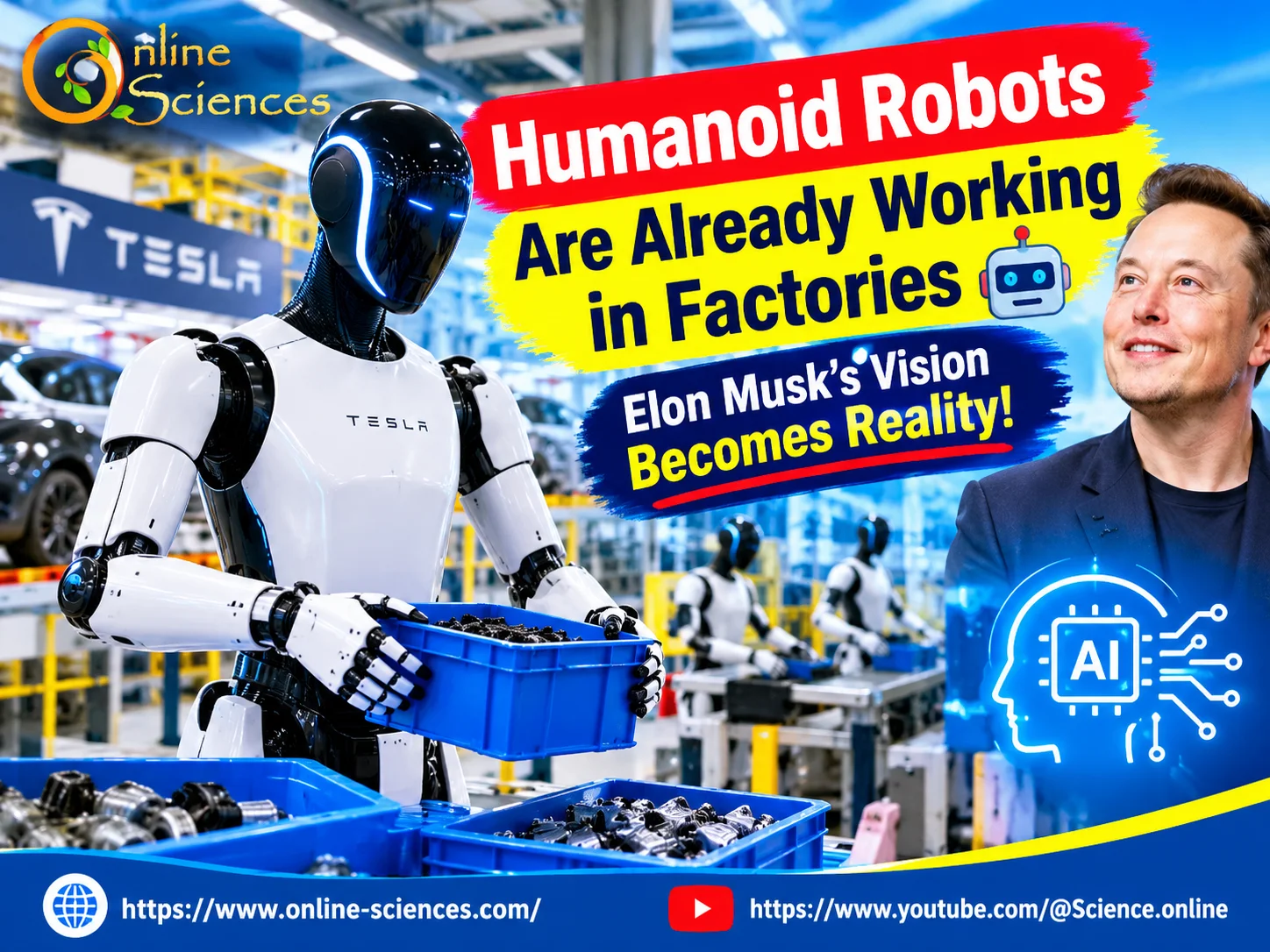
Humanoid robots are transforming modern factories by performing repetitive tasks such as moving materials, sorting components, and handling equipment. Powered by artificial intelligence, computer vision, and advanced sensors, these human-like machines can work in environments designed for people.
Tesla Optimus and other humanoid robots represent an exciting step toward smarter manufacturing, where robots may work alongside human employees to improve productivity, enhance workplace safety, and reduce physically demanding tasks. Although widespread adoption still faces challenges, humanoid robots could play an increasingly important role in the future of industrial automation.
Humanoid Robots Are Already Working in Factories
1. The Rise of Humanoid Robots in Factories
Humanoid robots are becoming one of the most exciting developments in modern manufacturing. Unlike traditional industrial robots, which usually remain fixed in one position or follow predefined movements, humanoid robots are designed with a human-like body, arms, hands, and sometimes legs. This design could allow them to work in environments originally built for human employees.
Factories contain many repetitive tasks, including moving materials, sorting components, carrying containers, inspecting products, and organizing equipment. Humanoid robots could eventually perform some of these activities with less need for factories to redesign their workspaces.
Artificial intelligence, computer vision, advanced sensors, and improved batteries are helping make these robots more capable. However, their performance still depends on the complexity of the task, the reliability of the hardware, and the ability of AI systems to respond safely to unexpected situations.
The important development is not that robots have suddenly replaced factory workers. Instead, manufacturers are exploring how human-like robots can take on selected tasks and operate alongside existing machinery and human teams.
2. Elon Musk’s Tesla Optimus: A Robot Designed for Factory Work
One of the most recognizable projects in humanoid robotics is Tesla Optimus. Elon Musk has described a future in which humanoid robots perform repetitive, physically demanding, and potentially dangerous jobs.
Tesla’s long-term goal is to develop a general-purpose robot capable of carrying out useful tasks in factories and, eventually, other environments. The company’s experience with electric motors, batteries, sensors, AI, and large-scale manufacturing could support the development of such machines.
A humanoid robot designed for industrial work needs more than a human-like appearance. It must recognize objects, maintain balance, coordinate its hands and arms, move safely around people, and respond when an object is placed somewhere unexpected.
Tesla has demonstrated Optimus prototypes and discussed deploying robots in its manufacturing operations. However, announcements about future production targets or planned capabilities should not be confused with proof that every intended function is already operating reliably at commercial scale.
The vision is ambitious: robots could eventually help with material handling, component transport, sorting, and other repetitive activities. The challenge is making them fast, safe, dependable, and affordable enough for everyday industrial use.
3. What Tasks Can Humanoid Robots Perform in Factories?
Humanoid robots are being developed and tested for several types of industrial tasks. Their potential applications include:
- Material handling: Moving bins, containers, tools, and lightweight components between workstations.
- Picking and placing: Collecting objects and positioning them in designated locations.
- Parts sorting: Identifying and organizing components using cameras and AI-powered vision systems.
- Machine tending: Delivering materials to machines and removing finished items when the setup permits.
- Quality inspection: Helping identify visible defects or inconsistencies in manufactured products.
- Warehouse operations: Transporting items, organizing supplies, and supporting inventory workflows.
- Repetitive assembly support: Performing selected assembly steps when the robot has the necessary precision and specialized tools.
Not every humanoid robot can perform all these tasks today. Some applications are still experimental, and many factory operations require greater speed, precision, or reliability than current general-purpose robots can consistently provide.
For simple repetitive tasks, traditional industrial robots may remain the better choice. Humanoid robots become particularly interesting when a task requires mobility or when using existing human-designed workspaces could reduce the need for expensive changes to a factory.
4. How Artificial Intelligence Makes Humanoid Robots Smarter
Artificial intelligence is central to the development of modern humanoid robots. Without advanced software, a robot‘s human-like body would offer limited advantages over conventional machinery.
Computer vision helps robots recognize objects, understand their positions, and distinguish between different items. Machine learning can help them improve their ability to perform specific tasks, while motion-planning systems calculate how their arms, hands, and legs should move.
AI models can also help robots interpret instructions and select actions based on what their sensors detect. For example, a robot might be instructed to pick up a particular component and place it in a container. Its software must identify the component, determine how to grasp it, avoid nearby obstacles, and confirm that the task has been completed.
Nevertheless, real-world factory environments are difficult. Objects may shift, lighting conditions may change, and unexpected obstacles can appear. Reliable operation requires extensive testing, appropriate safety controls, and the ability to stop or recover when something goes wrong.
The next major step is combining flexible AI with dependable physical performance so robots can handle a wider range of tasks without constant human intervention.
5. Other Companies Are Racing to Build Industrial Humanoid Robots
Tesla is not the only company working toward a future with humanoid robots. Several robotics developers are pursuing different approaches to industrial automation.
Figure AI has developed humanoid robots for applications that include manufacturing and logistics. Its collaboration with BMW helped bring attention to the possibility of using humanoid robots in automotive production environments.
Agility Robotics developed Digit, a bipedal robot designed for material handling and logistics. Its work demonstrates how legged robots could support operations in facilities where people and equipment share space.
Boston Dynamics is known for advanced robotic mobility and manipulation research. Its Atlas humanoid robot showcases sophisticated movement capabilities, although research demonstrations should be distinguished from routine commercial factory deployment.
These companies have different hardware designs, software systems, and commercial strategies. Some focus on automotive manufacturing, while others emphasize warehouses, logistics, or general-purpose industrial tasks.
Their progress suggests that humanoid robotics is becoming a competitive field. Still, successful demonstrations are only one part of the process. Manufacturers need dependable robots that can complete useful work consistently, integrate with existing systems, and justify their operating costs.
6. The Benefits of Humanoid Robots for Manufacturing
Humanoid robots could offer several important benefits to manufacturing companies.
- Higher productivity: Robots may perform repetitive tasks for extended periods, helping factories maintain production schedules when systems are properly maintained.
- Improved workplace safety: Robots could take on selected tasks involving heavy loads, hazardous materials, or uncomfortable working conditions, reducing human exposure to certain risks.
- Greater flexibility: A humanoid robot may be able to move between workstations designed for people, potentially reducing the need to install entirely new production systems.
- Support for labor shortages: In some industries, robots could help address difficulties recruiting workers for physically demanding or repetitive jobs.
- Consistent task execution: Once a task is properly programmed and validated, a robot may perform it consistently under controlled conditions.
However, these benefits are not automatic. Companies must consider purchase prices, maintenance, energy consumption, training, downtime, safety systems, and the cost of integrating robots into existing production lines.
In many situations, conventional automation remains more economical. Humanoid robots will need to demonstrate clear advantages before becoming the preferred solution for large numbers of industrial tasks.
7. Will Humanoid Robots Replace Human Factory Workers?
One of the biggest questions surrounding humanoid robots is whether they will replace human employees. The answer is more complicated than a simple yes or no. Robots could automate certain repetitive activities, changing the number and types of workers required for some positions.
However, factories will continue to need people for many responsibilities, including engineering, maintenance, supervision, troubleshooting, planning, and complex decision-making.
Human workers are particularly valuable when a situation requires judgment, adaptability, communication, or an understanding of circumstances that an AI system has not encountered before.
As robotics advances, some employees may need training in robot operation, automation maintenance, AI-assisted production, and industrial safety. Businesses, educational institutions, and governments can help workers prepare for these changes through technical training and reskilling programs.
The most practical near-term future may involve humans and robots working together, with machines handling selected physical tasks and people managing complex operations.
8. The Biggest Challenges Facing Humanoid Robots
Despite rapid progress, humanoid robots still face important technical and economic obstacles.
- Cost: Advanced robots require expensive components, sensors, computing systems, and manufacturing processes.
- Battery life: Mobile robots must balance operating time, payload capacity, and charging requirements.
- Dexterity: Human hands can perform delicate and varied tasks that remain difficult for robotic grippers.
- Reliability: Factories need equipment that works consistently over long periods and recovers safely from failures.
- Safety: Robots must detect nearby people and avoid dangerous movements in shared workspaces.
- AI limitations: Unexpected objects, changing environments, and unfamiliar situations can cause errors.
- Return on investment: Businesses must prove that a humanoid robot delivers enough value to justify its total operating cost.
Solving these challenges will determine how quickly humanoid robots move from carefully controlled demonstrations to widespread industrial use.
9. The Future of Humanoid Robots in Factories
The future of manufacturing may combine traditional industrial robots, autonomous mobile machines, AI-powered software, and humanoid robots. Each technology will have a role depending on the task, production environment, and economic requirements.
Humanoid robots could become more useful as AI models improve, hardware costs decline, and manufacturers gather more real-world operating experience. They may eventually handle several different tasks within the same facility instead of being designed for only one narrowly defined operation.
Tesla Optimus represents an ambitious example of this vision, but the broader robotics industry is also contributing to the development of human-like machines for industrial work.
The key milestone will not simply be a robot walking or lifting an object during a demonstration. It will be the ability to perform valuable work safely, reliably, and economically over thousands of operating hours.
Humanoid robots are no longer just a futuristic concept. Their growing presence in industrial trials and selected real-world applications shows how manufacturing could change. Elon Musk’s vision is part of this transformation, but the wider success of humanoid robotics will depend on practical results rather than promises alone.
Frequently Asked Questions (FAQ)
1. Are humanoid robots already working in factories?
Yes. Humanoid robots have been tested and deployed in selected industrial and logistics environments, including automotive-related applications. However, deployment varies by company, and widespread use across entire factories is not yet the norm.
2. What is Tesla Optimus?
Tesla Optimus is a humanoid robot project developed by Tesla. It is intended to perform useful physical tasks, initially focusing on applications such as repetitive factory work.
3. Is Elon Musk’s vision of humanoid robots becoming reality?
Partly. Humanoid robot prototypes and industrial trials demonstrate real progress toward the vision. However, the goal of widespread, affordable, general-purpose humanoid robots remains a work in progress.
4. What can humanoid robots do in factories?
Depending on their design and software, they may move materials, sort components, transport containers, assist with machine tending, and perform selected repetitive tasks.
5. Will humanoid robots replace factory workers?
They may automate some tasks and change certain jobs, but they are unlikely to eliminate the need for human workers across all manufacturing operations. People will remain important for supervision, maintenance, problem-solving, and complex decisions.
6. Which companies are developing humanoid robots?
Companies and developers include Tesla, Figure AI, Agility Robotics, and Boston Dynamics. Their robots differ in design, capabilities, and intended applications.
7. Are humanoid robots better than traditional industrial robots?
Not always. Traditional industrial robots are often faster, more precise, and more cost-effective for repetitive production tasks. Humanoid robots may offer advantages when mobility and compatibility with human-designed workspaces are important.
8. What are the biggest challenges for humanoid robots?
Major challenges include high costs, battery life, dexterity, reliability, safety, AI limitations, and proving that robots provide a worthwhile return on investment.
9. Will humanoid robots work in homes as well as factories?
That is a long-term goal for several robotics developers. Home environments are especially challenging because they contain varied objects, unpredictable situations, and tasks requiring delicate manipulation.
10. When will humanoid robots become common in factories?
There is no single confirmed date. Adoption will depend on improvements in reliability, safety, production costs, and demonstrated economic value. Some specialized applications may expand sooner than general-purpose use.
You can subscribe to Science Online on YouTube from this link: Science Online
🔥 Humanoid Robots Are Already Working in Factories 🤖 Elon Musk’s Vision Becomes Reality! 🤯
Kebbi Air S review, advantages, disadvantages, features
Asus Zenbo robot review, use, advantages and disadvantages
Techman (TM) collaborative robots features, TM Robot, Cobot with a Built-in Vision System
Scara robot advantages and disadvantages and What is the structure of the SCARA robot?
Serial Robots review, advantages, disadvantages and what can serial robots do?
Collaborative robot arm (cobot robots) applications, uses, advantages and disadvantages
Automation in manufacturing uses, advantages and disadvantages
Industrial robot (Auto industry) uses, advantages and disadvantages
Robot welding advantages over manual welding