Volcanoes and safety precautions must be taken at the occurrence of volcanoes
There are thousands of Volcanoes on the Earth’s surface. But sixty-one of them are active as evidence of the permanent activities and movement beneath the Earth’s crust.
Volcanoes
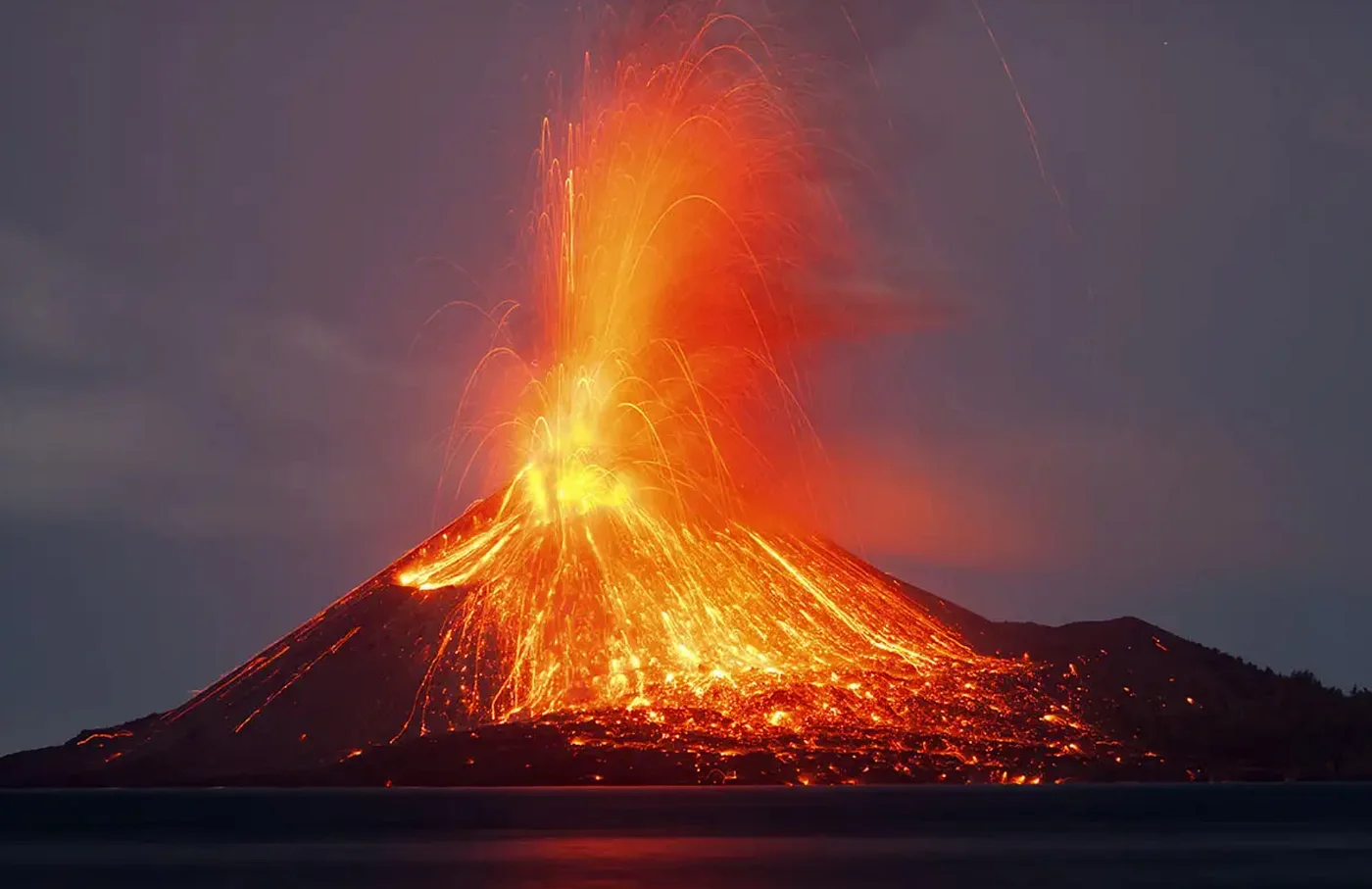
A volcano is an opening in the Earth’s crust that permits the passage of trapped gases and molten materials (lava).
Volcanoes
Causes of the occurrence of the volcano
The direct cause of the volcano occurrence is the presence of weak parts in the Earth’s crust, where molten materials are going out to the Earth’s surface.
Parts of the volcano
It consists of three parts, which are:
- The volcanic vent: It is an opening that lies at the top of the volcano.
- The volcanic pipe (or neck) is a cylindrical cavity that connects the Earth’s interior with the surface, through which the magma moves during its ascendence.
- The volcano cone, which is the body of the volcano. It consists of molten materials after their solidification and accumulation around the volcanic vent.
The products of the volcano
The materials ejected during the volcanic eruption are fragmented materials, lava, and volcanic gases.
-
The fragmented materials are materials that the volcano emanates. These materials are different in size, ranging from big projectiles to volcanic ashes.
-
Lava (or lava flows) which are molten material mass that spreads on the volcanic sides.
-
The volcanic gases, which are the fused (mixed) gases with the magma, and the most important of them are water vapour and oxides of carbon, nitrogen, and sulphur.
Harms of volcanoes
- The Lava and the lava flows cover and destroy whole towns and villages.
- Spreading of poisonous gases and volcanic dust into far places covering large areas.
- The fire catches in the forests and neighbouring places to the volcano and causes a lot of damage.
- The volcanoes destroy the cultivated lands near them.
Benefits of volcanoes
- In some countries, the thermal energy resulting from the volcano is used to produce electricity.
- The volcanic projectiles and ashes form more fertile soil, so, the most important crops are produced.
- They form new islands in the seas and increase the area of land.
- Volcanic rocks are produced by volcanoes, and they have great economic value.
Safety and security precautions that must be taken in the occurrence of volcanoes
- During the volcanoes, we must evaluate the people from the neighbouring areas of the volcano as soon as possible.
- To avoid the poisonous gases emanating from the volcanoes, people must take into account the instructions for forecasting the wind direction.
FAQ about Volcanoes and Safety Precautions
1. What is a Volcano?
A volcano is an opening in the Earth’s crust through which magma, gases, and ash escape to the surface. When magma reaches the surface, it is called lava.
2. What causes volcanoes?
Volcanoes are mainly caused by:
- Movement of tectonic plates.
- Subduction zones (one plate goes under another).
- Divergent boundaries (plates move apart).
- Hot spots deep inside the Earth.
3. What are the main parts of a volcano?
- Magma chamber – Underground storage of molten rock.
- Main vent – Channel through which magma rises.
- Crater – Opening at the top.
- Lava flow – Molten rock flowing on the surface.
- Ash cloud – Fine particles ejected into the air.
4. What are the types of volcanoes?
- Shield Volcano – Wide with gentle slopes.
- Composite (Stratovolcano) – Tall, cone-shaped, explosive.
- Cinder Cone Volcano – Small and steep.
5. What are the effects of volcanic eruptions?
- Lava flows.
- Ash fall.
- Toxic gases.
- Landslides.
- Destruction of buildings.
- Climate effects (large eruptions).
Safety Precautions During a Volcanic Eruption
1. What should you do DURING a volcanic eruption?
- Follow Official Instructions: Listen to emergency authorities and evacuate if ordered.
- Stay Indoors: Close windows and doors, and turn off ventilation systems.
- Protect Yourself from Ash: Wear a mask or cloth over your nose and mouth, wear goggles to protect your eyes, and cover your skin with long sleeves.
- Avoid River Valleys: Lava and mudflows (lahars) often move through valleys.
2. What should you prepare BEFORE a volcanic eruption?
- Emergency kit (water, food, flashlight, first aid kit).
- Masks and goggles.
- Important documents should be in a safe place.
- Know evacuation routes.
3. What should you do AFTER a volcanic eruption?
- Avoid ash-covered areas.
- Clean ash carefully (wear protection).
- Check roofs (ash is heavy).
- Avoid driving in heavy ash.
Frequently Asked Questions
1. Can volcanoes be predicted?
Scientists monitor volcanoes using instruments to detect warning signs, but an exact prediction is difficult.
2. What is lava?
Lava is molten rock that reaches the Earth’s surface.
3. What is volcanic ash?
Very fine rock particles are thrown into the air during an eruption.
4. Are all volcanoes explosive?
No. Some eruptions are slow and produce flowing lava, while others are explosive.
5. Where are most volcanoes located?
Most are found along tectonic plate boundaries, especially around the Pacific Ring of Fire.
You can follow Science Online on YouTube from this link: Science Online
Earthquakes and safety precautions must be taken at the occurrence of earthquakes
The negative effects of the global warming phenomenon and how to overcome global warming
Flood advantages, disadvantages, causes and risks