Xiaomi Redmi 17C Review (2026): A Powerful Budget Smartphone with a Smooth 120Hz Display
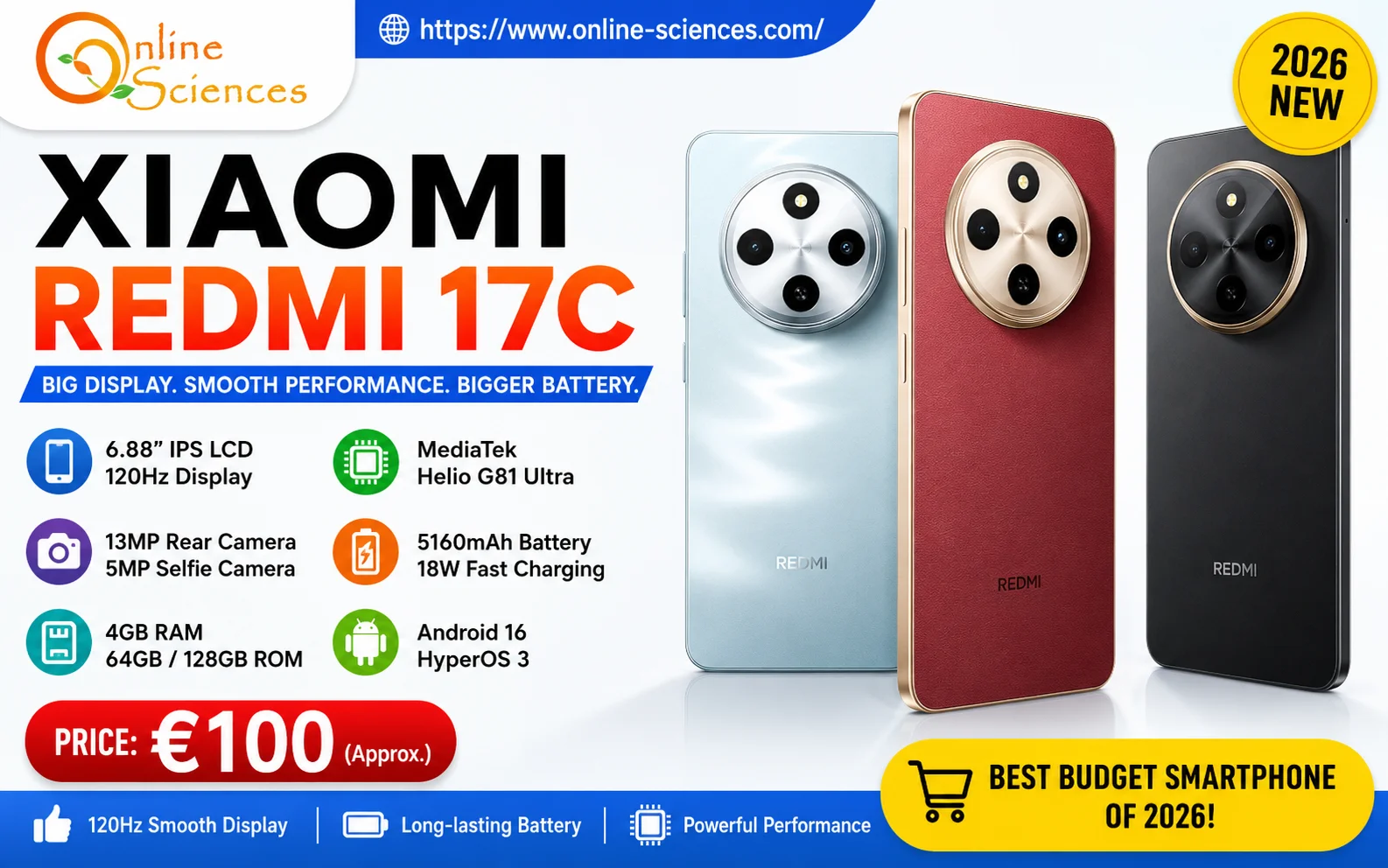
Xiaomi Redmi 17C is an affordable smartphone that combines a smooth 120Hz display, the efficient MediaTek Helio G81 Ultra processor, Android 16 with HyperOS 3, and a long-lasting 5160mAh battery. Designed for everyday users, it delivers reliable performance, decent cameras, and excellent value for money, making it one of the best budget smartphones to consider in 2026.
Xiaomi Redmi 17C
Xiaomi Redmi 17C Review
The Xiaomi Redmi 17C is one of Xiaomi’s latest budget smartphones for 2026, offering a 120Hz display, Android 16 with HyperOS 3, MediaTek Helio G81 Ultra processor, and a large 5160mAh battery at an affordable price of around €100. It is designed for users who need a reliable everyday smartphone without spending a fortune.
Although it doesn’t include premium features like 5G or NFC, the Redmi 17C delivers excellent value thanks to its smooth display, dependable battery life, expandable storage, and clean software experience.
Xiaomi Redmi 17C: Designed for Everyday Performance
The Xiaomi Redmi 17C combines modern software with practical hardware to deliver a balanced smartphone experience. Whether you’re browsing social media, streaming videos, making video calls, or handling daily tasks, the device performs smoothly while maintaining excellent battery efficiency. Its lightweight software optimization through HyperOS 3 also improves responsiveness compared to previous Redmi C-series smartphones.
Xiaomi Redmi 17C Specifications
- Display: 6.88-inch IPS LCD, 120Hz.
- Resolution: 720 × 1640 pixels.
- Operating System: Android 16, HyperOS 3.
- Processor: MediaTek Helio G81 Ultra.
- CPU: Octa-core.
- GPU: Mali-G52 MC2.
- RAM: 4GB.
- Storage: 64GB / 128GB.
- Expandable Storage: Yes, dedicated microSD slot.
- Rear Camera: 13MP.
- Front Camera: 5MP.
- Video Recording: 1080p@30fps.
- Battery: 5160mAh.
- Charging: 18W Wired (PD).
- Fingerprint: Side-mounted.
- Bluetooth: 5.4.
- Wi-Fi: Dual-band Wi-Fi ac.
- USB: USB Type-C 2.0.
- Headphone Jack: Yes.
- Weight: 206g.
- Colors: Black, Red, Light Blue.
- Price: Around €100
Xiaomi Redmi 17C Design and Build Quality
Xiaomi continues its practical design philosophy with the Redmi 17C. The device features:
- Glass front.
- Plastic frame.
- Plastic or eco-leather back.
- Slim 8.2mm profile.
- Comfortable grip.
- Side-mounted fingerprint scanner.
The eco-leather version offers a more premium appearance while resisting fingerprints better than glossy plastic finishes.
Display Review
One of the biggest highlights is the large 6.88-inch IPS LCD featuring a 120Hz refresh rate, which is uncommon in this price segment.
- Display Highlights.
- Smooth scrolling.
- Better gaming animations.
- Comfortable reading experience.
- 600 nits High Brightness Mode.
- Large screen for multimedia.
The HD+ (720 × 1640) resolution keeps power consumption low, helping extend battery life, although it is less sharp than Full HD displays.
Xiaomi Redmi 17C Performance Review
The Redmi 17C is powered by the MediaTek Helio G81 Ultra, a chipset optimized for entry-level and budget devices.
Daily performance is smooth for:
- Social media.
- Messaging.
- Web browsing.
- YouTube streaming.
- Online classes.
- Navigation.
- Casual gaming.
The Mali-G52 MC2 GPU can handle lighter games comfortably, while demanding titles may require lower graphics settings. For most users, the Redmi 17C offers responsive multitasking and stable performance thanks to HyperOS 3 optimizations.
Software Experience
Running Android 16 with HyperOS 3, the Redmi 17C benefits from:
- Improved memory management.
- Better battery optimization.
- Refreshed interface.
- Enhanced security.
- Smoother animations.
- Better app launching speeds.
HyperOS 3 also introduces improved resource management, helping budget hardware feel faster during everyday use.
Camera Review
The Redmi 17C features a 13MP rear camera with LED flash.
It performs well in:
- Daylight photography.
- Social media posts.
- Landscape shots.
- Document scanning.
The 5MP selfie camera is suitable for:
- Video calls.
- Selfies.
- Online meetings.
Both cameras support 1080p video recording at 30fps, providing decent video quality for casual users.
Battery Life
Battery life is one of the phone’s strongest features. The 5160mAh battery easily provides:
- Full-day heavy usage.
- Up to two days for moderate users.
- Long video playback sessions.
- Reliable standby performance.
The 18W wired charging with Power Delivery helps recharge the battery efficiently, though it is not among the fastest charging solutions available.
Connectivity
The Redmi 17C includes:
It also retains the increasingly rare 3.5mm headphone jack, making it convenient for users with wired headphones.
Xiaomi Redmi 17C Pros
- Affordable pricing.
- Smooth 120Hz display.
- Excellent battery life.
- Android 16 out of the box.
- HyperOS 3 optimization.
- Expandable storage.
- USB Type-C.
- Dedicated microSD slot.
- Headphone jack.
- Side fingerprint sensor.
Xiaomi Redmi 17C Cons
- No 5G connectivity.
- HD+ resolution only.
- Single rear camera.
- No NFC.
- Entry-level gaming performance.
Is the Xiaomi Redmi 17C Worth Buying?
If you’re looking for a dependable smartphone under €100, the Redmi 17C is an excellent choice. It focuses on the features that matter most to budget buyers: a smooth display, long battery life, reliable day-to-day performance, expandable storage, and modern software. While it lacks premium extras such as 5G and NFC, its overall value makes it one of the strongest entry-level smartphones available in 2026.
Frequently Asked Questions (FAQ) about Xiaomi Redmi 17C
1. Does the Xiaomi Redmi 17C support 5G?
No. The Redmi 17C supports GSM, CDMA, HSPA, and 4G LTE networks but does not support 5G connectivity.
2. Is the Redmi 17C good for gaming?
It is suitable for casual games and lighter titles. More demanding games can be played at lower graphics settings.
3. Does the Redmi 17C have expandable storage?
Yes. It includes a dedicated microSDXC card slot, allowing you to expand storage without sacrificing a SIM slot.
4. How long does the Redmi 17C battery last?
The 5160mAh battery can comfortably last a full day of heavy use and up to two days with moderate usage.
5. Does the Redmi 17C have a fingerprint scanner?
Yes. It features a fast and convenient side-mounted fingerprint sensor.
6. Is the Redmi 17C camera good?
The 13MP rear camera captures respectable photos in good lighting, while the 5MP front camera is adequate for selfies and video calls.
7. Does the Redmi 17C include a headphone jack?
Yes. It retains a 3.5mm audio jack for wired headphones and earphones.
8. What is the price of the Xiaomi Redmi 17C?
The Xiaomi Redmi 17C is priced at approximately €100, making it one of the most affordable Android smartphones with a 120Hz display in 2026.
Xiaomi Redmi 17C vs Redmi 16C
The Xiaomi Redmi 17C is a noticeable upgrade over the Redmi 16C, especially for users looking for a smoother and more modern smartphone experience. The Redmi 17C comes with a 6.88-inch IPS LCD display featuring a 120Hz refresh rate, making scrolling, gaming, and animations much smoother than the Redmi 16C’s lower refresh rate display. It also offers improved brightness, reaching up to 600 nits in High Brightness Mode, making the screen easier to view outdoors.
In terms of performance, the Redmi 17C is powered by the MediaTek Helio G81 Ultra processor, delivering better efficiency and faster everyday performance than the chipset used in the Redmi 16C. Combined with Android 16 and HyperOS 3, the Redmi 17C provides a more responsive interface, improved multitasking, enhanced security, and better software optimization, giving it a longer software lifespan.
Both smartphones are designed for everyday tasks such as web browsing, social media, messaging, video streaming, and light gaming. However, the Redmi 17C handles multitasking more smoothly thanks to its updated processor and optimized software. Casual gamers will also notice slightly better graphics performance and improved stability during gameplay.
The camera setup remains simple on both devices, but the Redmi 17C’s 13MP rear camera benefits from improved image processing, producing clearer photos with better color reproduction in good lighting conditions. The 5MP front camera is suitable for selfies, online meetings, and video calls, while both front and rear cameras support 1080p video recording at 30fps.
Battery life is another strong point for both phones, but the Redmi 17C’s 5160mAh battery works more efficiently with the Helio G81 Ultra chipset and HyperOS 3, allowing users to enjoy longer screen time. It also supports 18W wired charging via USB Type-C, making recharging convenient for everyday use.
Both devices include practical features such as a side-mounted fingerprint scanner, 3.5mm headphone jack, dedicated microSD card slot, Bluetooth, and dual-band Wi-Fi. However, neither smartphone supports 5G or NFC, keeping the focus on affordability and essential features.
Overall, the Xiaomi Redmi 17C is the better choice for most buyers. Its smoother 120Hz display, newer Android 16 operating system, HyperOS 3, improved processor, brighter screen, and better software optimization make it a worthwhile upgrade over the Redmi 16C while remaining one of the best-value budget smartphones in 2026.
The Redmi 17C improves the user experience with a smoother display, updated software, and better overall optimization, making it a worthwhile upgrade over its predecessor.
You can subscribe to Science Online on YouTube from this link: Science Online