DARPA Robotics Review – Features, Definition, Advantages, Disadvantages & FAQ
Defense Advanced Research Projects Agency (DARPA) Robotics refers to advanced robotic systems developed or funded by DARPA to perform complex and dangerous tasks that are difficult or unsafe for humans. DARPA Robotics is not a single robot, but a group of advanced robotics research projects.
DARPA Robotics
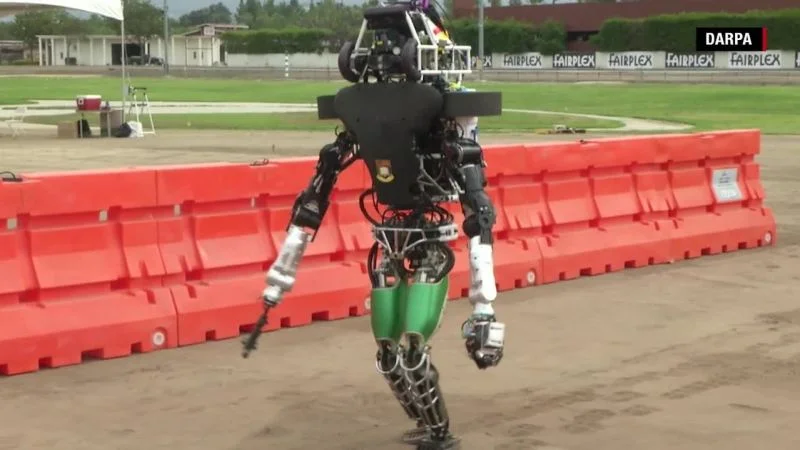
Defense Advanced Research Projects Agency (DARPA) Robotics refers to advanced robotics programs developed or funded by DARPA to create intelligent machines capable of assisting humans in dangerous environments, especially during disasters and military operations. One of the most famous programs was the DARPA Robotics Challenge, which focused on building robots capable of responding to natural or man-made disasters.
What is DARPA Robotics?
DARPA Robotics is not a single robot. It is a collection of research programs and competitions aimed at developing highly advanced autonomous and semi-autonomous robots. These robots are designed to perform complex tasks that are too dangerous for humans. DARPA supports research programs that improve robot intelligence, mobility, perception, and autonomy. One of its well-known programs was the DARPA Robotics Challenge, which focused on creating robots capable of assisting in disaster situations.
DARPA Robotics
Uses of DARPA Robotics
DARPA robotics technologies are used in:
- Disaster Response: Robots can enter collapsed buildings, nuclear sites, or fire zones to rescue victims and reduce risk to human rescuers.
- Military Applications: Robotic systems assist in surveillance, bomb disposal, logistics, and hazardous missions.
- Search and Rescue Operations: Robots can navigate rough terrain, climb stairs, and operate in dangerous environments.
- Industrial and Hazardous Environments: They can handle toxic materials, radiation zones, and high-risk industrial sites.
- Robotics Research and Innovation: DARPA programs accelerate the development of humanoid robots, artificial intelligence, and autonomous systems used worldwide.
Why DARPA Robotics Is Important
- DARPA robotics protects human life in dangerous missions.
- DARPA robotics advances in AI and robotic engineering.
- DARPA robotics improves national security technologies.
- DARPA robotics supports emergency response capabilities.
Features of DARPA Robotics Systems
- Advanced artificial intelligence.
- Autonomous navigation.
- Human-like mobility (walking, climbing stairs).
- Object manipulation (turning valves, opening doors).
- Remote operation capability.
- High adaptability to unpredictable environments.
What Can DARPA Robots Do?
DARPA robots can walk on rough terrain, climb stairs, and climb ladders. They can drive vehicles, open doors, use tools, turn industrial valves, cut through walls, assist in disaster response, and operate in hazardous environments (e.g., radiation and fire zones).
Advantages of DARPA Robotics
DARPA robot reduces the risk to human life. It operates in extreme conditions. It supports disaster relief operations. It encourages innovation in robotics and AI, and it improves national security technologies.
Disadvantages of DARPA Robotics
- Very expensive development costs.
- Complex maintenance requirements.
- Limited battery life.
- Ethical concerns about military robotics.
- Not fully autonomous in all conditions.
Importance of DARPA Robotics
DARPA Robotics programs have accelerated the development of humanoid robots and AI-driven machines used in:
- Search and rescue.
- Military defense.
- Space exploration research.
- Industrial automation.
- They have influenced the robotics industry worldwide.
FAQ about DARPA Robotics
Is DARPA Robotics a single robot?
No, it is a research initiative that includes multiple robotics projects and competitions.
What was the goal of the DARPA Robotics Challenge?
To develop robots capable of assisting humans during disaster response situations.
Are DARPA robots fully autonomous?
Many DARPA robots are semi-autonomous and still require human supervision.
Are DARPA robots used in real disasters?
Some technologies developed through DARPA programs have been adapted for real-world rescue systems.
Who can participate in DARPA robotics competitions?
Universities, research institutions, and robotics companies worldwide.
You can subscribe to Science Online on YouTube from this link: Science Online
Retail robot importance, drawbacks, what are robots in retail? and will robots take over retail?
Serial Robots review, advantages, disadvantages and what can serial robots do?
Collaborative robot arm (cobot robots) applications, uses, advantages and disadvantages
Automation in manufacturing uses, advantages and disadvantages
Industrial robot (Auto industry) uses, advantages and disadvantages