
Gemini 4 Argon: 7 Powerful AI Features, Expected Capabilities, and What to Know
Gemini 4 Argon is a name attracting curiosity among people interested in Google’s next generation of artificial intelligence. Could it introduce smarter reasoning, faster responses, advanced AI agents, and more powerful multimodal capabilities? Although its official specifications and release status need confirmation, exploring the possibilities behind a future Gemini model helps explain where AI technology may be heading.
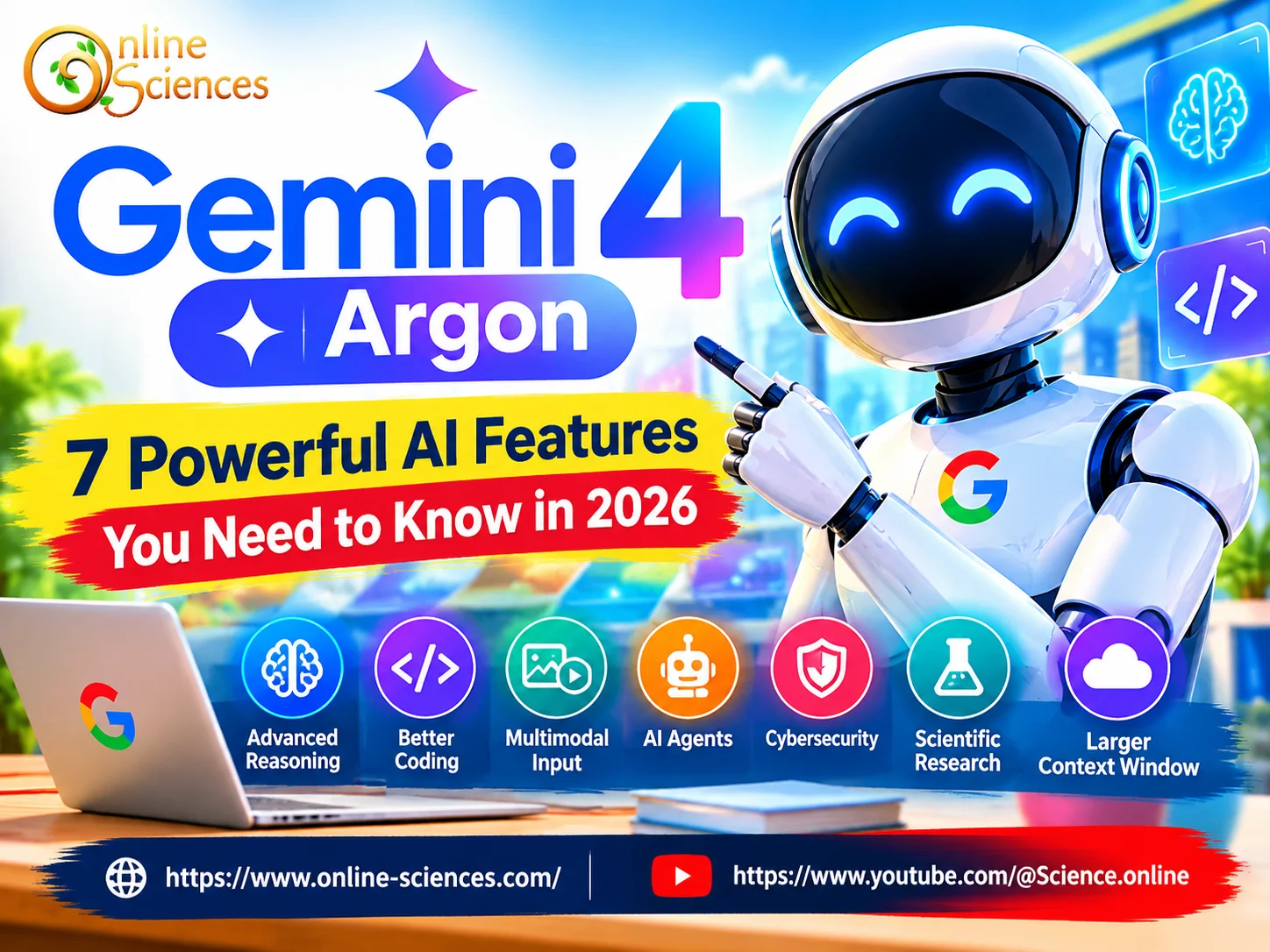
Gemini 4 Argon
What is Gemini 4 Argon?
Gemini 4 Argon is a name that may be used to describe a potential future development in Google’s Gemini artificial intelligence ecosystem. However, readers should distinguish between officially announced Google products and names circulating in online discussions. Without a verified announcement from Google, Gemini 4 Argon should not be treated as a confirmed product with established specifications.
Google’s Gemini family is designed to help people perform tasks involving language, reasoning, coding, image understanding, and other forms of digital information. As AI technology advances, future models may become better at handling complex instructions, connecting information across different formats, and helping users complete tasks more efficiently.
The interest in Gemini 4 Argon reflects a broader question: what will the next generation of AI assistants be able to do, and how will these systems change the way people work, learn, and create?
7 Potential Gemini 4 Argon features
1. More Advanced AI Reasoning
One important direction for future AI development is improved reasoning. Users increasingly expect AI assistants to do more than produce quick answers. They want systems that can compare alternatives, explain complicated ideas, solve multistep problems, and identify mistakes in their own work.
A future Gemini model could build on these goals by improving its ability to organize information and handle complicated requests. Such improvements could benefit students, researchers, engineers, developers, and professionals who need assistance with demanding tasks.
However, the actual reasoning performance of Gemini 4 Argon cannot be assessed without verified technical documentation and independent testing.
2. Smarter Multimodal Capabilities
Multimodal AI can work with different types of information, such as text, images, audio, and video, depending on the model and supported features.
Future Gemini systems may continue developing these capabilities, making it easier for users to ask questions about photographs, understand visual information, summarize supported media, or combine several information sources in one workflow.
For example, a student might use an AI assistant to explain a diagram, while a content creator could use it to organize research for an educational video. Engineers might explore how AI can help interpret technical illustrations or explain complex concepts. The specific multimodal features available in any product called Gemini 4 Argon remain unconfirmed.
3. Better AI Coding Assistance
Artificial intelligence is changing software development by helping programmers understand code, find errors, generate examples, and learn unfamiliar programming languages. A future Gemini model could potentially improve these workflows through stronger code analysis, more useful explanations, and better support for complex software projects.
Developers may benefit from tools that can explain an unfamiliar codebase, suggest debugging strategies, write test cases, and help document software. Students learning Python, JavaScript, or other programming languages could also use AI assistance to understand programming concepts.
Nevertheless, AI-generated code must be reviewed, tested, and checked for security problems. More advanced language models do not automatically produce flawless software.
4. AI Agents That Can Complete Multistep Tasks
AI agents are systems designed to work toward a goal by carrying out multiple steps, sometimes using tools or interacting with supported applications.
For example, an AI agent might help organize research, prepare a report, analyze information, and draft a presentation. More advanced systems may coordinate several stages of a workflow while asking the user for approval when necessary.
Future Gemini developments could make these workflows more reliable and useful. Better planning, tool selection, and error recovery would be important improvements.
However, these possibilities should not be interpreted as confirmation that Gemini 4 Argon includes autonomous agents or can operate every application. Actual functionality depends on the released product, available integrations, permissions, and safety controls.
5. Faster and More Efficient Responses
Speed and efficiency are important considerations when comparing AI models. Users want useful responses without unnecessary waiting, while businesses may need systems that can handle large workloads at a reasonable cost. Future AI systems could improve efficiency through optimized model architectures, specialized processing, or different approaches to managing complex requests.
For everyday users, better efficiency could mean smoother conversations and more responsive tools. For developers, it could help make AI-powered applications more practical. Still, no reliable performance figures, processing speeds, or cost estimates can be attributed to Gemini 4 Argon without official information.
6. More Personalized AI Assistance
Personalization can make an AI assistant more useful by allowing it to adapt to a user’s preferences, goals, and working style when supported memory features and privacy settings are available. A future AI assistant might help users maintain consistent writing styles, organize recurring projects, or adapt explanations to different skill levels.
For example, a teacher could request explanations suitable for beginners, while an experienced programmer could ask for more technical details. A science website owner could use AI to brainstorm article topics, prepare educational scripts, and develop search-friendly content.
Personalization also requires careful attention to privacy. Users should understand what information an AI service retains, how memory settings work, and which permissions they have granted. There is currently no verified basis for claiming that Gemini 4 Argon introduces any particular personalization feature.
7. Stronger Integration With Google’s Digital Tools
Google’s AI ecosystem includes products and services for communication, productivity, information management, and software development. Depending on the product and subscription, Gemini features may be available through different Google services.
Future developments could make it easier to move between research, document creation, coding, and other tasks. Such integration could reduce repetitive work and help users organize information more effectively.
For businesses, AI integration may support document analysis and administrative workflows. Students could benefit from study assistance, while creators might use supported tools to develop scripts and organize research.
However, integrations, availability, regional access, and subscription requirements must be checked against official product documentation rather than assumed from the Gemini name.
How Could Gemini 4 Argon Compare With Earlier Gemini Models?
The most useful way to evaluate a new AI model is to compare verified performance rather than rely on its name or promotional claims. Important comparison categories include reasoning accuracy, coding performance, multimodal understanding, response speed, context handling, tool use, privacy controls, and pricing.
Independent benchmarks can help reveal strengths and weaknesses, but benchmark scores alone do not tell the whole story. A model that performs well on a mathematical test may not necessarily be the best choice for writing, research, or everyday productivity.
Users should also consider reliability. An AI assistant can generate convincing but incorrect information, so important facts should be checked against trustworthy sources. Until Google confirms the identity and specifications of Gemini 4 Argon, a meaningful numerical comparison with existing Gemini models would be premature.
What Could a Future Gemini Model Mean for Everyday Users?
The next stage of AI development could make digital assistants more useful in education, business, scientific research, software development, and creative work.
Students may benefit from personalized explanations and practice questions. Researchers could use AI to organize literature searches and summarize complex material. Businesses might automate repetitive administrative tasks, while content creators could streamline brainstorming, drafting, and production planning.
These benefits depend on the quality of the underlying model, the tools it can access, and how carefully people review its output. AI should support human judgment rather than replace it in situations that require professional expertise, careful verification, or accountability.
Is Gemini 4 Argon Worth Waiting For?
Whether Gemini 4 Argon is worth waiting for depends on whether Google officially announces a product under that name and what the final specifications reveal.
If you need an AI assistant today, compare currently available tools according to your actual requirements. Test how well they handle your preferred tasks, check their privacy policies, and review any usage limits or subscription costs.
If a new Gemini model is announced, look for official release notes, supported features, regional availability, pricing, and independent evaluations. These details will provide a much stronger basis for deciding whether it offers a meaningful improvement.
Final Thoughts
Gemini 4 Argon raises interesting questions about the future of Google’s artificial intelligence technology, particularly in reasoning, multimodal interaction, coding, and AI-powered workflows. These are important areas of AI research, but potential capabilities should not be confused with confirmed product features.
For now, readers should treat the name cautiously and wait for reliable confirmation before accepting claims about its launch date, performance, or technical specifications. As the Gemini ecosystem evolves, verified information and independent testing will remain the best ways to understand what new AI models can actually deliver.
Frequently Asked Questions (FAQ) about Gemini 4 Argon
1. What is Gemini 4 Argon?
Gemini 4 Argon is a name associated with interest in a potential Google AI development, but its official product status and specifications have not been confirmed here.
2. Has Google officially released Gemini 4 Argon?
An official release could not be verified. Check Google’s official Gemini announcements and product documentation for the latest confirmed information.
3. What features could Gemini 4 Argon offer?
Potential areas of development include advanced reasoning, multimodal understanding, coding assistance, AI agents, efficiency, and productivity integrations. These are possibilities, not verified features of a confirmed product.
4. Will Gemini 4 Argon be better than previous Gemini models?
That cannot be established without an official model release and reliable comparative testing. Performance may differ across reasoning, coding, image understanding, speed, and other tasks.
5. Is Gemini 4 Argon free?
Its pricing and availability are unconfirmed. Check the official Google Gemini website for current access options, subscription requirements, and regional restrictions.
6. When will Gemini 4 Argon be released?
No verified release date can be provided. Avoid relying on unofficial launch dates unless they are supported by credible evidence.
7. Could Gemini 4 Argon help with coding and content creation?
Future AI models may support coding, writing, research, and other creative workflows. The capabilities of a specific product must be confirmed and tested before making definitive claims.
8. Where can I find official Gemini 4 Argon news?
Start with Google’s official Gemini website, Google blog announcements, and developer documentation. These sources are preferable to unverified social media posts or speculative reports.
Explore more AI innovations and emerging technologies on Science Online
and subscribe to the Science Online YouTube channel
🔥 Gemini 4 Argon: 7 Powerful AI Features to Discover in 2026 🔥 🚀
🔥 Google Gemini AI Agents: 10 Powerful New Features You Need to See in 2026 🚀
🔥 Google Gemini Notebook Just Changed AI Forever! 10 Powerful New Features You NEED to See (2026) 🚀
Goodbye Google Assistant: Can Your Android Phone Actually Run Gemini? 🚀
Goodbye Google Assistant? 10 Powerful Reasons Gemini AI Is the Future in 2026
Will Gemini AI Replace Google Assistant? The Ultimate Guide to Google’s Powerful AI Upgrade 2026
Google Assistant Review 2026: Features, Pros, Cons and What It Can Do
Gemini AI review, advantages, disadvantages and Is Gemini AI better than ChatGPT?
ChatGPT review, features, advantages and disadvantages
Google Bard AI chatbot advantages, disadvantages, review, features and Bard vs ChatGPT