
Google Assistant Review 2026: Features, Pros, Cons & What It Can Do
Google Assistant is an AI-powered virtual assistant developed by Google. It uses natural language processing and voice recognition to understand user commands and respond intelligently. It can perform a wide range of tasks, such as answering questions, setting reminders, playing music, providing directions, and controlling smart home devices—all through simple voice commands like “Hey Google.”
What is Google Assistant?
Google Assistant is an AI-powered virtual assistant developed by Google. It uses natural language processing and voice recognition to help users perform tasks, answer questions, and control smart devices. Available on smartphones, smart speakers, and other devices, Google Assistant has become one of the most widely used digital assistants worldwide.
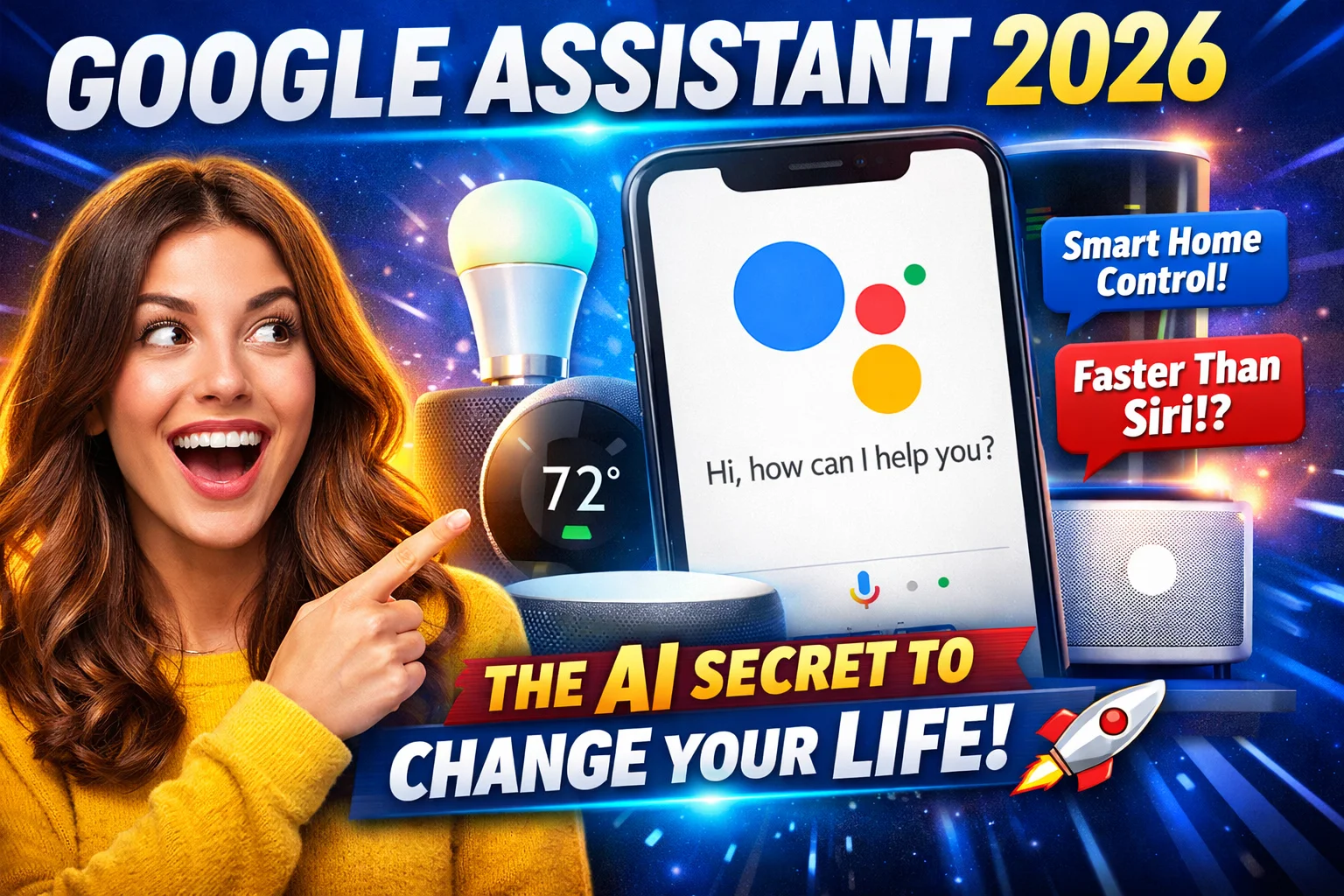
Google Assistant
Google Assistant Review
Google Assistant is considered one of the most advanced voice assistants thanks to its powerful AI, deep integration with Google services, and accurate responses. Compared to competitors like Siri and Amazon Alexa, it often delivers faster and more context-aware results. Its ability to understand follow-up questions and provide personalized responses makes it highly efficient for daily use, whether for productivity, entertainment, or smart home control.
What is the meaning of “Assistant”?
An assistant is a person or tool that helps someone complete tasks or makes work easier. It can refer to a human helper or a digital system like Google Assistant, which supports users by performing actions or providing information.
What is an Assistant in a job?
In a job context, an assistant is an employee who supports a manager, team, or organization with daily tasks. Their responsibilities may include organizing schedules, handling emails, preparing documents, managing data, or assisting in decision-making processes. Examples include administrative assistants, personal assistants, and office assistants.
What is an Assistant also called?
An assistant can also be called:
- Helper.
- Aide.
- Support staff.
- सचिव / Secretary (in office roles).
- Associate (in some workplaces).
- Virtual assistant (for AI tools like Google Assistant).
The exact term depends on the context and the type of work being performed.
Features of Google Assistant
- Voice Commands & Conversations: It understands natural speech and context.
- Smart Home Control: It works with devices like lights, thermostats, and TVs.
- Integration with Google Services: It seamlessly connects with Gmail, Maps, Calendar, and more.
- Real-Time Information: Weather updates, news, traffic, and reminders.
- Multilingual Support: It supports multiple languages, including Arabic.
- Routine Automation: It can perform multiple actions with one command.
- AI-Powered Suggestions: Personalized recommendations based on usage.
What Can Google Assistant Do?
- Google Assistant can help you in many aspects of daily life:
- Manage Tasks: It can set alarms, reminders, and schedules.
- Navigation: It can get directions using Google Maps.
- Entertainment: It can play music, videos, and podcasts.
- Smart Home Control: It can turn devices on/off remotely.
- Communication: It can make calls or send messages.
- Answer Questions: It can provide instant, accurate information.
- Shopping Help: It can create lists and track orders.
Advantages of Google Assistant
- Highly accurate voice recognition.
- Fast and relevant search results.
- Deep integration with the Google ecosystem.
- It supports a wide range of devices.
- Continuous updates and AI improvements.
- Free to use.
Disadvantages of Google Assistant
- It requires an internet connection for most features.
- Privacy concerns related to data collection.
- Limited offline functionality.
- Some features depend on device compatibility.
- It can occasionally misinterpret complex commands.
Google Assistant vs Competitors
- Google Assistant vs Siri: Google Assistant is better in search and contextual understanding.
- Google Assistant vs Amazon Alexa: Alexa excels in smart home integration, but Google Assistant is smarter in answering queries.
- Google Assistant vs Samsung Bixby: Google Assistant is more widely supported and reliable.
FAQ about Google Assistant
1. Is Google Assistant free?
Yes, it is completely free to use on supported devices.
2. Does Google Assistant work offline?
Some basic features work offline, but most functions require internet access.
3. Is Google Assistant safe to use?
It is generally safe, but users should review privacy settings to control data usage.
4. Can Google Assistant speak Arabic?
Yes, it supports Arabic along with many other languages.
5. What devices support Google Assistant?
Android phones, smart speakers, smart TVs, and even some cars and wearables.
6. How is Google Assistant activated?
You can say “Hey Google” or press a dedicated button on your device.
You can follow science online on YouTube from this link: Science online
Claude AI advantages, disadvantages, features and Is Claude better than GPT 4?
Claude Sonnet 4.5 features, advantages, disadvantages, Is Claude Sonnet 4 better than GPT 4?
Gemini AI review, advantages, disadvantages and Is Gemini AI better than ChatGPT?
ChatGPT review, features, advantages and disadvantages
Google Bard AI chatbot advantages, disadvantages, review, features and Bard vs ChatGPT
Artificial intelligence marketing (AI Marketing) importance, features & Chatbots
Applications of Artificial intelligence marketing, How ai is changing marketing & advertising
Benefits & application of Artificial intelligence in business, E-commerce and marketing
Applications of Artificial Intelligence (AI) in Banking and Finance