Importance and Uses of Lasers in the Industry: 15 Powerful Applications Transforming Modern Manufacturing
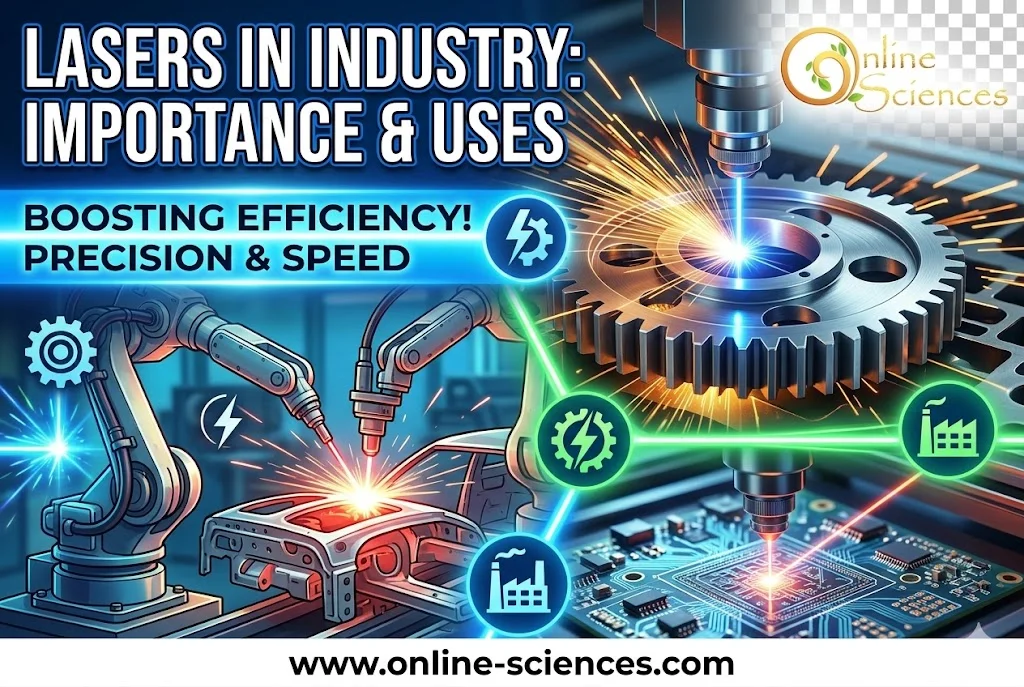
The importance and uses of lasers in the industry continue to grow as manufacturers seek faster, cleaner, and more accurate production methods. Industrial lasers improve product quality, enhance workplace safety, support automation, and enable the production of complex components that would be difficult or impossible to produce with traditional manufacturing techniques.
Importance and Uses of Lasers in the Industry
Lasers in the industry
The lasers are used to drill, weld, cut, and mark all sorts of materials. They can drill the tiny holes in the turbine blades more quickly and less expensively than mechanical drills. The laser welding is one of many techniques for joining materials. The laser welding has high processing speeds with no tool wear due to a contact-free process.
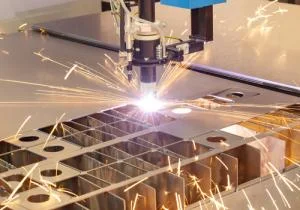
The lasers cut with better edge quality than most mechanical cutters; the edges of the metal parts cut by the lasers rarely need to be filed or polished because the laser makes such a clean cut.
The laser has a high weld aspect ratio.
The industrial applications for high average power fiber lasers include cutting of hydroformed automotive frames, blank welding for the automotive industry, Titanium welding of the aircraft skins, and laser cladding for the aerospace and oil industries.
The lasers are used in battery welding for the medical device industry, pacemaker welding for the medical device industry, transmission welding for the automotive industry, and sheet metal cutting.
The laser welding of metal can be differentiated between keyhole welding and heat conduction welding. A selection of plastics can be successfully welded by using a diode laser.
The laser cladding is a process where the material is added to the melt pool on the surface of a part in the form of powder or wire to create a surface layer with different properties.
The coherent lasers offer the superior overall-clad quality. They reduced the heat input, the minimal part distortion, and better-clad deposition control, resulting in reduced dilution, lower porosity, and better surface uniformity.
The laser scissors cut the patterns for the clothes. The laser scissors can work on a microscopic level; they are not used only in the industry but also in biological research. The laser processing is easily automated to allow the computer and the robot to control.
The laser processes include converting, such as drilling of the foils for vegetable packages to make them breathable or the cigarette paper to control the strength of cigarettes, and it is used in cutting of the medical components like blood testers.
Importance and Uses of Lasers in the Industry
Lasers have become one of the most important technologies in modern industry due to their exceptional precision, speed, and versatility. Their ability to produce highly concentrated beams of light enables manufacturers to cut, weld, engrave, measure, and inspect materials with remarkable accuracy. From automotive production to electronics, aerospace, and medical device manufacturing, lasers have transformed industrial processes by increasing productivity while reducing waste and production costs.
Precision Laser Cutting
Laser cutting is one of the most widely used industrial applications. High-powered laser beams cut metals, plastics, wood, glass, ceramics, and composite materials with exceptional precision.
Benefits include:
- Smooth and clean edges.
- Minimal material waste.
- High-speed production.
- Ability to cut complex shapes.
- Reduced need for additional finishing.
Laser Welding
Laser welding produces strong, accurate, and durable joints while generating less heat than conventional welding methods. This minimizes material distortion and allows manufacturers to join delicate components with exceptional precision.
Laser welding is widely used in:
- Automotive manufacturing.
- Aerospace engineering.
- Medical devices.
- Battery production.
- Electronics assembly.
Laser Engraving and Marking
Industrial lasers permanently engrave serial numbers, logos, QR codes, barcodes, and product information onto a wide variety of materials without physical contact.
Laser marking offers:
- Permanent identification.
- High-speed processing.
- Excellent readability.
- Resistance to wear and corrosion.
- Counterfeit protection.
Laser Drilling
Laser drilling creates extremely small and accurate holes in metals, ceramics, semiconductors, and other advanced materials.
Applications include:
- Aircraft engine components.
- Electronic circuit boards.
- Fuel injectors.
- Medical implants.
- Precision instruments.
Laser Cleaning
Laser cleaning removes rust, paint, grease, oxide layers, and contaminants without damaging the underlying material. Unlike chemical cleaning, laser cleaning is environmentally friendly and generates minimal waste.
Common industries include:
- Shipbuilding.
- Automotive restoration.
- Historical monument preservation.
- Manufacturing maintenance.
- Aerospace maintenance.
Laser Surface Treatment
Lasers improve material properties through surface hardening, alloying, cladding, and heat treatment. These processes enhance wear resistance, corrosion resistance, and mechanical strength.
Industries benefiting include:
- Heavy machinery.
- Automotive parts.
- Industrial tools.
- Oil and gas equipment.
Additive Manufacturing (3D Printing)
Many industrial 3D printers use lasers to selectively melt metal powders layer by layer, producing highly complex parts with excellent mechanical properties.
Laser-based additive manufacturing is used in:
- Aerospace.
- Medical implants.
- Automotive engineering.
- Rapid prototyping.
- Custom manufacturing.
Quality Control and Inspection
Laser measurement systems perform highly accurate inspections during manufacturing without touching the product.
These systems measure:
- Thickness.
- Dimensions.
- Surface defects.
- Alignment.
- Distance.
- Product geometry.
This improves quality while reducing production errors.
Industrial Automation
Laser technology is integrated into robotic manufacturing systems, allowing automated cutting, welding, marking, inspection, and assembly with minimal human intervention.
Benefits include:
- Higher productivity.
- Consistent quality.
- Lower labor costs.
- Reduced human error.
- Faster production cycles.
Environmental Benefits
Laser manufacturing supports environmentally friendly production by:
- Reducing material waste.
- Lowering energy consumption.
- Eliminating many chemical cleaning agents.
- Minimizing emissions.
- Improving manufacturing efficiency.
Frequently Asked Questions (FAQ) about Lasers
1. What are lasers used for in industry?
Industrial lasers are used for cutting, welding, engraving, marking, drilling, cleaning, surface treatment, quality inspection, measurement, and additive manufacturing.
2. Why are lasers important in manufacturing?
Lasers provide exceptional precision, increase production speed, reduce waste, improve product quality, and support automated manufacturing systems.
3. Which industries use laser technology?
Many industries rely on lasers, including automotive, aerospace, electronics, medical device manufacturing, construction, shipbuilding, jewelry, defense, and heavy engineering.
4. What materials can industrial lasers process?
Industrial lasers can process steel, aluminum, titanium, copper, plastics, wood, glass, ceramics, rubber, textiles, and composite materials.
5. What are the advantages of laser cutting?
Laser cutting offers high precision, smooth edges, minimal waste, fast production, reduced finishing requirements, and the ability to create complex designs.
6. Is laser cleaning environmentally friendly?
Yes. Laser cleaning eliminates many chemical solvents, reduces waste, and removes contaminants without damaging the underlying material, making it a cleaner alternative to traditional methods.
7. How do lasers improve quality control?
Laser inspection systems accurately measure dimensions, detect defects, monitor alignment, and ensure products meet strict manufacturing standards.
8. Are industrial lasers safe?
Yes, when proper safety procedures are followed. Operators use protective eyewear, enclosed workstations, safety sensors, and controlled operating environments to minimize risks.
9. Can lasers reduce manufacturing costs?
Yes. Lasers improve efficiency, reduce material waste, lower maintenance needs, minimize production errors, and shorten manufacturing time, resulting in significant cost savings.
10. What is the future of industrial laser technology?
Future developments include AI-powered laser systems, smarter robotic automation, ultra-fast laser processing, advanced additive manufacturing, and more energy-efficient laser equipment.
Conclusion
The importance and uses of lasers in the industry continue to expand as manufacturing becomes more advanced and automated. From precision cutting and welding to engraving, cleaning, 3D printing, and quality inspection, laser technology delivers unmatched accuracy, speed, and efficiency. As industries adopt smarter production methods, lasers will remain at the forefront of innovation, helping manufacturers produce higher-quality products while reducing costs, waste, and environmental impact.
You can follow science online on YouTube from this link: Science online