Robonaut 2 (R2) review, Why was Robonaut 2 sent to space?, How does Robonaut 2 help astronauts?
Robonaut 2 (R2) is a humanoid robot developed by NASA in collaboration with General Motors. It was designed to assist astronauts with tasks in space, especially aboard the International Space Station (ISS). Unlike traditional robots, R2 mimics human movements, making it capable of using the same tools designed for astronauts.
Robonaut 2 (R2)
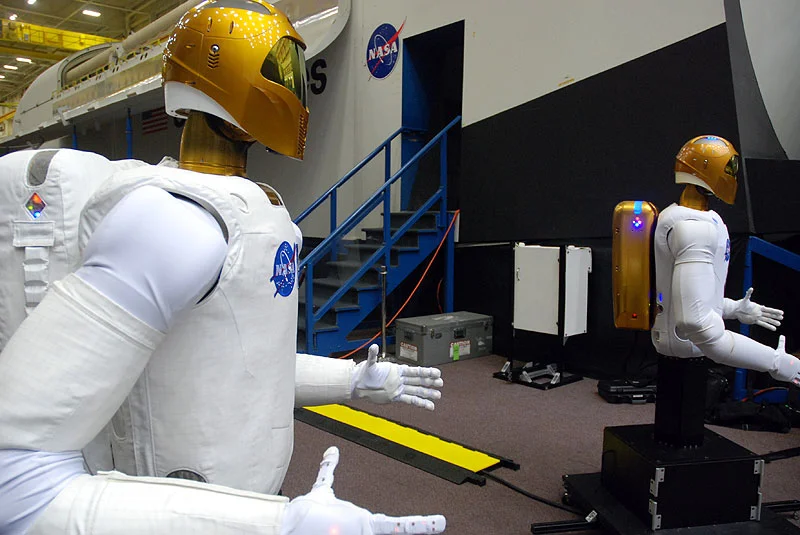
Robonaut 2 (R2) is a humanoid robot developed by NASA in partnership with General Motors. It was designed to work alongside astronauts, especially on the International Space Station (ISS), by performing tasks that are either dangerous, repetitive, or require high precision. R2 is built to resemble a human upper body, allowing it to use the same tools and operate in environments designed for humans.
Robonaut 2 represents a major step forward in space robotics. It combines advanced dexterity, vision systems, and artificial intelligence to perform delicate and repetitive tasks. While it has shown great promise, operational challenges and technical limitations have slowed its full deployment.
Robonaut 2
Use of Robonaut 2
Robonaut 2 has several important uses in space missions, including:
- Astronaut Assistance: Robonaut 2 helps astronauts with routine maintenance and repair tasks.
- Handling Dangerous Jobs: Robonaut 2 can perform risky operations, reducing human exposure to hazards.
- Repetitive Work: Robonaut 2 takes over time-consuming tasks, saving astronauts’ energy.
- Scientific Support: Robonaut 2 assists in conducting experiments in microgravity.
- Tool Operation: Robonaut 2 uses standard human tools aboard the ISS.
- Future Space Exploration: Robonaut 2 paves the way for robots to support missions to the Moon and Mars.
Why It Matters
Robonaut 2 represents a major step toward integrating robots into human space missions. Working alongside astronauts, it increases safety, efficiency, and productivity in space environments.
Features of Robonaut 2
- Human-like Hands: Highly dexterous fingers for precise work.
- Advanced Vision System: Cameras and sensors for depth and object detection.
- Artificial Intelligence: Semi-autonomous task execution.
- Tool Compatibility: Robonaut 2 can use tools designed for humans.
- Space-Ready Design: Robonaut 2 is built to function in microgravity.
- High Dexterity: More flexible than earlier space robots.
What Can Robonaut 2 Do?
Robonaut 2 can assist astronauts with maintenance tasks. It can handle dangerous operations (reducing human risk). It can perform repetitive or time-consuming work. It can support scientific experiments. It can operate tools and equipment inside the ISS.
Advantages of Robonaut 2
Robonaut 2 reduces risk to astronauts. It saves time on routine tasks. It offers high precision and flexibility. It works in hazardous environments. and it enhances long-term space mission efficiency.
Disadvantages of Robonaut 2
Robonaut 2 is expensive to develop and maintain. It has limited autonomy (still needs human control). Technical malfunctions have occurred. It is not fully operational for all mission tasks, and it requires complex support systems.
FAQ about Robonaut 2
1. What is Robonaut 2 used for?
It is used to assist astronauts with maintenance, research, and potentially dangerous tasks in space.
2. Where was Robonaut 2 used?
It was primarily tested and used aboard the International Space Station.
3. Can Robonaut 2 replace astronauts?
No, it is designed to assist—not replace—human astronauts.
4. Who developed Robonaut 2?
It was developed by NASA and General Motors.
5. Why is Robonaut 2 important?
It helps reduce risks and improve efficiency in space missions.
6. What makes Robonaut 2 different from other robots?
Robonaut 2 is designed to look and move like a human, allowing it to use the same tools and work in human environments.
7. Why was Robonaut 2 sent to space?
It was sent to help astronauts with tasks, especially those that are dangerous or repetitive.
8. Can Robonaut 2 work alone?
It has limited autonomy, but it usually needs human control or supervision.
9. What kind of tasks can Robonaut 2 perform?
It can perform maintenance, operate tools, assist in experiments, and handle equipment.
10. Is Robonaut 2 used outside the spacecraft?
Mostly, it was designed for use inside spacecraft like the International Space Station, but future versions may work outside.
11. How does Robonaut 2 see objects?
It uses cameras and sensors to detect objects and understand its surroundings.
12. What are the main parts of Robonaut 2?
It mainly has a head, torso, arms, and highly advanced hands.
13. Who controls Robonaut 2?
Astronauts or engineers on Earth can control it remotely.
14. What are the challenges of using Robonaut 2?
Technical issues, high cost, and limited independence are some challenges.
15. What is the future of robots like Robonaut 2?
They are expected to play a big role in future missions to the Moon and Mars.
16. Does Robonaut 2 have legs?
The original version does not have legs, but later upgrades aimed to add mobility.
17. How does Robonaut 2 help astronauts?
It saves time, reduces risks, and allows astronauts to focus on more important tasks.
You can follow Science Online on YouTube from this link: Science Online
Junko Chihira robot features, advantages and disadvantages, What can Junko Chihira do?
Advantages and disadvantages of using robots in our life
Elias robot review, advantages, disadvantages, and What robot teaches languages?
Robot teachers use, types, advantages, and disadvantages
Educational robotics, Robot teachers, Social robots review, features advantages and drawbacks
Artificial intelligence in education, AI tutors features, advantages and disadvantages
Pros and cons of technology in education and Can technology replace teachers?
The importance and uses of educational robotics for students