Tesla Bot Gen 4 UPDATE: 5000 Tasks as HOMEMAKER & Surgeon? Elon Musk SHOCKED Inside Optimus!
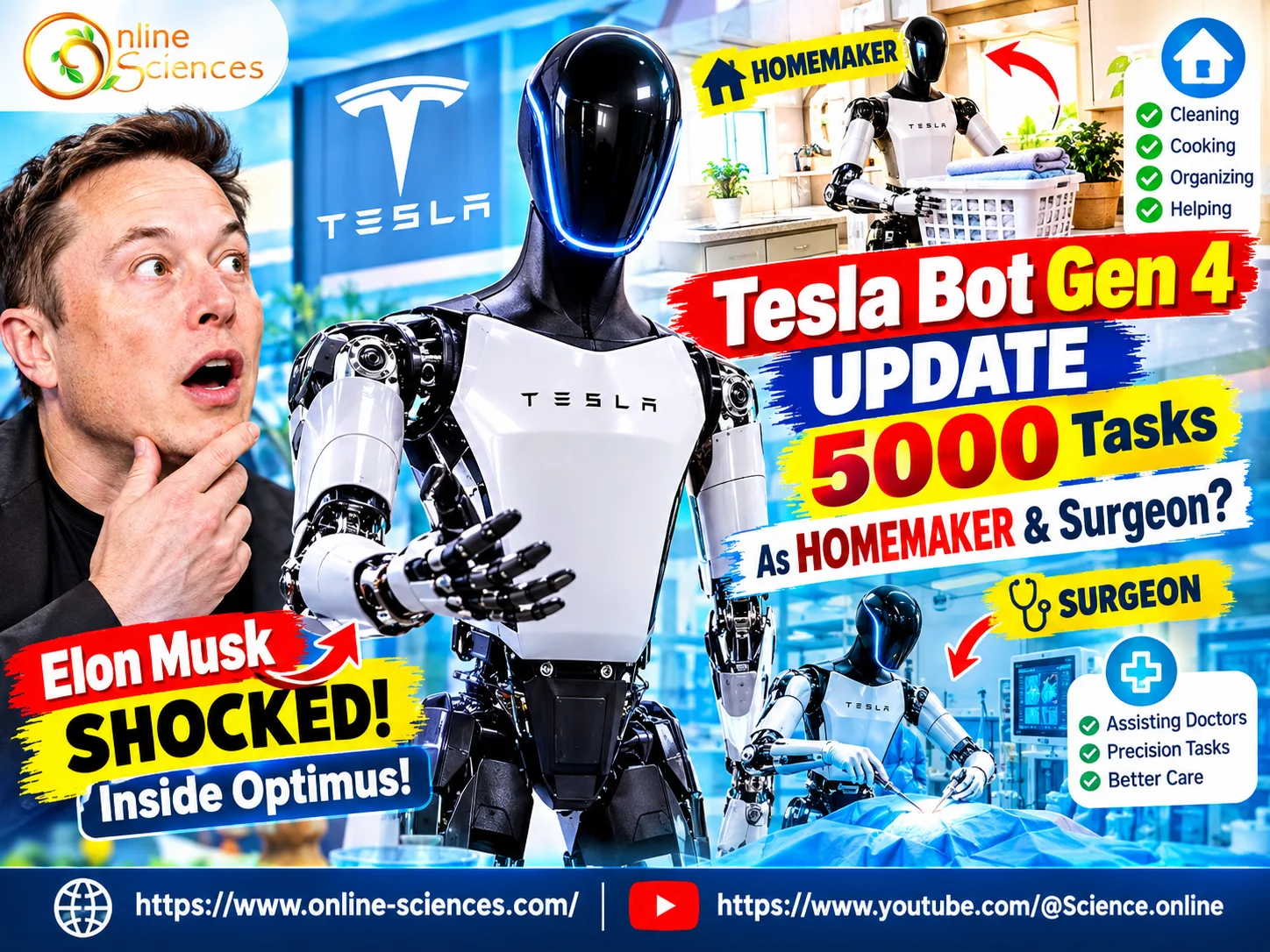
Tesla Bot Gen 4 is one of the most intriguing ideas surrounding the future of humanoid robotics. Online reports and videos have promoted claims that a future Optimus generation could eventually handle up to 5,000 tasks, including household work and highly precise medical applications. But what is actually confirmed today, and what remains a future goal? Tesla officially describes Optimus as a general-purpose, autonomous humanoid robot intended to perform unsafe, repetitive, or boring tasks, while the dramatic “5,000 tasks” and surgical claims should be treated as future-looking claims rather than established Gen 4 capabilities.
Tesla Bot Gen 4 UPDATE: 5000 Tasks
Tesla Bot Gen 4 and the Optimus Vision
Tesla Optimus is designed around the idea that a humanoid form can operate in environments created for humans. Instead of requiring completely redesigned factories or homes, a bipedal robot can potentially walk through existing spaces, manipulate objects, use human tools and interact with familiar equipment.
Tesla says its Optimus project requires sophisticated systems for balance, navigation, perception and interaction with the physical world. The company is applying its experience with artificial intelligence, computer vision, neural networks and inference hardware to humanoid robotics.
This makes the concept of a future Tesla Bot Gen 4 particularly interesting. A more capable generation could potentially combine better mechanical design with improved AI models, faster inference, more precise hands, and better understanding of physical environments. However, Tesla‘s official material currently describes the broader Optimus objective rather than confirming a commercial “Gen 4” specification or a verified 5,000-task capability.
The 5,000-Task Claim: What Does It Mean?
The phrase “5,000 tasks” has received significant attention in online Tesla and robotics coverage. A 2025 YouTube video discussing Optimus described a future progression toward thousands of useful tasks and associated the 5,000-task figure with a more advanced future generation.
It is important, however, to distinguish between a target, a prediction, a demonstration, and verified capability. A robot being technically capable of learning thousands of behaviors does not necessarily mean it can reliably perform 5,000 complex jobs independently in ordinary homes or workplaces.
For a humanoid robot, each task can involve many different challenges. Picking up a rigid object from a predictable location is relatively structured. Folding different types of clothing, recognizing fragile objects, cleaning a cluttered room or preparing food requires much greater perception, dexterity, and decision-making.
Therefore, the 5,000-task number is best presented as a future capability claim associated with Optimus discussions, rather than evidence that Tesla Bot Gen 4 already performs 5,000 autonomous tasks.
Could Optimus Become an AI Homemaker?
One of the most attractive applications for a future Tesla humanoid robot is the home. Tesla itself says Optimus is intended to help with daily activities such as household chores and errands. A sufficiently advanced Optimus could theoretically perform activities such as:
- Picking up objects from floors and tables.
- Carrying groceries.
- Loading or unloading household items.
- Cleaning surfaces.
- Vacuuming.
- Organizing objects.
- Opening and closing cabinets.
- Moving lightweight items.
- Helping with repetitive household routines.
- Assisting people with limited mobility.
Some of these behaviors have appeared in demonstrations or reports about Optimus, but demonstrations do not automatically prove reliable, fully autonomous performance in every home. The real challenge is generalization. A human can enter an unfamiliar kitchen and immediately adapt to different cupboards, utensils, lighting, objects, and obstacles. A useful home robot must eventually demonstrate comparable flexibility while maintaining safety.
Optimus and the Future of Surgery
The most dramatic part of the Tesla Bot Gen 4 story is the suggestion that Optimus could become a surgical robot. Humanoid robotics and medical robotics are related but very different fields. A robot demonstrating excellent hand movements does not automatically qualify as a surgical system. Surgery requires extremely high standards for precision, reliability, sterilization, safety, clinical validation, regulatory approval and human oversight.
A future humanoid platform might potentially assist healthcare workers with tasks around operating rooms, hospitals, laboratories or patient-care environments. More specialized robotic systems could also perform highly controlled movements.
But there is currently a major distinction between “could eventually assist with surgical tasks” and “is an autonomous surgeon.” The latter would require extensive clinical evidence and regulatory authorization. Therefore, the “Optimus surgeon” idea is best understood as a future robotics concept, not as evidence that Tesla has already developed an approved autonomous surgical robot.
What AI Gives Tesla Optimus Its Potential?
AI is arguably the most important component of Optimus. Tesla describes its robotics strategy as involving perception, planning, navigation, balance and interaction with the physical world. The robot must continuously answer questions such as:
What am I looking at? Where is the object? Can I safely pick it up? How much force should I apply? Where should I move it? What happens if something unexpected blocks my path? These problems require a combination of computer vision, machine learning, motion planning, control systems and powerful onboard computing.
Tesla has also said that data gathered from Optimus robots practicing tasks in an Optimus Academy will contribute to reinforcement-learning systems, allowing robots to learn from successes and failures. This approach could become important for expanding the number of tasks an Optimus robot can perform.
Elon Musk’s Vision for Optimus
Elon Musk has repeatedly described Optimus as a potentially major part of Tesla‘s future. Tesla‘s corporate materials describe the long-term vision as using Optimus to perform dangerous, repetitive or boring tasks and to transform productivity in commercial and household environments.
That vision explains why headlines about Tesla Bot Gen 4, 5,000 tasks and robot surgeons generate so much interest. However, the most meaningful milestones will not simply be spectacular demonstrations. The important questions will be whether Optimus can perform tasks autonomously, safely, repeatedly, and economically in real-world environments.
What Could Make Gen 4 a Major Step?
If Tesla eventually introduces a Gen 4 Optimus, potential improvements could include:
- Better dexterity: More precise hands and fingers could allow manipulation of smaller or more delicate objects.
- Improved AI: Better models could enable the robot to understand instructions and environments more effectively.
- Faster learning: Training systems could allow new skills to be introduced more rapidly.
- Better mobility: More natural walking, balance and recovery from unexpected movements could improve reliability.
- Longer operating time: Improvements in batteries and power efficiency could make robots more practical.
- Greater autonomy: The robot could require less human intervention during complex tasks.
These are reasonable areas for development, but they should not be presented as confirmed specifications of Tesla Bot Gen 4 unless Tesla officially announces them.
Tesla Bot Gen 4: What Happens Next?
The future of Tesla Optimus will depend on the transition from impressive demonstrations to dependable real-world work. Tesla‘s official objective is clear: build a general-purpose humanoid capable of performing useful physical tasks. The company continues to develop the AI, hardware and manufacturing infrastructure needed for that goal.
The 5,000-task concept represents an exciting vision of what a highly adaptable humanoid robot might eventually accomplish. Yet the distinction between a future target and a demonstrated capability is essential.
If future Optimus generations can reliably learn thousands of different tasks, operate safely around humans and adapt to unstructured environments, the impact could extend far beyond factories. Homes, logistics, healthcare and many other industries could be affected.
For now, the most accurate way to describe Tesla Bot Gen 4 is as a future-looking stage in Tesla’s Optimus roadmap rather than a fully documented commercial robot with 5,000 verified autonomous tasks or autonomous surgical capabilities.
FAQ About Tesla Optimus Gen 4
What is Tesla Bot Gen 4?
Tesla Bot Gen 4 refers to a proposed future generation of Tesla’s Optimus humanoid robot. Tesla’s official public material currently focuses on Optimus as a general-purpose autonomous humanoid rather than publishing a complete Gen 4 specification.
Can Tesla Optimus perform 5,000 tasks?
The 5,000-task figure appears in online discussions about future Optimus capabilities, but it should not be presented as a verified current capability. Demonstrated tasks and future targets are different from 5,000 independently validated tasks.
Can Optimus work as a homemaker?
Tesla envisions Optimus helping with household chores and errands. However, the reliability and autonomy required for a robot to function as a general-purpose homemaker in an ordinary home remain an important development challenge.
Can Tesla Optimus perform surgery?
There is no basis here to describe Optimus as an approved autonomous surgeon. Future humanoid robots could potentially assist healthcare professionals, but surgical applications require specialized development, clinical validation, and regulatory approval.
What tasks is Tesla Optimus designed to perform?
Tesla describes Optimus as a general-purpose humanoid intended to perform unsafe, repetitive or boring tasks. Its development involves balance, navigation, perception and interaction with the physical world.
Why is AI important for Optimus?
AI enables Optimus to perceive its surroundings, interpret tasks, plan movements and interact with physical objects. Tesla is also working on training approaches that use robot experience to improve task performance.
Is Tesla Bot Gen 4 available to buy?
A confirmed public commercial specification and retail availability for a robot specifically identified as Tesla Bot Gen 4 should not be assumed from online claims. Tesla’s Optimus development is ongoing.
What is the biggest challenge for Tesla Optimus?
One of the biggest challenges is moving from controlled demonstrations to reliable autonomous operation in unpredictable real-world environments, particularly when tasks involve soft objects, clutter, unexpected obstacles or delicate manipulation.
You can follow Science Online on YouTube from this link: Science Online
🔥 Tesla Bot Gen 4 UPDATE 5000 Tasks As HOMEMAKER & Surgeon! Elon Musk SHOCKED Inside Optimus! 🤯
Boston Dynamics Atlas review, advantages and features, How does Atlas robot work?
Tesla robots (Optimus) review, use, advantages and disadvantages
Emo robot review, advantages, disadvantages, features and what can Emo do?
Advantages and disadvantages of using robots in our life
Artificial intelligence (AI) definition, advantages, disadvantages, features and applications
Robot teachers use, advantages and disadvantages
Sophia robot review, features, use, advantages and disadvantages
Vector robot review, advantages, disadvantages and specifications