Rotation of Earth Around the Sun and the Sequence of Four Seasons: 12 Amazing Facts You Should Know in 2026
Rotation of Earth around the Sun is one of the most important astronomical processes affecting life on our planet. As the Earth travels along its orbit, different regions receive varying amounts of sunlight throughout the year, creating the four distinct seasons: spring, summer, autumn, and winter. Understanding this movement helps explain changes in weather, daylight hours, and natural cycles.
Look at the sky, and you will notice that the Sun rises from the east and sets from the west. The sunrise and the sunset do not occur due to the rotation of the Sun, but they occur due to the rotation of the Earth around itself (its axis).
This phenomenon is called the apparent movement of the Sun, where it takes different apparent orbits from the east to the west. The movement of the shadow of the fixed bodies is due to the apparent movement of the Sun.
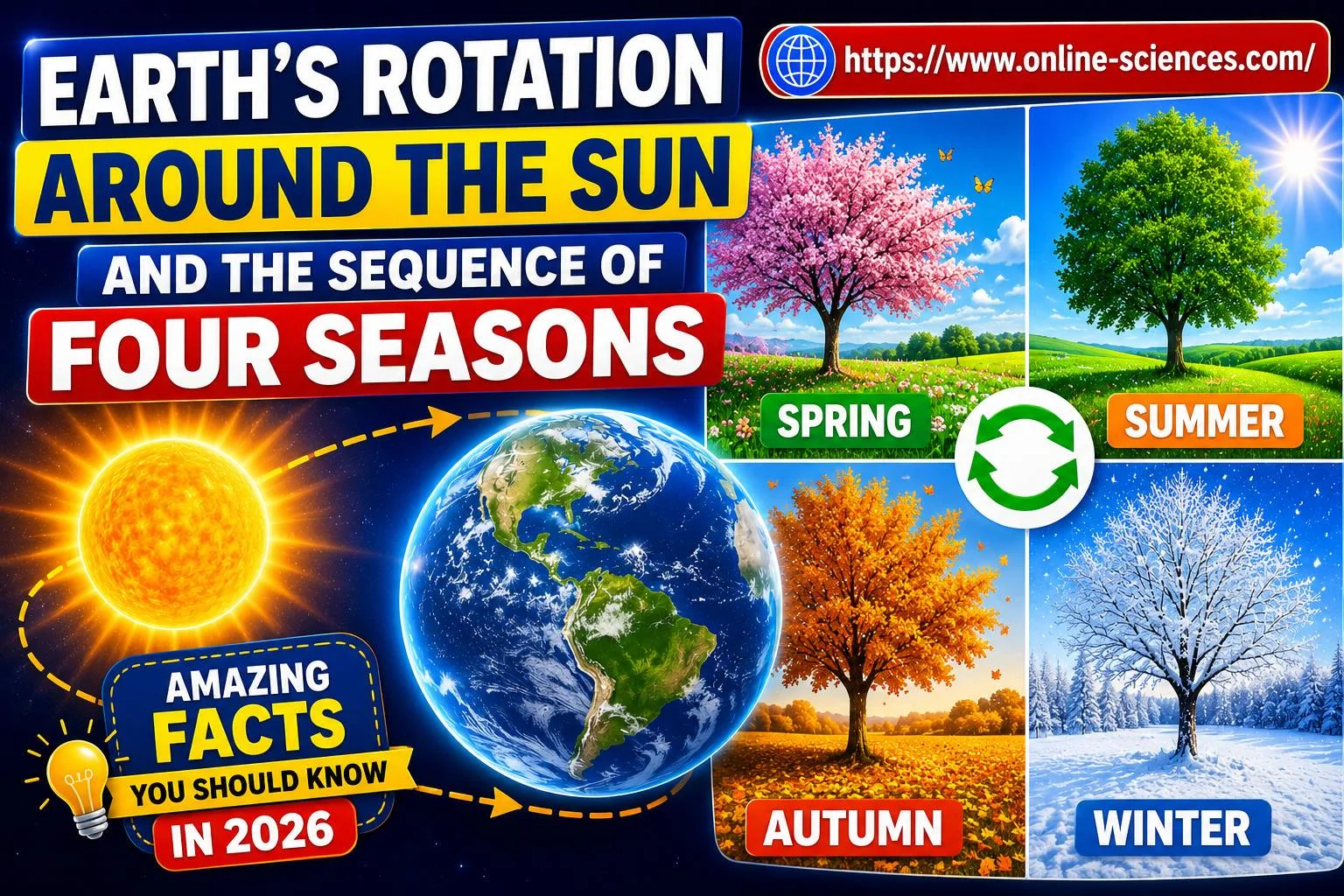
Rotation of the Earth Around the Sun and the Sequence of Four Seasons
Rotation of the Earth
The Earth is one of the planets, where we can live because it contains the air, the food, and the water. The Earth consists of two hemispheres (northern hemisphere and southern hemisphere), The Earth rotates around itself and rotates around the Sun.
Earth’s rotation around itself
The Earth rotates around its inclined axis (itself) once every 24 hours (one day), and the side (hemisphere) of the Earth that faces the Sun during this rotation becomes bright or day, while its other side becomes dark or night. The rotation of the Earth around its axis causes the sequence of day and night.
Earth’s rotation around the Sun
The Earth revolves around the Sun once every 365 and a quarter days (one year). The rotation of the Earth around the Sun causes the sequence of the four seasons (summer, spring, autumn, winter).
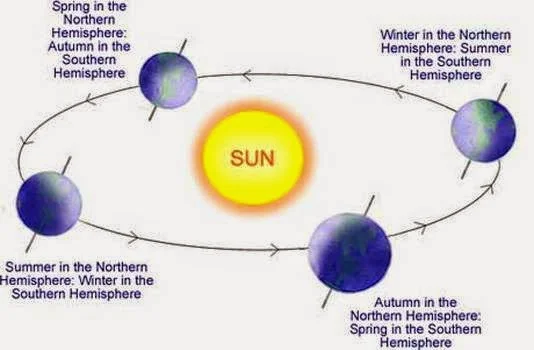 |
| The sequence of the four seasons. |
The Earth’s axis is inclined, and this causes the difference in the length of the day and the night. You notice that the day is longer than the night in the summer season.
You notice that the night is longer than the day, in the winter season, and the hours of the day equal the hours of the night, in the spring or the autumn.
The day in the summer season is longer than the day in the winter season because the apparent orbit of the Sun (the rotation of the Earth around its axis) during the summer is longer than during the winter.
The four seasons differ in characteristics and can prompt changes in the world around them. The timing and characteristics of the seasons depend upon the location on Earth.
In tropical & subtropical places, there are two seasons, which are the rainy (or wet, or monsoon) season and the dry season, because rain changes more than the temperature.
12 Amazing Facts about Rotation of Earth Around the Sun and the Sequence of Four Seasons
1. Earth Completes One Orbit Every Year: The Earth takes approximately 365.25 days to complete one full revolution around the Sun. This period defines a calendar year and is why we have a leap year every four years.
2. Earth’s Orbit Is Slightly Elliptical: The Earth’s path around the Sun is not a perfect circle. Instead, it follows a slightly elliptical orbit, although this shape has little effect on seasonal changes.
3. Seasons Are Caused by Earth’s Tilt: The Earth’s axis is tilted by about 23.5 degrees. This tilt is the primary reason why different seasons occur throughout the year.
4. Summer Occurs When a Hemisphere Tilts Toward the Sun: When the Northern Hemisphere tilts toward the Sun, it receives more direct sunlight and experiences summer, while the Southern Hemisphere experiences winter.
5. Winter Happens When a Hemisphere Tilts Away from the Sun: During winter, sunlight reaches the Earth’s surface at a lower angle, reducing the amount of heat received.
6. Spring and Autumn Are Transitional Seasons: Spring and autumn occur between the extreme temperatures of summer and winter, bringing moderate weather conditions.
7. Day and Night Are Equal During Equinoxes: The spring and autumn equinoxes occur when both hemispheres receive nearly equal amounts of sunlight, resulting in almost equal day and night lengths.
8. Solstices Mark the Longest and Shortest Days: The summer solstice brings the longest day of the year, while the winter solstice brings the shortest day.
9. The Seasons Are Opposite in Each Hemisphere: When it is summer in the Northern Hemisphere, it is winter in the Southern Hemisphere, and vice versa.
10. Distance from the Sun Does Not Cause Seasons: Many people believe seasons occur because the Earth is closer to the Sun in summer. In reality, the Earth’s axial tilt is the key factor.
11. Seasonal Changes Affect Ecosystems: Plants, animals, and human activities adapt to seasonal variations in temperature, rainfall, and daylight.
12. The Four Seasons Influence Daily Life: Agriculture, tourism, energy consumption, and many natural processes depend on the Earth’s revolution around the Sun and the sequence of seasons.
Conclusion
The Earth’s rotation around the Sun and the sequence of four seasons are essential for maintaining the climate patterns that support life. The combination of Earth’s annual revolution and its 23.5-degree axial tilt creates the changing seasons, influencing weather, ecosystems, and human activities across the globe.
FAQ about Earth’s Rotation Around the Sun
1. What is meant by Earth’s rotation around the Sun?
Earth’s rotation around the Sun refers to the movement of Earth in an orbit around the Sun. This movement is called revolution, and it takes about 365 days and 6 hours to complete one full cycle.
2. What is the path that Earth follows around the Sun?
Earth moves around the Sun in a path called an orbit, which has a slightly elliptical (oval) shape.
3. What causes the four seasons on Earth?
The four seasons occur because of:
- The tilt of Earth’s axis (about 23.5 degrees).
- The revolution of Earth around the Sun.
- This tilt causes different parts of the Earth to receive varying amounts of sunlight during the year.
4. What are the four seasons of the year?
The four seasons are:
- Spring.
- Summer.
- Autumn (Fall).
- Winter.
5. What is the sequence of the four seasons?
The usual sequence of the seasons is:
- Spring.
- Summer.
- Autumn (Fall).
- Winter.
After winter, the cycle begins again with spring.
6. How long does each season last?
Each season lasts about three months, making up the total year of about 12 months.
7. Why is summer hotter than winter?
Summer is hotter because the hemisphere facing the Sun receives more direct sunlight and longer daylight hours, while in winter the sunlight is less direct and days are shorter.
8. What happens during spring?
In spring:
- Temperatures become warmer.
- Plants begin to grow, and flowers bloom.
- Days become longer.
9. What are the main features of summer?
Summer is characterized by:
- High temperatures.
- Long daylight hours.
- Increased plant growth and outdoor activities.
10. What happens during autumn?
During autumn:
- Temperatures start to decrease.
- Leaves of many trees change color and fall.
- Days become shorter.
11. What are the characteristics of winter?
Winter usually has:
- Cold temperatures.
- Short daylight hours.
- Snowfall in some regions.
12. Does the whole Earth experience the same season at the same time?
No. When it is summer in the Northern Hemisphere, it is usually winter in the Southern Hemisphere, and vice versa.
13. Why is Earth’s revolution around the Sun important?
Earth’s revolution around the Sun is important because it:
- Causes the change of seasons.
- Helps regulate climate and temperature patterns.
- Supports life cycles of plants and animals.
14. What would happen if Earth were not tilted?
If Earth were not tilted, there would be no seasons, and most places would experience nearly the same climate throughout the year.
You can follow science online on YouTube from this link: Science online