QNX OS 8 Review: Features, Performance, Security, and Real-Time Capabilities in 2026
QNX OS 8 is one of the world’s most advanced real-time operating systems (RTOS), designed for safety-critical applications where reliability, security, and deterministic performance are essential. Built on a modern microkernel architecture, QNX OS 8 powers millions of embedded devices across automotive, industrial automation, robotics, medical equipment, aerospace, and intelligent transportation systems.
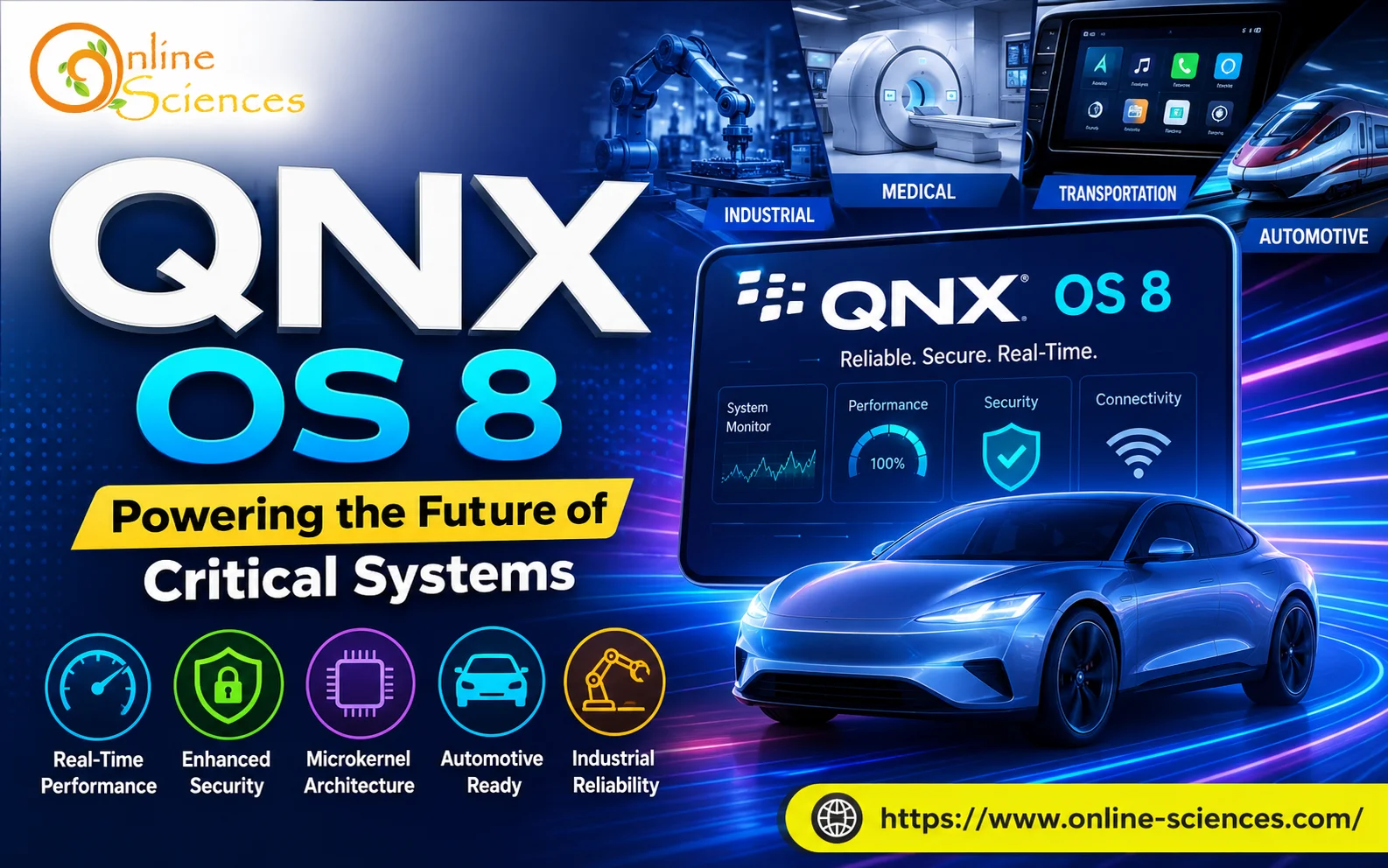
QNX OS 8
QNX OS 8 Review
As industries increasingly rely on autonomous machines, connected vehicles, industrial robots, and AI-powered embedded devices, operating systems must deliver predictable performance with uncompromising security. QNX OS 8 meets these demands by combining real-time responsiveness, functional safety, cyber resilience, and scalable virtualization in a lightweight operating system.
Unlike traditional desktop operating systems, QNX OS 8 is optimized to execute mission-critical tasks with deterministic timing, ensuring applications continue running even if individual components fail.
What is QNX OS 8?
QNX OS 8 is the latest generation of the QNX Neutrino Real-Time Operating System developed by BlackBerry QNX. It is specifically designed for embedded systems that require:
- Deterministic real-time performance.
- High reliability.
- Functional safety.
- Cybersecurity.
- High availability.
- Fault isolation.
Its microkernel architecture allows only the essential core services to run in kernel mode while drivers, file systems, networking, and applications operate safely in user space.
Features of QNX OS 8
1. Modern Microkernel Architecture
One of the strongest advantages of QNX OS 8 is its microkernel design.
Benefits include:
- Smaller trusted computing base.
- Better reliability.
- Easier debugging.
- Reduced crash impact.
- Improved security.
- Independent service management.
If one driver crashes, the rest of the operating system continues functioning without requiring a complete reboot.
2. Exceptional Real-Time Performance
QNX OS 8 delivers deterministic scheduling, making it ideal for:
- Autonomous vehicles.
- Industrial robots.
- Medical imaging.
- Air traffic systems.
- Railway control.
- Factory automation.
Predictable response times ensure critical tasks are completed exactly when required.
3. Enhanced Cybersecurity
Security is built into every layer of QNX OS 8.
Major improvements include:
- Secure boot.
- Memory protection.
- Process isolation.
- Cryptographic verification.
- Secure software updates.
- Runtime integrity checking.
- Least-privilege architecture.
These features help protect embedded devices from modern cyber threats.
4. Functional Safety
QNX OS 8 supports safety-certified development for industries requiring compliance with standards such as:
- ISO 26262 (Automotive).
- IEC 61508.
- IEC 62304.
- DO-178C.
- IEC 62443.
Its architecture simplifies certification while reducing development complexity.
5. Improved Multi-Core Support
Modern embedded processors contain multiple CPU cores. QNX OS 8 efficiently distributes workloads across cores, improving:
- System responsiveness.
- Parallel processing.
- Resource utilization.
- AI inference performance.
- Industrial control.
6. Advanced Virtualization
Virtualization enables multiple operating systems to run simultaneously on a single hardware platform.
Developers can run:
- Android.
- Linux.
- QNX.
- Custom RTOS environments.
This capability is especially valuable in software-defined vehicles and industrial control systems.
7. High Reliability
QNX OS 8 is engineered for systems that must operate continuously for years.
Examples include:
- Power plants.
- Medical equipment.
- Autonomous vehicles.
- Telecommunications.
- Smart factories.
Its fault-tolerant architecture minimizes downtime and enhances system availability.
QNX OS 8 Performance Review
QNX OS 8 demonstrates excellent performance in embedded environments due to:
- Fast interrupt handling.
- Low scheduling latency.
- Efficient memory management.
- Optimized inter-process communication.
- High-speed message passing.
- Minimal kernel overhead.
These characteristics enable smooth operation under demanding workloads.
QNX OS 8 Security Review
Security is one of QNX OS 8’s strongest selling points.
Highlights include:
- Strong process isolation.
- Minimal attack surface.
- Secure boot chain.
- Digital signature verification.
- Hardware-assisted security.
- Secure networking.
- Modern encryption support.
These protections make it suitable for connected vehicles and industrial IoT deployments.
Developer Experience
QNX provides an extensive development ecosystem including:
- Eclipse-based IDE.
- Command-line development tools.
- Cross-compilers.
- Debugging utilities.
- Performance analyzers.
- Profiling tools.
- Simulation environments.
Developers can efficiently build, test, and deploy embedded applications across multiple hardware platforms.
Industries Using QNX OS 8
QNX OS 8 is widely deployed in:
Automotive
- Digital instrument clusters.
- Infotainment systems.
- ADAS.
- Autonomous driving.
- Domain controllers.
Medical
- MRI scanners.
- CT scanners.
- Ultrasound machines.
- Patient monitoring systems.
Industrial Automation
- PLC controllers.
- Factory robots.
- Smart manufacturing.
- Industrial gateways.
Aerospace
- Flight control.
- Navigation systems.
- Mission computers.
Railway
- Signaling.
- Train control.
- Passenger information systems.
Advantages of QNX OS 8
- Outstanding real-time performance.
- Excellent stability.
- Modern microkernel architecture.
- Strong cybersecurity.
- Functional safety certifications.
- High availability.
- Scalable virtualization.
- Multi-core optimization.
- Lightweight footprint.
- Reliable long-term operation.
Disadvantages of QNX OS 8
- Commercial licensing costs.
- Smaller developer community than Linux.
- Steeper learning curve for beginners.
- Fewer open-source packages.
- Specialized embedded development expertise required.
Who Should Use QNX OS 8?
QNX OS 8 is an excellent choice for:
- Automotive manufacturers.
- Robotics developers.
- Medical device companies.
- Aerospace organizations.
- Industrial automation engineers.
- Telecommunications infrastructure providers.
- Embedded systems developers.
- Safety-critical software teams.
Final Verdict
QNX OS 8 is among the most capable real-time operating systems available in 2026. Its microkernel architecture, deterministic scheduling, advanced cybersecurity, functional safety support, and robust virtualization make it a top choice for mission-critical embedded systems. While its commercial licensing and specialized ecosystem may not suit every project, organizations building safety-critical products will benefit from its exceptional reliability, security, and long-term performance.
Frequently Asked Questions (FAQ) about QNX OS 8
1. What is QNX OS 8 used for?
QNX OS 8 is used in embedded systems for automotive, medical, industrial automation, aerospace, robotics, telecommunications, and railway applications that require real-time performance and high reliability.
2. Is QNX OS 8 a real-time operating system?
Yes. QNX OS 8 is a deterministic real-time operating system (RTOS) designed for mission-critical applications.
3. Why is QNX OS 8 more secure than many traditional operating systems?
Its microkernel architecture, process isolation, secure boot, memory protection, and minimized attack surface significantly improve system security.
4. Does QNX OS 8 support multi-core processors?
Yes. It efficiently utilizes modern multi-core CPUs for parallel processing and improved application performance.
5. Can QNX OS 8 run alongside Linux or Android?
Yes. Its virtualization capabilities allow multiple operating systems to run simultaneously on supported hardware.
6. Is QNX OS 8 open source?
No. QNX OS 8 is a commercial operating system with proprietary licensing.
7. Which industries benefit most from QNX OS 8?
Automotive, healthcare, aerospace, industrial automation, robotics, railway, and telecommunications industries benefit the most from its reliability and real-time capabilities.
QNX OS 8 vs Linux
When comparing QNX OS 8 vs Linux, the right choice depends on the application’s requirements. QNX OS 8 is a commercial real-time operating system (RTOS) built on a microkernel architecture, delivering deterministic performance, fault isolation, and high reliability for safety-critical applications such as autonomous vehicles, medical devices, aerospace systems, and industrial automation.
Its real-time scheduling ensures that critical tasks are executed within predictable time limits, making it ideal for mission-critical environments. In contrast, Linux uses a monolithic kernel and offers greater flexibility, extensive hardware support, a massive open-source software ecosystem, and lower deployment costs.
While Linux can be enhanced for real-time performance using the PREEMPT_RT patch, it generally cannot match the deterministic behavior of QNX OS 8 in demanding real-time systems. Organizations developing embedded systems that require functional safety and continuous uptime often prefer QNX OS 8, whereas Linux remains the preferred choice for general-purpose computing, servers, consumer electronics, and cost-sensitive embedded projects.
You can follow Science Online on YouTube from this link: Science Online
Linux Operating System advantages and disadvantages
What are the advantages and disadvantages of Windows 7?
Mozilla Firefox advantages, disadvantages, review & features
Windows 10 advantages and disadvantages