
Magnetic Resonance Imaging (MRI): Uses, Advantages, Disadvantages, and Important Facts in 2026
Magnetic Resonance Imaging (MRI) is one of the most advanced medical imaging technologies available today. It uses powerful magnetic fields and radio waves to create highly detailed images of internal organs, tissues, muscles, nerves, and blood vessels without exposing patients to ionizing radiation. MRI has become an essential diagnostic tool in modern medicine because it helps doctors detect diseases early, plan treatments accurately, and monitor patient progress with exceptional precision.
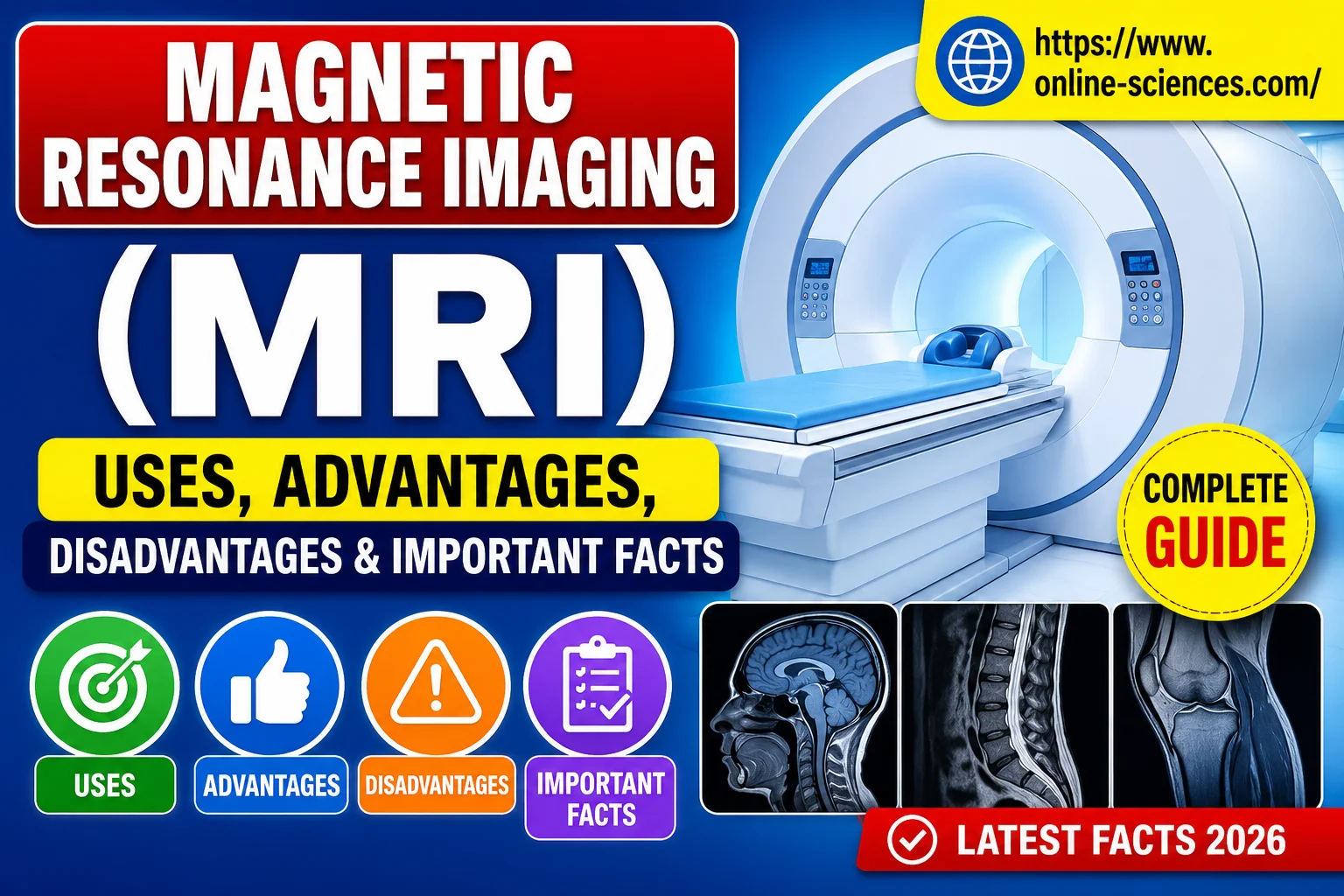
Magnetic Resonance Imaging (MRI)
Magnetic Resonance Imaging (MRI)
Magnetic Resonance Imaging (MRI) is widely used in hospitals and diagnostic centers because it produces detailed cross-sectional images of the body’s soft tissues. Unlike X-rays and CT scans, MRI does not rely on radiation, making it a preferred imaging method for many neurological, musculoskeletal, cardiovascular, and abdominal conditions. Advances in MRI technology in 2026 continue to improve image quality, scan speed, and diagnostic accuracy, helping physicians make faster and more reliable medical decisions.
The MRI scan uses magnetism, radio waves, and a computer to produce images of body structures. The benefit of MRI is that, unlike conventional X-ray or CT imaging, it does not use X-ray radiation. Magnetic resonance imaging is the preferred method for imaging soft tissue because it can produce a clearer, more detailed view of internal organs than computed tomography (CT) without the radiation exposure associated with CT.
MRI is a non-invasive way to view organs, tissues, bones, and other structures inside the body. It uses strong magnetic fields and radio waves to produce internal images of the body. Unlike X-ray and CT scans, MRI machines produce cross-sectional, 3D images of the body without the use of radiation.
Doctors can use MRI to view parts of the body that are hard to see with other imaging techniques such as X-rays, ultrasound, or computed tomography (CT) scans. MRI scan is used to diagnose many different types of diseases, including heart and vascular disease, stroke, muscle and skeletal (bone) disorders, and cancer.
What is Magnetic Resonance Imaging (MRI)?
MRI is a non-invasive diagnostic imaging technique that uses:
- Strong magnetic fields.
- Radiofrequency waves.
- Advanced computer processing.
These elements work together to generate detailed images of internal structures. The scan allows physicians to view organs, tissues, and abnormalities that may not be visible through other imaging methods.
MRI Instruments
The MRI machine is a large, cylinder-shaped machine that contains a very strong donut-shaped magnet. The patient lies on the bed that moves in and out of the machine during the process. The MRI machine is connected to the computer that receives signals from the MRI unit. The computer interprets the signals and generates a 3-D image of the patient’s body.
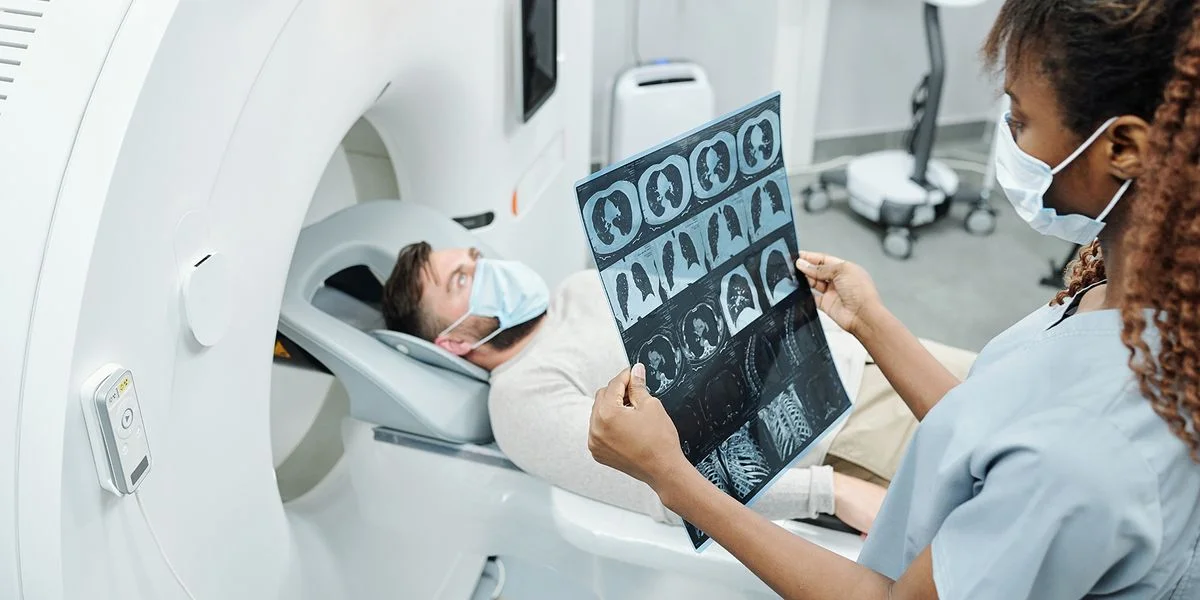
Magnetic Resonance Imaging
Magnetic Resonance Imaging, unlike X-rays and CT scans, does not use ionizing radiation. Instead, it uses radio waves that interact with specific molecules in the body (protons, the nuclei of hydrogen atoms). During the test, radio signals are repeatedly turned on and off.
Preparation & Precautions for MRI
The MRI machine is a strong magnet, so patients must avoid wearing jewelry and other accessories because they could interfere with the machine’s magnetic field. Jewelry, watches, credit cards, and hearing aids (all can be damaged) are not allowed to enter the test room. Pins, hairpins, metal zippers, and similar metallic items (can alter images taken) are not allowed to enter the test room. Removable dental work, Pens, pocketknives, and eyeglasses are not allowed to enter the test room.
All metallic objects on the body are removed prior to obtaining an MRI scan. Patients will be given a sedative medication to decrease anxiety and relax them during the MRI scan. Patients with claustrophobia or anxiety may want to request a mild sedative from their physicians.
If the MRI scan will involve a contrasting agent, the patient should tell the physician about any allergies, including hay fever, hives, allergic asthma, or food and drug allergies. The radiologist should be informed if the patient has serious health problems such as kidney disease or sickle cell anemia.
During an MRI test, the patient is placed on a table that rolls into the MRI unit, and the radiologist and technologist will leave the MRI room and observe from an adjoining room. The physician may decide to use a contrast agent known as gadolinium DTPA to help enhance the image quality of the MRI scan. This non-radioactive contrast agent improves the strength and clarity of the images by emphasizing the tumor-like qualities of any suspicious masses. Ask your doctor about the side effects of the gadolinium-based contrast material if you have kidney problems.
If the contrasting agent is used, an intravenous (IV) line will be inserted into the patient’s hand or arm, which will allow the radiologist to inject the contrasting substance directly into the patient’s body at the appropriate time. The contrasting agent often creates a cooling sensation at the site of injection and throughout the body. The patient may experience some discomfort at the injection site.
The MRI test process
During the MRI scan, the patient will hear loud noises that are generated within the MRI unit while images are being produced. The patient can ask for earplugs to reduce the sound of the MRI scanner. Some of the newer scanners have music to help the patient pass the time. They may be air-conditioned and have lights inside.
When a contrast agent is not used an MRI can show: The shape, size, appearance, and location of organs, bones, and joints, The presence of abnormal growths, and Signs of inflammation or infection, When a contrast agent is used, MRI can show: size and location of benign or malignant growths, enlarged lymph nodes, changes in blood flow, and extracellular volume.
Advantages of MRI
Magnetic Resonance Imaging is non-invasive and does not use radiation, so it can be safely used on people who might be vulnerable to the effects of radiation, such as pregnant women & babies, MRI contrasting agent is less likely to produce an allergic reaction that may occur when iodine-based substances are used for x-rays and CT scans, Magnetic Resonance Imaging offers extremely clear, detailed images of soft-tissue structures that other imaging techniques cannot achieve.
Magnetic Resonance Imaging can easily create hundreds of images from almost any direction and in any orientation. Unlike techniques that examine small parts of the body (i.e. ultrasound or mammography), MRI tests can cover large portions of the body, Magnetic Resonance Imaging can determine if cancer has spread, and help determine the best treatment.
Magnetic Resonance Imaging is useful for scanning and detecting abnormalities in soft tissue structures in the body, such as the cartilage tissues and soft organs like the brain or the heart. MRI scans can offer information about blood circulation throughout the body and blood vessels and also enable the detection of problems related to blood circulation.
Disadvantages of MRI
Magnetic Resonance Imaging is expensive ($1000-$1500). It will not be able to find all cancers (i.e. breast cancers indicated by microcalcifications). Magnetic Resonance Imaging can’t distinguish between malignant tumors and benign diseases (such as breast fibroadenomas), which could lead to false positive results. MRI is done in an enclosed space, and the loud noises made by the magnets can make some people feel fearful of being on a closely enclosed surface while they have the MRI scan.
Magnetic Resonance Imaging is not painful, but the patient must remain still in an enclosed machine, which may be a problem for claustrophobic patients, An undetected metal implant in a patient’s body may be affected by the strong magnet of the MRI unit, the patient may develop an allergic reaction to the contrasting agent, or that the skin infection could develop at the site of injection, If the patient chooses to be sedated for the scanning, there is a slight risk associated with using the sedation medication.
Common Uses of MRI
1. Brain and Nervous System Imaging: MRI is frequently used to diagnose:
- Brain tumors.
- Stroke.
- Multiple sclerosis.
- Epilepsy.
- Brain injuries.
- Alzheimer’s disease.
2. Spine Examination: Doctors use MRI to evaluate:
- Herniated discs.
- Spinal cord injuries.
- Spinal tumors.
- Chronic back pain.
- Nerve compression.
3. Joint and Musculoskeletal Disorders: MRI helps detect:
- Ligament tears.
- Tendon injuries.
- Sports injuries.
- Arthritis.
- Bone infections.
4. Heart and Blood Vessel Assessment: Cardiac MRI can identify:
- Heart defects.
- Blood vessel abnormalities.
- Heart muscle diseases.
- Damage after heart attacks.
5. Cancer Detection and Monitoring: MRI assists in:
- Detecting tumors.
- Determining cancer stage.
- Monitoring treatment effectiveness.
- Identifying recurrence.
6. Abdominal and Pelvic Imaging: MRI can evaluate:
- Liver diseases.
- Kidney disorders.
- Pancreatic abnormalities.
- Uterine conditions.
- Prostate disorders.
Importance of MRI
- Excellent Soft Tissue Visualization: MRI provides superior images of soft tissues compared to many other imaging techniques.
- No Radiation Exposure: Unlike CT scans and X-rays, MRI does not use ionizing radiation.
- Early Disease Detection: MRI can identify abnormalities at an early stage before symptoms become severe.
- Multiplanar Imaging: Images can be obtained in multiple planes without moving the patient.
- High Diagnostic Accuracy: MRI often helps physicians reach a precise diagnosis.
- Non-Invasive Procedure: Most MRI examinations require no surgery or invasive intervention.
- Safe for Repeated Monitoring: Patients requiring long-term follow-up can undergo multiple MRI scans safely.
Drawbacks of MRI
- High Cost: MRI examinations are generally more expensive than X-rays or ultrasound scans.
- Longer Scan Time: Many MRI studies require 20 to 60 minutes to complete.
- Claustrophobia: Some patients may feel uncomfortable inside the enclosed MRI scanner.
- Noise During Scanning: MRI machines produce loud knocking and buzzing sounds.
- Metal Restrictions: Patients with certain implants or metallic devices may not be eligible for MRI.
- Motion Sensitivity: Patient movement can reduce image quality and require repeat scanning.
- Limited Availability: Advanced MRI systems may not be available in all healthcare facilities.
How to Prepare for an MRI Scan
Patients are usually advised to:
- Remove metal objects and jewelry.
- Inform healthcare providers about implants.
- Wear comfortable clothing.
- Follow fasting instructions if contrast material is used.
- Notify the medical team if pregnant or experiencing claustrophobia.
Is MRI Safe?
MRI is considered very safe for most patients. Because it does not use ionizing radiation, it is often preferred for repeated examinations. However, individuals with pacemakers, certain implants, or metallic fragments in the body should discuss safety considerations with their physician before the scan.
MRI vs CT Scan
MRI vs CT scan is a common comparison when choosing the most appropriate medical imaging technique. MRI (Magnetic Resonance Imaging) uses powerful magnetic fields and radio waves to create highly detailed images of soft tissues, making it ideal for examining the brain, spinal cord, muscles, ligaments, joints, and internal organs.
CT (Computed Tomography) scans use X-rays to produce cross-sectional images and are generally faster, making them especially useful in emergencies such as trauma, stroke evaluation, internal bleeding, and bone fractures. MRI does not expose patients to ionizing radiation, while CT scans involve a small amount of radiation exposure.
Although MRI typically provides superior soft-tissue contrast and diagnostic detail, CT scans are often more widely available, less expensive, and quicker to perform. The choice between MRI and CT depends on the patient’s condition, the body part being examined, the urgency of diagnosis, and the physician’s clinical assessment.
Conclusion
Magnetic Resonance Imaging (MRI) remains one of the most valuable diagnostic tools in modern medicine. Its ability to provide highly detailed images without radiation exposure makes it indispensable for diagnosing neurological, musculoskeletal, cardiovascular, and oncological conditions. While MRI has some limitations, including cost and scan duration, its advantages continue to outweigh its drawbacks for many medical applications.
Frequently Asked Questions (FAQ) about MRI
1. What is MRI used for?
MRI is used to examine the brain, spinal cord, joints, muscles, blood vessels, internal organs, and many types of tumors and diseases.
2. Does MRI use radiation?
No. MRI uses magnetic fields and radio waves rather than ionizing radiation.
3. How long does an MRI scan take?
Most MRI examinations take between 20 and 60 minutes, depending on the body area being examined.
4. Is an MRI painful?
No. MRI is a painless procedure, although some patients may feel uncomfortable lying still for extended periods.
5. Can MRI detect cancer?
Yes. MRI is commonly used to detect, evaluate, and monitor many types of cancer.
6. Is MRI better than a CT scan?
MRI provides superior soft tissue detail, while CT scans are often faster and better for certain emergencies and bone imaging.
7. Can patients with metal implants undergo MRI?
It depends on the type of implant. Some implants are MRI-compatible, while others may make MRI unsafe.
8. Are contrast agents used during MRI?
In some cases, a contrast agent is injected to improve image clarity and help identify abnormalities more accurately.
9. Can children have MRI scans?
Yes. MRI is commonly performed in children when medically necessary and is considered safe.
10. What should I avoid before an MRI?
Avoid wearing metal accessories and inform your healthcare provider about any implants, medical devices, or health conditions before the examination.
You can follow science online on YouTube from this link: Science Online
What is PET/CT, Positron emission tomography scan (PET) uses, risks and importance
Computed Tomography (CT) types, uses, advantages & disadvantages
Cone beam CT vs. Fan beam CT, CBCT advantages, disadvantages & uses
Interventional radiology types, Robotic endovascular systems advantages & disadvantages
Artificial intelligence in radiology decision support systems, Medical Imaging & Healthcare
Artificial intelligence in medical field advantages & how AI medical diagnosis changes medicine