Gemini AI Retail Is Amazing: Build Multimodal Recommendations with GSP1230
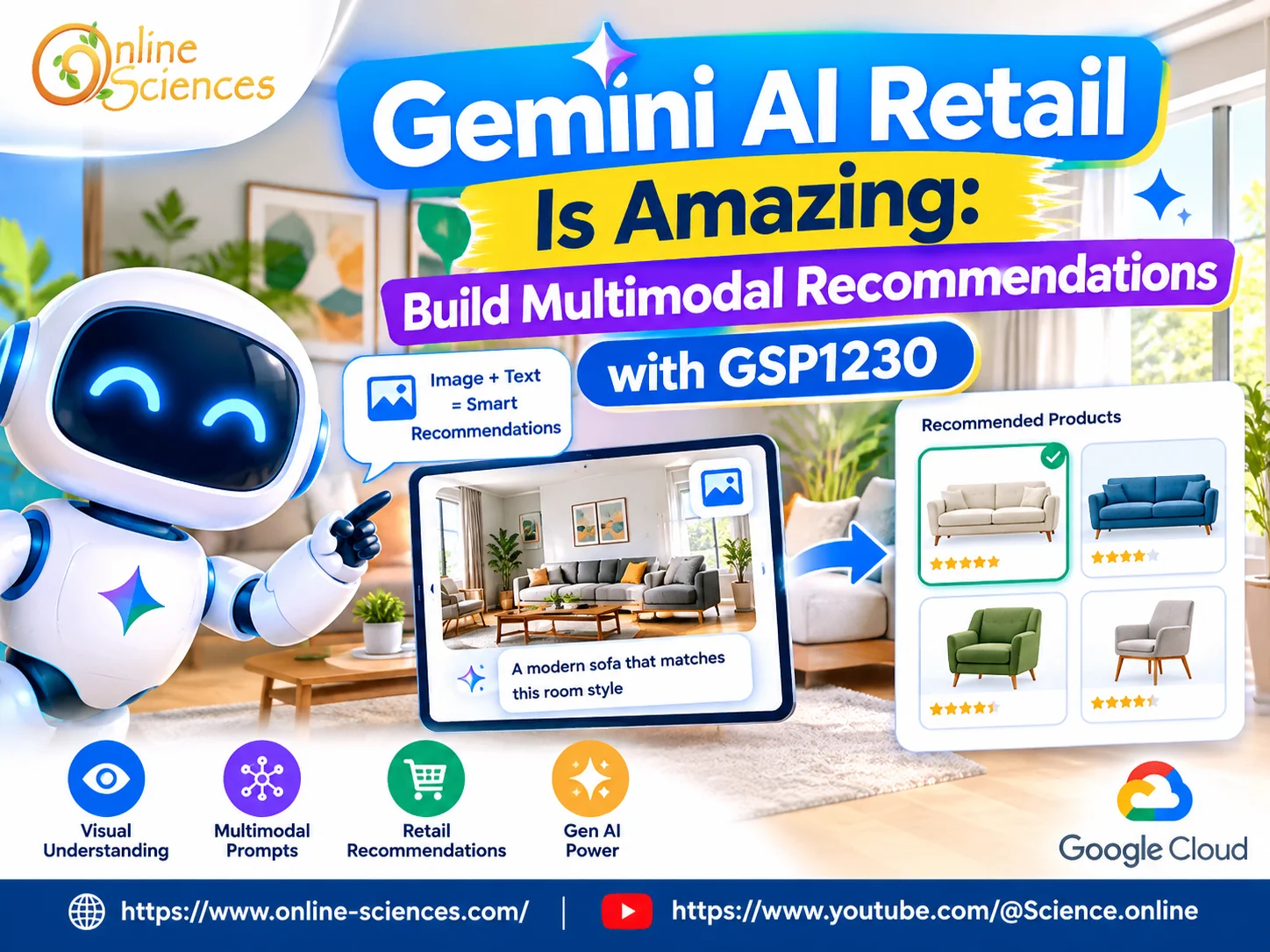
Gemini AI retail is transforming online shopping by combining visual understanding with natural-language prompts to create smarter and more personalized product recommendations. In the GSP1230 lab, Gemini can analyze a retail scene, understand details such as furniture, colors, and style, and recommend products that fit the customer’s visual context.
Gemini AI Retail
Gemini Retail AI
Gemini AI retail also demonstrates how multimodal Gen AI can improve product discovery beyond traditional keyword searches. By combining images, product catalogs, and text instructions, businesses can create interactive shopping experiences for furniture, fashion, home decoration, and e-commerce, helping customers discover relevant products more naturally and engagingly.
Using Gemini for Multimodal Retail Recommendations GSP1230 Gen AI
Using Gemini for Multimodal Retail Recommendations is an exciting Google Cloud Gen AI application that demonstrates how artificial intelligence can understand images and text together to create smarter shopping recommendations. The GSP1230 hands-on lab shows how Gemini can analyze a scene such as a living room, understand its visual characteristics, and recommend suitable furniture. It also demonstrates how recommendations can be generated from a specific collection of product images, creating a practical foundation for AI-powered retail and e-commerce experiences.
What is GSP1230: Using Gemini for Multimodal Retail Recommendations?
GSP1230 – Using Gemini for Multimodal Retail Recommendations is a Google Cloud Skills hands-on lab focused on applying Gemini‘s multimodal capabilities to a real-world retail recommendation scenario. Instead of relying only on traditional text-based searches such as “modern chair” or “wooden table,” a multimodal recommendation system can examine an image and use its visual information together with a written prompt.
For example, imagine that a customer uploads a photograph of a living room. The system can analyze elements such as the furniture, colors, arrangement, style, and overall appearance. Gemini can then use that understanding to suggest an appropriate furniture item.
Google’s official lab explains that Gemini can provide both recommendations and explanations using a multimodal model. The GSP1230 exercise specifically uses a room scene and asks Gemini to recommend furniture, including an item selected from a provided list of furniture images.
Why Multimodal AI Is Important for Retail
Traditional recommendation systems often depend on structured information such as product categories, customer history, clicks, purchases, and search terms. Multimodal AI adds another important dimension: visual understanding.
A shopper may not know the exact name of the product they want. Instead, they may have an image showing the style they like. An AI system capable of understanding that image can potentially make the shopping experience more natural. Google describes retail applications of Gemini that combine customer information with images and other types of data to create more personalized shopping experiences.
This creates possibilities for:
- Image-based product discovery.
- Personalized furniture recommendations.
- Fashion recommendations.
- Visual shopping assistants.
- Interior-design suggestions.
- Product comparison.
- Conversational shopping.
- Personalized marketing.
- AI-powered e-commerce search.
How Gemini Understands a Retail Scene
One of the central ideas in GSP1230 is visual understanding. The process begins with an image, such as a photograph of a room. Gemini examines the visual information and generates a description of what it sees. For a living room, the model could identify relevant characteristics such as furniture types, colors, arrangement, materials, and overall style. This information becomes useful when constructing the recommendation prompt.
Instead of simply asking: “Recommend a chair,” the application can provide Gemini with visual context and instructions such as recommending a chair that fits the existing room. This is an important difference between ordinary text-based recommendations and multimodal recommendations.
Gemini Retail Recommendations Using Product Images
GSP1230 also demonstrates another important approach: recommending an item from a specific selection of product images. This is particularly useful for real retail environments because a business normally wants its recommendation system to suggest products that it actually sells.
For example, an online furniture store could provide Gemini with images of available chairs. The model can then consider the customer’s room and recommend an appropriate chair from that collection.
This creates a distinction between:
- Open recommendations: Gemini can suggest products using its available knowledge and the information supplied in the prompt.
- Closed recommendations: Gemini selects or recommends an item from a specific collection of products supplied to the model.
The second approach can be especially relevant to e-commerce because recommendations can be connected to an actual product catalog.
Prompt Engineering for Multimodal Recommendations
Prompt engineering is another major concept behind GSP1230. A good multimodal prompt needs to clearly explain what the AI should do with the image and what type of recommendation is required. For example, a retail prompt might instruct Gemini to:
- Examine the uploaded room image.
- Describe the room and its visual characteristics.
- Consider the furniture already present.
- Compare the available products.
- Recommend the most appropriate item.
- Explain why the selected product fits the scene.
This approach provides Gemini with both visual context and a clear task. The official GSP1230 objectives specifically include using Gemini for visual understanding and taking multimodality into consideration when creating prompts.
Google Cloud and Vertex AI in GSP1230
The lab provides a practical cloud environment for experimenting with generative AI. Learners work with Google Cloud resources and a notebook environment rather than building the complete application from scratch on a local computer. The lab is designed as a real cloud environment with temporary credentials and is timed, according to Google Cloud’s current instructions.
This makes GSP1230 useful for students, developers, cloud learners, data professionals, and anyone who wants hands-on experience with a practical Gemini use case. The broader Google Cloud ecosystem also supports AI-powered product discovery, personalized recommendations, conversational shopping, and retail agents.
Real-World Applications of Gemini Retail AI
The furniture example in GSP1230 is only the beginning. Google’s current Skills documentation notes that the same general approach can be applied to other recommendation scenarios, including recommending clothing based on an occasion or image of a venue and recommending wallpaper based on a room.
Other potential applications include:
- Fashion: A customer could upload a photograph of an event or outfit and receive suggestions for clothing and accessories that match the visual context.
- Furniture: A shopper could upload a photograph of a bedroom, office, or living room and receive furniture recommendations that fit the existing style.
- Home Decoration: Multimodal AI could help recommend wallpaper, lighting, rugs, artwork, or decorative products based on a room image.
- Beauty and Personal Care: AI shopping assistants could combine text descriptions with product images to help users explore suitable products.
- E-Commerce Search: Instead of typing multiple keywords, shoppers could use an image and natural-language questions to discover visually similar or contextually appropriate products.
Gemini and the Future of AI-Powered Shopping
The importance of multimodal retail AI extends beyond a single Google Cloud lab. Google has continued expanding AI-powered shopping experiences. Its current Gemini shopping experience can use Google’s Shopping Graph to help users discover products, compare options, and receive visually rich shopping results.
Google has also described a broader retail direction in which AI agents can help shoppers move from product discovery toward purchase while retailers maintain their customer relationship. For businesses, this means recommendation technology is moving toward more conversational and context-aware experiences.
Instead of simply asking, “What product has the highest rating?” shoppers can increasingly ask questions involving style, context, appearance, budget, purpose, and personal preferences.
Benefits of Using Gemini for Multimodal Retail Recommendations
The GSP1230 approach demonstrates several important advantages:
- Visual understanding: Gemini can work with images rather than relying exclusively on text.
- Context-aware recommendations: Products can be recommended according to the surrounding visual environment.
- Natural interaction: Users can describe what they want using ordinary language.
- Product-specific recommendations: Businesses can provide a collection of products for recommendation.
- Explainable suggestions: The system can provide reasons for its recommendations.
- Flexible applications: The same concept can be adapted to furniture, fashion, home decoration, and other retail categories.
For larger retail systems, Google Cloud also provides recommendation technology that can use shopping behavior and contextual information to personalize product recommendations.
Final Thoughts
Using Gemini for Multimodal Retail Recommendations | GSP1230 | Gen AI provides a practical introduction to one of the most interesting applications of generative AI: combining visual understanding with product recommendations. The lab demonstrates how Gemini can analyze a scene, understand multimodal information, recommend furniture, and work with a supplied collection of product images.
For developers and AI learners, GSP1230 is a useful example of how a generative AI model can move beyond simple text conversations and become part of an intelligent shopping experience. As multimodal AI continues to develop, retailers can use similar ideas to make product discovery more visual, conversational, personalized, and context-aware.
Frequently Asked Questions
What is GSP1230?
GSP1230 is the Google Cloud Skills hands-on lab titled Using Gemini for Multimodal Retail Recommendations. It teaches learners how to use Gemini for visual understanding, multimodal prompting, and retail recommendations.
What does multimodal mean in Gemini?
Multimodal means that an AI model can work with different forms of information, such as text and images, rather than depending on text alone. Gemini is designed for multimodal use cases.
What does the Gemini retail recommendation lab recommend?
The GSP1230 lab uses a furniture scenario. Learners begin with a scene such as a living room and use Gemini to recommend furniture, including recommendations from a provided selection of furniture images.
Can Gemini recommend products from images?
Yes. The GSP1230 lab demonstrates how Gemini can use visual information and product images as part of a retail recommendation workflow.
Is GSP1230 useful for learning Gen AI?
Yes. The lab provides hands-on practice with multimodal prompting and a practical retail recommendation use case, making it relevant to learners exploring generative AI and Google Cloud.
Can this technology be used outside furniture?
Yes. Google specifically identifies potential applications such as clothing recommendations based on an occasion or venue image and wallpaper recommendations based on a room.
What is the advantage of multimodal retail recommendations?
Multimodal recommendations can consider visual context in addition to text. This can make product discovery more natural when shoppers have an image of a room, outfit, product, or design they want to match.
Can AI retail recommendations improve CTR?
Recommendation systems can be configured around different business objectives. Google Cloud documentation describes click-through rate (CTR) as an optimization objective focused on the likelihood that users interact with recommendations, while other objectives include conversion rate and revenue per session.
You can follow Science Online on YouTube at this link: Science Online
🔥 Using Gemini for Multimodal Retail Recommendations: GSP1230 Gen AI 🚀
Gemini Takes Over: The End of Google Assistant in 2026! 🚀
Goodbye Google Assistant: Can Your Android Phone Actually Run Gemini? 🚀
Goodbye Google Assistant? 10 Powerful Reasons Gemini AI Is the Future in 2026
Will Gemini AI Replace Google Assistant? The Ultimate Guide to Google’s Powerful AI Upgrade 2026
Google Assistant Review 2026: Features, Pros, Cons and What It Can Do
Claude AI advantages, disadvantages, features and Is Claude better than GPT 4?
Claude Sonnet 4.5 features, advantages, disadvantages, Is Claude Sonnet 4 better than GPT 4?
Gemini AI review, advantages, disadvantages and Is Gemini AI better than ChatGPT?
ChatGPT review, features, advantages and disadvantages
Google Bard AI chatbot advantages, disadvantages, review, features and Bard vs ChatGPT