15 powerful Facts About the Transpiration Process and Transmission of Juice in Plants: Complete Guide 2026
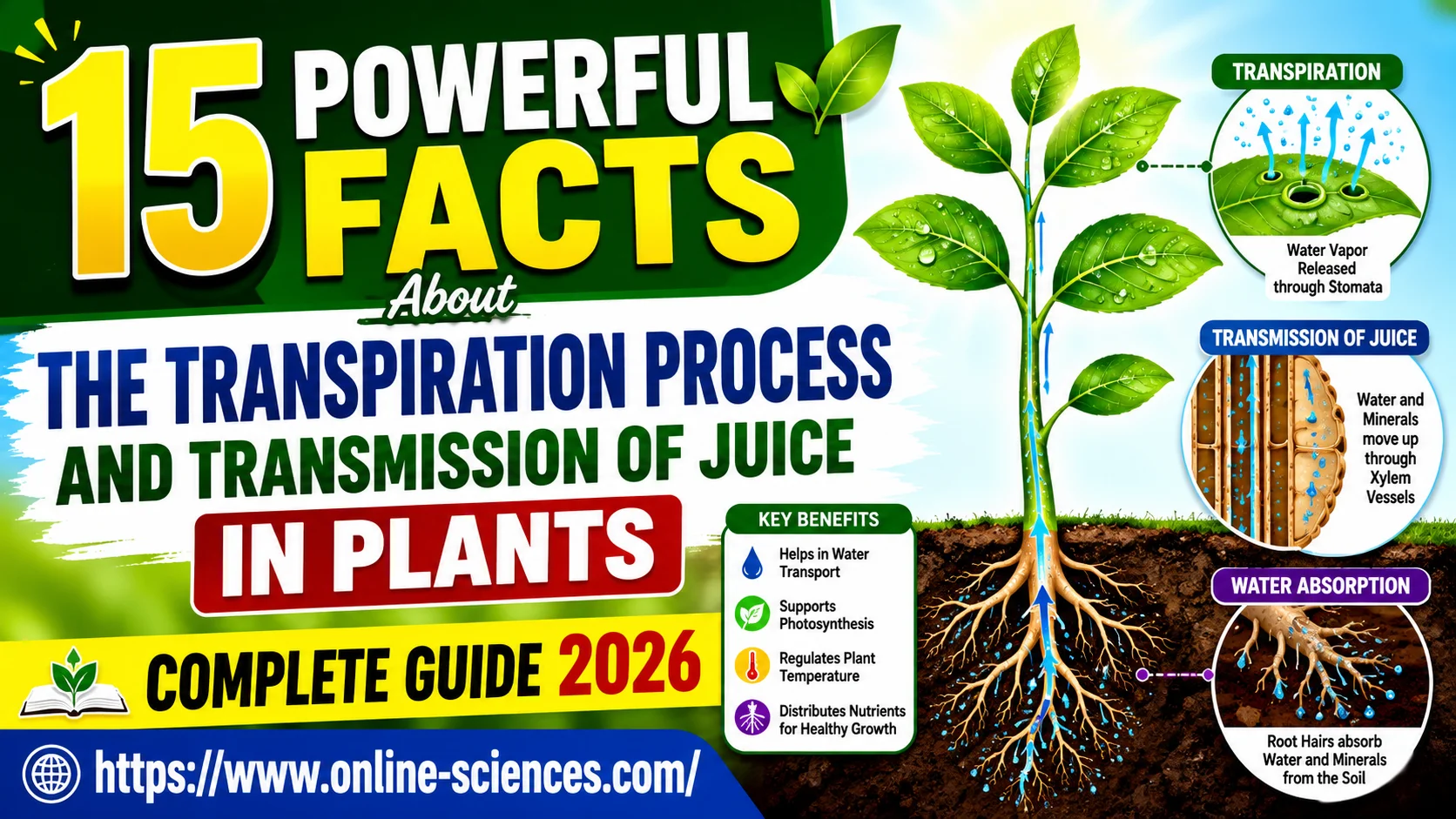
The transpiration process and transmission of juice in plants are among the most important physiological functions that maintain plant growth and survival. Water absorbed by the roots travels through specialized tissues called xylem vessels and reaches the stems, branches, flowers, and leaves. During transpiration, water evaporates from the leaf surface through tiny pores known as stomata, creating a pulling force that helps transport water and dissolved minerals upward throughout the plant.
Transpiration Process and Transmission of Juice in Plants
What is Transpiration?
Transpiration is the process by which plants lose water vapor from their aerial parts, primarily through the stomata in their leaves. It is a continuous process that occurs during the day and helps maintain the flow of water from roots to leaves.
What is the Transmission of Juice in Plants?
The transmission of juice refers to the transport of water and dissolved mineral salts from the roots to all parts of the plant through xylem tissues. This upward movement of water is called the ascent of sap.
Transmission of juice from the root to the other parts of the plant
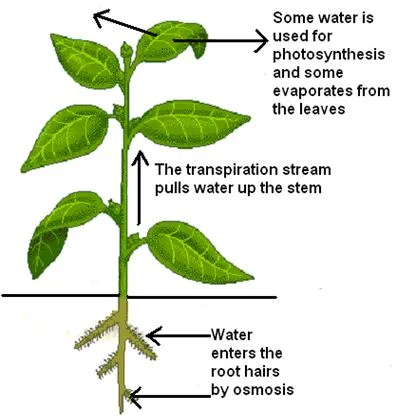
The water and the mineral salts (juice) are transmitted from the root to other parts of the plant to use them in making the food. It is transmitted from the soil by the osmosis feature because the concentration of the salt inside the vacuole is higher than the concentration of the salt in the soil.
Transpiration Process and Transmission of Juice in Plants
The mineral salts are transmitted from the soil by the selective permeability of the semi-permeable of the membrane of the root hair. The root hairs in the epidermis layer absorb the water and mineral salts (the juice) from the soil. The juice is transmitted to the endodermis layer, which regulates passing of the water to the xylem. The xylem (wood tissue) transports the juice to reach the stem and other parts of the plant, such as the leaves and the flowers.
The transpiration process and the transmission of juice in plants are closely linked physiological processes that ensure the continuous movement of water and dissolved minerals from the roots to all parts of a plant. During transpiration, water evaporates from the leaf surface through tiny openings called stomata, creating a pulling force known as the transpiration pull. This force draws water upward through the xylem vessels from the roots to the stems, branches, flowers, and leaves.
The transmission of juice, also known as the ascent of sap, depends on transpiration pull, cohesion between water molecules, adhesion to xylem walls, and root pressure. Together, these mechanisms help distribute nutrients, support photosynthesis, maintain cell turgidity, regulate plant temperature, and promote healthy growth and development. Without the transpiration process and efficient transmission of juice in plants, the transport of water and essential minerals would be greatly reduced, affecting the plant’s survival and productivity.
The movement of water from roots to aerial parts is commonly known as the ascent of sap. This process ensures the distribution of essential minerals, supports photosynthesis, maintains cell turgidity, regulates temperature, and promotes healthy plant development. Without transpiration and efficient water transport, plants would not be able to produce food or survive environmental stress.
Transpiration process
The transpiration process is a vital process by which the plant loses water in the form of water vapour from the leaves or from the other green parts through the holes called the stomata. Loss of the plant water by the transpiration process creates pressure that raises the water upwards to the plant’s top.
The stomata are widely spread on the lower surface of the plant leaves, and the plant loses most of the water that reaches the leaves through the stomata. Each stoma is surrounded by two guard cells, which control the opening and closing of the stoma by changing their shapes. The stomata are tiny holes that are widely spread on the lower surface of the plant leaves, through which the plant gets rid of the excess water.
How Does Water Move from Roots to Leaves?
The process occurs through several steps:
- Water Absorption: Root hairs absorb water and dissolved minerals from the soil.
- Movement into Root Xylem: Water passes through root tissues and enters the xylem vessels.
- Upward Transport: Water moves upward through stems and branches due to transpiration pull, cohesion, adhesion, and root pressure.
- Distribution to Leaves: Water reaches leaf cells where it is used in photosynthesis and metabolic activities.
- Evaporation Through Stomata: Excess water evaporates through stomata during transpiration.
Importance of Transpiration
- Facilitates Water Transport: Transpiration creates the force needed to pull water from roots to leaves.
- Supplies Essential Minerals: Minerals dissolved in water are transported to growing tissues.
- Supports Photosynthesis: Water is a key raw material for photosynthesis.
- Maintains Cell Turgidity: It helps cells remain firm and supports plant structure.
- Cools the Plant: Evaporation reduces leaf temperature during hot weather.
- Enhances Nutrient Distribution: Nutrients reach different plant organs efficiently.
- Promotes Growth: Proper water movement supports cell division and elongation.
Factors Affecting Transpiration
Internal Factors
- Stomatal Number: More stomata increase water loss.
- Leaf Surface Area: Larger leaves generally transpire more.
- Cuticle Thickness: A thicker waxy cuticle reduces transpiration.
External Factors
- Temperature: Higher temperatures increase transpiration.
- Humidity: High humidity reduces water loss.
- Wind: Wind removes water vapor around leaves and increases transpiration.
- Light Intensity: Bright light opens stomata and increases transpiration.
- Soil Water Availability: Adequate soil moisture supports transpiration.
Mechanisms Responsible for the Ascent of Sap
- Root Pressure: Pressure generated in roots pushes water upward.
- Cohesion: Water molecules stick together, forming a continuous column.
- Adhesion: Water molecules adhere to xylem walls.
- Transpiration Pull: Evaporation from leaves creates negative pressure that pulls water upward.
Advantages of Efficient Water Transport
- Maintains healthy plant growth.
- Improves nutrient distribution.
- Supports flowering and fruit production.
- Increases photosynthetic efficiency.
- Helps plants survive environmental changes.
- Enhances agricultural productivity.
15 Powerful Facts About Transpiration and Water Transport
- Nearly 95–99% of absorbed water is lost through transpiration.
- Stomata are the primary sites of transpiration.
- Xylem vessels transport water upward.
- Root hairs greatly increase water absorption.
- Transpiration helps cool plants naturally.
- Water transport depends on cohesion and adhesion.
- The ascent of sap occurs against gravity.
- Root pressure contributes mainly in small plants.
- Transpiration rates vary among plant species.
- Desert plants reduce transpiration through adaptations.
- Wind can significantly increase water loss.
- Humidity decreases transpiration rates.
- Water is essential for photosynthesis.
- Most transpiration occurs during daylight hours.
- Healthy xylem tissues are vital for plant survival.
Frequently Asked Questions (FAQ) about Transpiration and Water Transport
1. What is transpiration in plants?
Transpiration is the loss of water vapor from plant surfaces, mainly through leaf stomata.
2. What is the ascent of sap?
The ascent of sap is the upward movement of water and dissolved minerals from roots to leaves through xylem vessels.
3. Why is transpiration important?
It facilitates water transport, cools plants, supports photosynthesis, and distributes minerals.
4. Which tissue transports water in plants?
Xylem tissue transports water and mineral salts from roots to other plant parts.
5. What causes water to move upward in plants?
Water moves upward due to transpiration pull, cohesion, adhesion, and root pressure.
6. How do stomata affect transpiration?
Open stomata allow water vapor to escape, increasing transpiration rates.
7. Does humidity affect transpiration?
Yes. High humidity reduces transpiration, while low humidity increases it.
8. Why do plants need water transport?
Water transport provides cells with water and minerals needed for growth, photosynthesis, and metabolism.
9. What is the difference between transpiration and evaporation?
Transpiration is water loss from living plant tissues, while evaporation can occur from any exposed water surface.
10. Can transpiration occur at night?
It occurs at a much lower rate because many stomata close during the night.
Transpiration vs Guttation
Transpiration is the process by which plants lose water in the form of water vapor from their aerial parts, mainly through the stomata of the leaves. It occurs mostly during the daytime when the stomata are open, allowing gas exchange for photosynthesis. Transpiration creates a pulling force known as the transpiration pull, which helps transport water and dissolved minerals from the roots to the leaves through the xylem vessels. It also plays an important role in cooling the plant and maintaining the flow of nutrients.
Guttation, on the other hand, is the loss of liquid water droplets from the edges or tips of leaves through specialized structures called hydathodes. It usually occurs at night or in the early morning when the soil contains abundant water and the rate of transpiration is low. Under these conditions, root pressure forces excess water out of the plant, resulting in visible droplets on leaf margins. Unlike transpiration, the water lost during guttation contains dissolved minerals and other substances.
The main difference between transpiration and guttation is the form in which water is lost. In transpiration, water escapes as vapor, while in guttation, water is released as liquid droplets. Transpiration mainly occurs through stomata and is driven by evaporation and transpiration pull, whereas guttation occurs through hydathodes and is driven by root pressure. Transpiration is a continuous and widespread process in most plants during the day, while guttation is less common and usually occurs under conditions of high soil moisture and high humidity.
Although both processes involve water loss from plants, transpiration is much more important for water transport, temperature regulation, and nutrient movement throughout the plant. Guttation mainly serves as a mechanism for removing excess water when transpiration rates are low. Together, these processes demonstrate how plants regulate their internal water balance and adapt to changing environmental conditions.
Transpiration and guttation are two processes through which plants lose water, but they differ significantly in their mechanisms and functions. Transpiration is the loss of water in the form of water vapor through the stomata of leaves, stems, and other aerial parts of the plant. It usually occurs during the daytime when stomata are open and creates a transpiration pull that helps transport water and dissolved minerals from the roots to the leaves. This process is essential for cooling the plant, maintaining cell turgidity, supporting photosynthesis, and ensuring the continuous upward movement of sap through the xylem vessels.
In contrast, guttation is the loss of water in the form of liquid droplets from the edges or tips of leaves through specialized structures called hydathodes. It commonly occurs at night or in the early morning when soil moisture is high and transpiration rates are low. Guttation is driven by root pressure rather than evaporation and transpiration pull.
Unlike the pure water vapor lost during transpiration, guttation droplets contain dissolved minerals and salts. While transpiration plays a major role in water transport and temperature regulation, guttation mainly helps remove excess water from the plant. Understanding transpiration vs guttation is important in plant physiology because both processes contribute to maintaining water balance and healthy plant growth.
Conclusion
The transpiration process and transmission of juice in plants are essential for plant survival, growth, and productivity. Through the coordinated actions of roots, xylem vessels, stomata, and environmental factors, water and minerals move efficiently throughout the plant. Understanding these processes helps students, researchers, and gardeners appreciate how plants maintain life and adapt to changing conditions in 2026 and beyond.
You can follow science online on YouTube from this link: Science online
Mechanism of the transport in higher plants, Theories explain the ascent of water in the plant
Transportation in plant, Structure & role of the plant stem in the process of transportation
Excretion in plants, Importance & types of transpiration for the plant