Types & properties of the soil, Sand soil, Silt soil and Clay soil, Why is understanding soil types important?
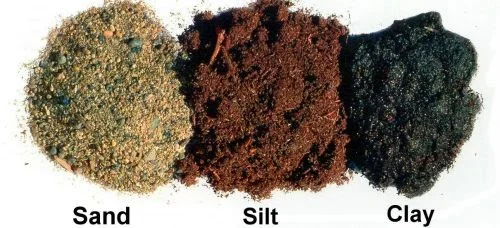 |
| The types of soil are the sand soil, the silt soil, and the clay soil |
You can see the soil around you, and you will notice the different crops that are planted in the different types of soil. The soil can be classified into three different types according to the kind of particles (the components) that form it.
What are the types of soil?
The types of soil are sand soil, silt soil, and clay soil.
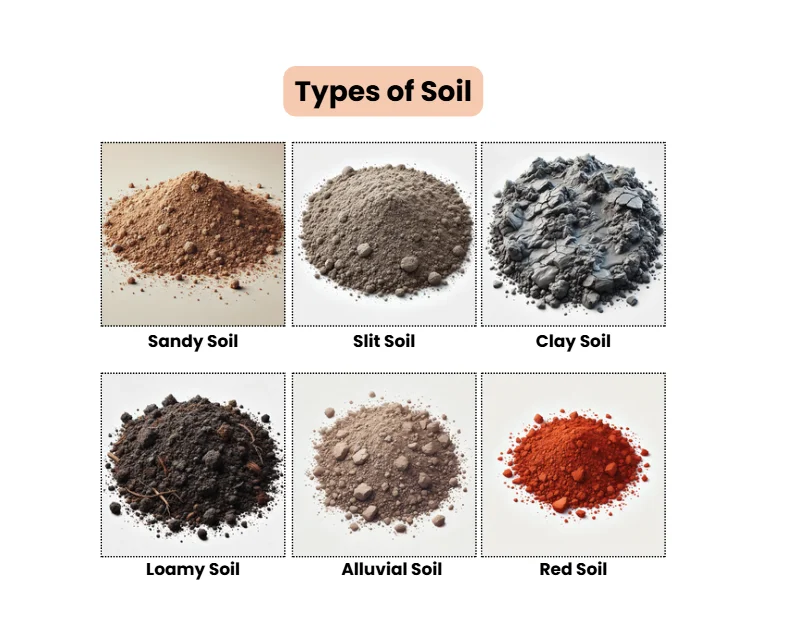
Types of soil
Sand soil
The sand soil is the soil that rarely contains humus, and it is composed mainly of sand particles, a small amount of clay, and silt.
The sand soil is called by this name as it is composed mainly of sand particles.
Sand soil properties
-
The fertility of the sand soil is low.
-
It is well-aerated soil that has low absorption of water.
-
The size of its particles is large.
-
The colour of the sand soil is yellow.
-
It is weekly composed (loose).
-
It has the fastest and greatest drainage of water.
Silt soil
The silt soil is the soil that contains more humus, and it is composed of a mixture of equal amounts of sand, gravel, silt, and clay.
Silt soil properties
-
The colour of the silt soil is grey.
-
The size of its particles is medium (between the sand soil particles and the clay soil particles.
-
It is moderately aerated soil that has medium absorption of the water.
-
It is moderately compacted.
-
It has high fertility.
-
It has medium drainage of the water.
Clay soil
The clay soil is composed mainly of clay and silt particles, and a small amount of sand and humus.
The clay soil is called by this name as it is composed mainly of clay and silt particles.
Clay soil properties
-
The colour of the clay soil is dark (black).
-
The size of its particles is small.
-
It is fertile.
-
It is highly compacted (hard).
-
It is poorly aerated soil that has a high absorption of water.
-
It has the lowest drainage of water.
FAQ about Types and Properties of Soil
1. What is soil?
Soil is the top layer of the Earth’s surface that supports plant life. It is made of a mixture of minerals, organic matter, water, air, and living organisms, and it plays an important role in agriculture and ecosystems.
2. What are the main types of soil?
The three main soil types are sand soil, silt soil, and clay soil. Each type differs in particle size, texture, water retention, and fertility.
3. What are the properties of sandy soil?
Sandy soil has large particles and a rough texture. It drains water quickly, warms up fast, and allows good air circulation, but it does not hold nutrients well.
4. What are the advantages of sandy soil?
Sandy soil has several advantages:
- Good drainage of water.
- Easy to cultivate and work with.
- Good aeration for plant roots.
5. What are the disadvantages of sandy soil?
The disadvantages include:
- Poor water retention.
- Nutrients wash away easily.
- Plants may need frequent watering and fertilization.
6. What are the characteristics of silt soil?
Silt soil has medium-sized particles and feels smooth or silky to the touch. It retains water better than sandy soil and is usually more fertile.
7. What are the advantages of silt soil?
Silt soil is beneficial because:
- It holds moisture well.
- It contains many nutrients.
- It is good for plant growth and farming.
8. What are the disadvantages of silt soil?
Silt soil can:
- Become compacted easily.
- Have poor drainage if heavily packed.
- Be prone to erosion by wind or water.
9. What are the properties of clay soil?
Clay soil has very small particles and feels sticky when wet. It retains water and nutrients very well but has poor drainage and aeration.
10. What are the advantages of clay soil?
Clay soil benefits include:
- High nutrient content.
- Excellent water retention.
- Suitable for certain crops like rice.
11. What are the disadvantages of clay soil?
Clay soil may:
- Drain water very slowly.
- Become hard and compact when dry.
- Make root growth difficult.
12. Why is understanding soil types important?
Understanding soil types helps farmers and gardeners choose the right crops, irrigation methods, and fertilizers, which improves plant growth and agricultural productivity.
You can subscribe to Science Online on YouTube from this link: Science Online