RugOne Xever 7 Pro review, advantages, disadvantages and specifications
RugOne Xever 7 Pro offers AMOLED, 120Hz, 500 nits (typ), 900 nits (HBM), 2200 nits (peak), it has a size of 6.67 inches, 107.4 cm2 (~73.3% screen-to-body ratio), it has a resolution of 1080 x 2400 pixels, 20:9 ratio (~395 ppi density), making it suitable for playing games, watching videos and browsing the internet, it has Corning Gorilla Glass 3, Mohs level 4 for screen protection.
RugOne Xever 7 Pro advantages
RugOne Xever 7 Pro presents the latest operating system of Android 15, up to 3 major Android upgrades, it has Mediatek Dimensity 7025 (6 nm), offering Octa-core (2×2.5 GHz Cortex-A78 & 6×2.0 GHz Cortex-A55), IMG BXM-8-256, and it offers fantastic performance without any lag.
RugOne Xever 7 Pro comes with high expandable memory via a card slot, microSDXC (dedicated slot), it offers high internal memory of 512GB 12GB RAM that is suitable for multitasking performance, it has UFS 3.1, it offers lots of RAM and a large memory, It was announced on 2025, November 11, and it was released on 2025, November 11.
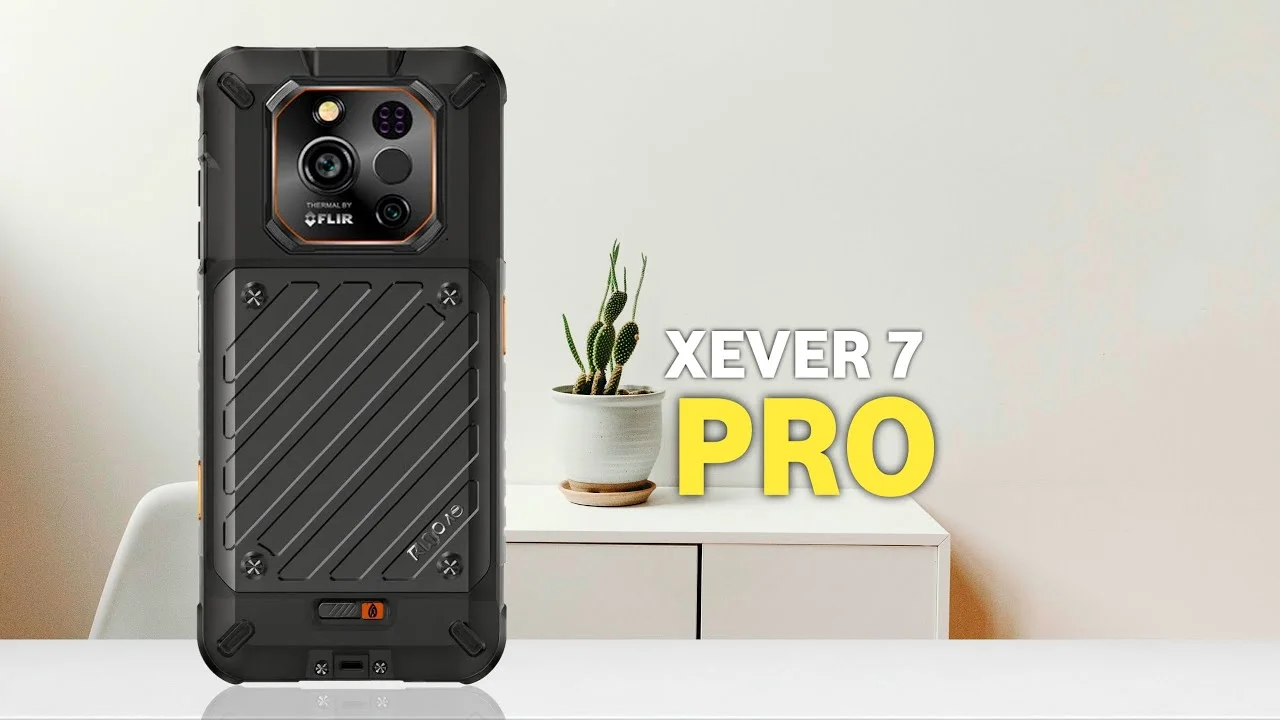
RugOne Xever 7 Pro presents a triple primary camera, it has 50 MP, f/1.9, (wide), 1.0µm, PDAF, OIS, 64 MP, f/1.8, (night vision), 4 infrared lights, Thermal camera by FLIR Lepton 3.5, 160×120 px, 9Hz, 12μm, it offers features such as Dual-LED flash, HDR, panorama, it has a video of 1440p@30fps, 1080p@30fps, it has a single selfie camera, 32 MP, f/2.5, (wide), 0.7µm, it has a video of 1080p@30fps, and it presents fantastic selfies.
RugOne Xever 7 Pro
RugOne Xever 7 Pro has 2G bands GSM 850 / 900 / 1800 / 1900, CDMA 800 / 1900, it offers 3G bands HSDPA 800 / 850 / 900 / 1700(AWS) / 1900 / 2100, it includes 4G bands 1, 2, 3, 4, 5, 7, 8, 12, 13, 17, 18, 19, 20, 25, 26, 28, 32, 34, 38, 39, 40, 41, 66, 71, it has 5G bands 1, 2, 3, 5, 7, 8, 20, 25, 28, 38, 40, 41, 66, 71, 77, 78, 79 SA/NSA/Sub6, and it offers a speed of HSPA, LTE, 5G.
RugOne Xever 7 Pro has Nano-SIM + Nano-SIM + eSIM (max 2 at a time), its body dimensions are 173.6 x 84.4 x 14.1 mm (6.83 x 3.32 x 0.56 in), it is IP68/IP69K dust-tight and water resistant (high pressure water jets; immersible up to 2m for 30 min) Drop resistant up to 2m MIL-STD-810H compliant Dedicated flashlight (230 lumens).
RugOne Xever 7 Pro comes with a loudspeaker, it has a 3.5mm jack, it has Wi-Fi 802.11 a/b/g/n/ac, dual-band, it has Bluetooth 5.2, A2DP, LE, it has GPS, GALILEO, GLONASS, BDS, QZSS, it offers NFC to transfer data, it has an Infrared port, and it presents Wireless FM radio, and it offers USB, Type-C 2.0, OTG.
RugOne Xever 7 Pro offers sensors such as fingerprint (side-mounted), accelerometer, gyro, proximity, compass, and barometer, it has a Li-Po 5550 mAh, removable battery that lasts a long time, it has 33W wired, 18W wired, via pins, 10W reverse wired, and its price is about 560 EUR.
RugOne Xever 7 Pro presents a high-end processor and graphics processor, It has a flash that allows you to take superb photos in low light conditions and with high quality, It has superb battery capacity, It offers a high pixel density, It presents a high resolution that makes the display very clear & bright, it has an excellent screen-to-body ratio, and it has a high building quality.
RugOne Xever 7 Pro has decent apps and gaming performance. It has connectivity options such as Wi-Fi, Bluetooth, GPS, USB, 3G, 4G and 5G, It offers better viewing angles and lower power consumption, it offers smooth performance, it comes with a big and vibrant screen.
RugOne Xever 7 Pro comes with a premium and impressive design, It has excellent and up-to-date software, it has a fingerprint for better phone security, It has superb cameras with many features, and the quality of the produced photos is excellent in both natural and low light conditions, and it can take superb images without losing any details.
RugOne Xever 7 Pro disadvantages
RugOne Xever 7 Pro weighs a bit heavy at 325 g (11.46 oz), it does not have Wi-Fi Direct, it offers only two colours which are Black, and Beige, and it does not have a Temperature sensor.
You can follow Science online on YouTube from this link: Science online