4NE-1 Humanoid Robot: Shocking Features, AI Capabilities, Applications, and the Future of Human-Like Robotics
4NE-1 humanoid robot represents a new generation of intelligent robots designed to work alongside humans in homes, workplaces, healthcare, research laboratories, and industrial environments. Combining advanced artificial intelligence, computer vision, dexterous manipulation, and human-like mobility, the 4NE-1 robot demonstrates how modern robotics is moving toward safer, smarter, and more versatile assistants capable of performing increasingly complex tasks.
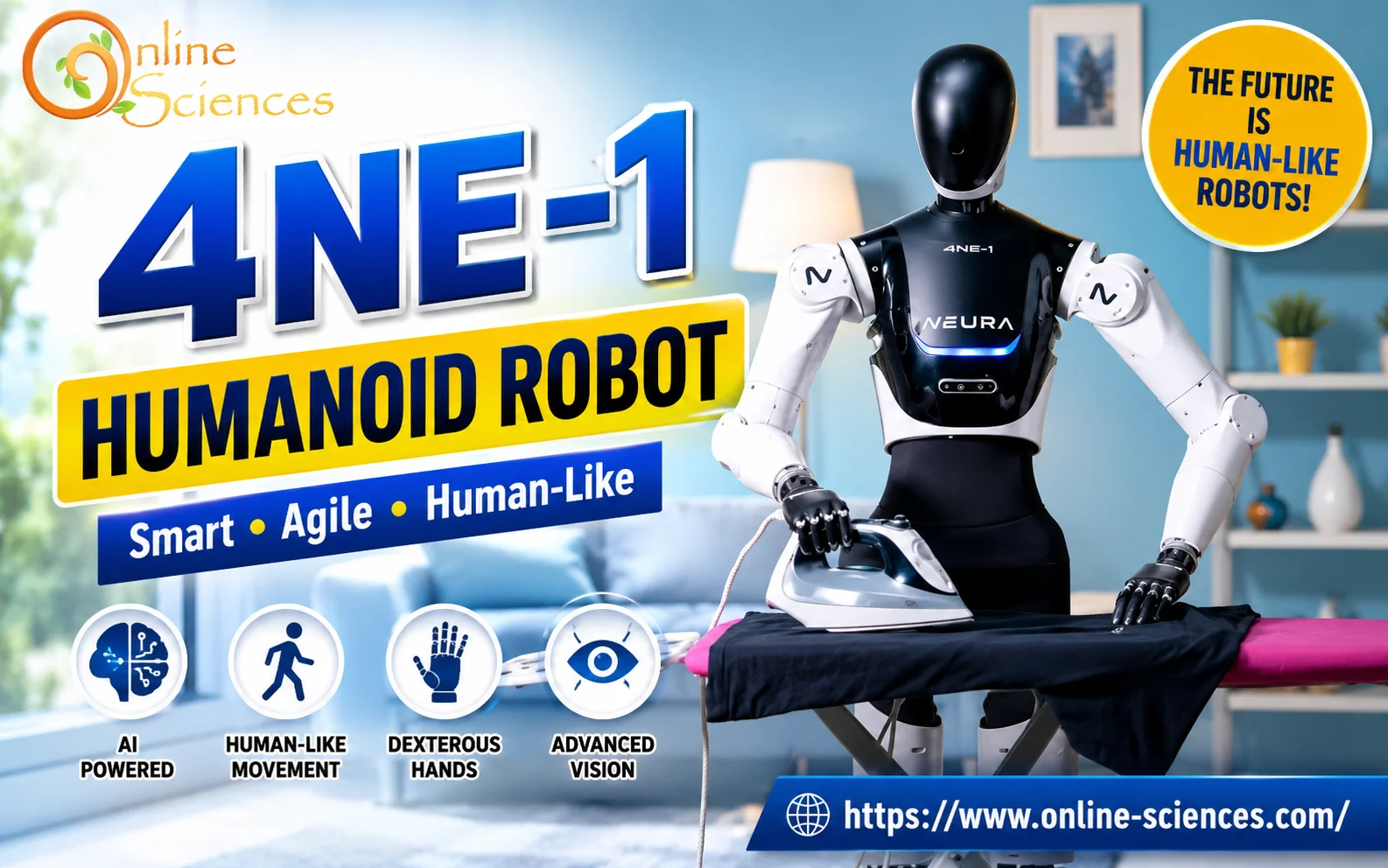
4NE-1 humanoid robot
What is the 4NE-1 Humanoid Robot?
The 4NE-1 humanoid robot is an AI-powered humanoid platform created to perform tasks that require human-like movement, perception, and decision-making. Its human-inspired body enables it to operate in environments originally designed for people without requiring major infrastructure changes.
Unlike traditional industrial robots that remain fixed in factories, 4NE-1 is designed for dynamic environments where it can safely navigate around people while interacting with tools, furniture, equipment, and everyday objects.
Features of the 4NE-1 Humanoid Robot
Human-like Design
The robot‘s anthropomorphic structure allows it to:
- Walk naturally.
- Maintain balance.
- Reach shelves.
- Climb small obstacles.
- Open doors.
- Use tools.
- Operate human-designed equipment.
Its human proportions make adaptation easier across multiple industries.
Artificial Intelligence
The robot integrates powerful AI systems capable of:
- Object recognition.
- Facial recognition.
- Voice interaction.
- Natural language understanding.
- Motion planning.
- Task optimization.
- Autonomous decision-making.
Machine learning enables continuous improvement from experience.
Advanced Vision System
Multiple cameras and depth sensors allow 4NE-1 to:
- Detect people.
- Avoid collisions.
- Recognize obstacles.
- Read environments.
- Identify objects.
- Estimate distances.
- Perform precision handling.
Its computer vision system enables reliable operation even in changing environments.
Dexterous Robotic Hands
One of the robot‘s biggest strengths is its sophisticated hands.
They are capable of:
- Picking up fragile objects.
- Carrying boxes.
- Using kitchen utensils.
- Handling tools.
- Pressing buttons.
- Operating machinery.
- Sorting products.
Fine motor control allows delicate manipulation similar to human hands.
Stable Mobility
The humanoid robot is engineered with advanced balance control.
It can:
- Walk on uneven floors.
- Turn smoothly.
- Recover from small disturbances.
- Navigate narrow pathways.
- Work safely near humans.
Dynamic balancing algorithms improve stability during movement.
AI Technologies Behind the 4NE-1 Robot
The robot combines several advanced technologies, including:
- Reinforcement learning.
- Computer vision.
- Sensor fusion.
- Speech recognition.
- Motion planning.
- Large language models.
- Autonomous navigation.
- Edge AI computing.
- Human-robot interaction systems.
These technologies allow the robot to understand its surroundings and execute complex actions efficiently.
Applications of the 4NE-1 Humanoid Robot
Manufacturing
Factories can use 4NE-1 for:
- Material handling.
- Equipment inspection.
- Assembly assistance.
- Packaging.
- Quality control.
- Warehouse operations.
Healthcare
Hospitals may use the robot to:
- Deliver medicines.
- Transport medical supplies.
- Guide visitors.
- Support healthcare staff.
- Monitor patients.
- Reduce repetitive workloads.
Logistics
Warehouses benefit from:
- Inventory management.
- Shelf inspection.
- Package transportation.
- Loading assistance.
- Sorting operations.
Home Assistance
Future home applications include:
- Cleaning.
- Cooking assistance.
- Carrying groceries.
- Organizing household items.
- Elderly support.
- Smart home interaction.
Education
Educational institutions can use the robot for:
Research
Universities and laboratories employ humanoid robots for:
- Human-robot interaction studies.
- Artificial intelligence research.
- Motion planning.
- Autonomous navigation.
- Cognitive robotics.
Advantages of the 4NE-1 Humanoid Robot
The robot offers numerous benefits:
- Human-like mobility.
- Intelligent decision-making.
- Safe human collaboration.
- Flexible deployment.
- Autonomous navigation.
- Continuous AI learning.
- High operational efficiency.
- Precision manipulation.
- Multi-purpose functionality.
- Adaptability across industries.
4NE-1 humanoid robot Limitations
Despite its capabilities, several challenges remain:
- High development costs.
- Complex maintenance.
- Limited battery life.
- Ethical considerations.
- Data privacy concerns.
- Computing power requirements.
- Regulatory challenges.
- Dependence on AI training quality.
Future hardware improvements are expected to reduce many of these limitations.
Industries That Can Benefit
The 4NE-1 robot has potential applications in:
- Manufacturing.
- Healthcare.
- Hospitality.
- Retail.
- Education.
- Security.
- Warehousing.
- Logistics.
- Research laboratories.
- Smart cities.
- Public services.
- Customer support.
Future of the 4NE-1 Humanoid Robot
Future versions are expected to include:
- Longer battery life.
- Faster AI reasoning.
- Better conversational abilities.
- Improved dexterity.
- More natural walking.
- Enhanced emotional interaction.
- Stronger collaborative intelligence.
- Cloud-connected learning.
- Better autonomous decision-making.
As artificial intelligence advances, robots like 4NE-1 could become valuable assistants in daily life and professional environments.
Why the 4NE-1 Humanoid Robot Matters
Humanoid robots represent an important milestone because they are designed to operate in spaces already built for humans. Instead of redesigning factories, offices, hospitals, or homes for machines, robots like 4NE-1 can adapt to existing environments. This flexibility has the potential to reduce automation costs and expand the use of robotics across many sectors.
Frequently Asked Questions (FAQ) about the 4NE-1 humanoid robot
1. What is the 4NE-1 humanoid robot?
It is an AI-powered humanoid robot designed to perform human-like tasks using advanced artificial intelligence, computer vision, and autonomous navigation.
2. What can the 4NE-1 robot do?
It can walk, recognize objects, interact with people, manipulate tools, transport items, assist workers, and perform various service and industrial tasks.
3. Does the 4NE-1 robot use artificial intelligence?
Yes. It relies on AI technologies such as machine learning, computer vision, speech recognition, and intelligent motion planning.
4. Which industries can benefit from the 4NE-1 robot?
Manufacturing, healthcare, logistics, education, hospitality, retail, research, and home assistance are among the primary sectors.
5. Is the 4NE-1 robot fully autonomous?
It is designed for a high level of autonomous operation, although some tasks may still require human supervision depending on the application.
6. Can the 4NE-1 robot safely work with humans?
Yes. It is designed with sensors, AI perception, and collision avoidance systems to support safe human-robot collaboration.
7. What are the biggest advantages of the 4NE-1 robot?
Its strengths include human-like mobility, intelligent automation, adaptable task performance, advanced perception, and the ability to work in environments built for people.
8. What challenges does the 4NE-1 robot face?
Challenges include battery endurance, development costs, maintenance, AI training requirements, and evolving safety regulations.
You can follow Science Online on YouTube from this link: Science Online
Sophia robot review, features, use, advantages and disadvantages
Top trending topics on Sophia robots and Can Sophia Destroy humans
Educational robotics, Robot teachers, Social robots review, features advantages & drawbacks
Humanoid robots use, risks, advantages and disadvantages
Advantages and disadvantages of using robots in our life
Robot teachers use, advantages and disadvantages
Boston Dynamics Atlas review, advantages and features, How does Atlas robot work?
Pepper robot review, features and What can Pepper do for your business?