
New Ameca Gen 3 AI Robot Is Getting WAY TOO HUMAN! 😱: 7 Shocking Ways It Looks TOO Human!
The New Ameca Gen 3 AI Robot is capturing attention with the fascinating world of humanoid robotics, realistic facial expressions, and artificial intelligence. As robots become better at imitating human movements and communication, Ameca raises an intriguing question: can a machine look and behave so much like a human that it becomes difficult to distinguish between artificial intelligence and real emotions? Discover the technology behind Ameca, its human-like features, potential applications, and why the future of robotics is becoming more exciting than ever.
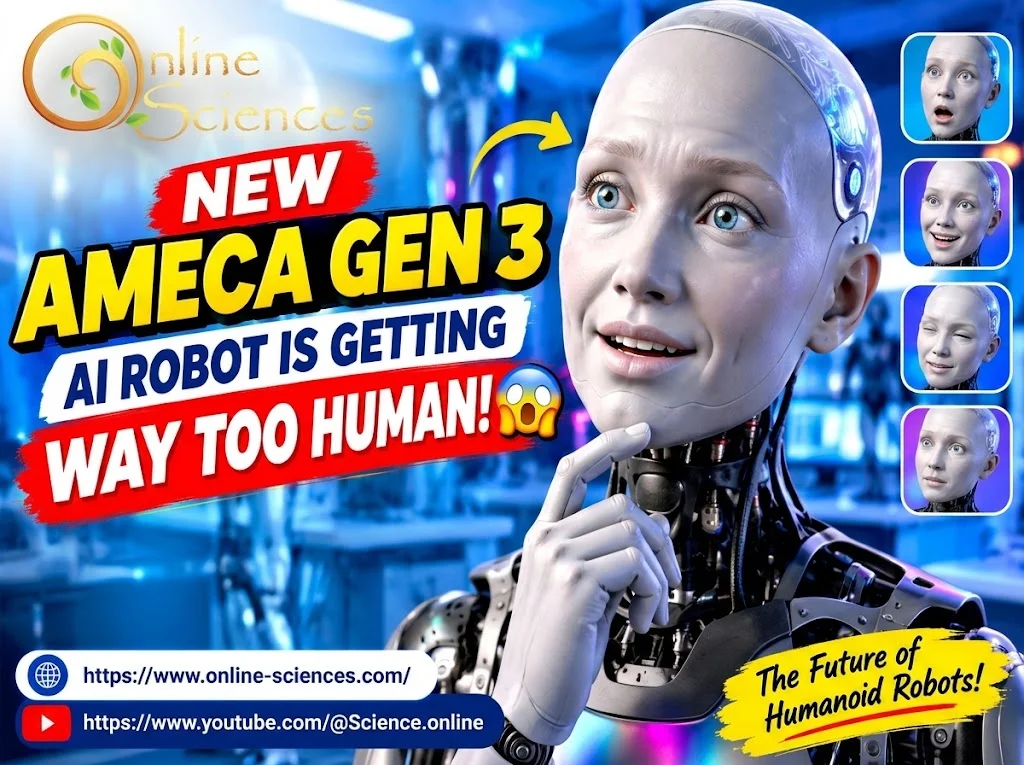
New Ameca Gen 3 AI humanoid robot showing realistic facial expressions and human-like movements.
What is the New Ameca Gen 3 AI Robot?
The Ameca humanoid robot, developed by Engineered Arts, is one of the best-known examples of realistic humanoid robotics. It was designed to interact with people through facial expressions, gestures, and human-like movements. Its expressive face and ability to produce lifelike reactions have made it a popular subject in discussions about the future of artificial intelligence.
The phrase “Ameca Gen 3” is attracting interest from people looking for the latest developments in the Ameca robot. However, specific Gen 3 specifications and capabilities should be verified through official announcements before being presented as confirmed features. The broader Ameca platform already demonstrates how mechanical engineering, facial animation, and AI-driven interactions can create a more natural communication experience.
Unlike traditional industrial robots, which are usually designed to perform repetitive tasks, Ameca focuses on human-robot interaction. Its expressive design makes it suitable for demonstrations, exhibitions, research, and experiments involving communication between people and machines.
1. Realistic Facial Expressions That Look Almost Human
One of Ameca‘s most remarkable characteristics is its expressive face. The robot can display a range of facial movements, including smiling, raising its eyebrows, opening its mouth, and moving its eyes. These small details can make a significant difference in how people perceive a machine.
Human communication depends on much more than spoken words. Eye contact, facial expressions, and gestures help people interpret meaning and understand reactions. By reproducing some of these behaviors, Ameca can make conversations with robots feel more engaging.
For example, a surprised expression or a friendly smile can make an interaction appear more natural. Nevertheless, these expressions are generated through mechanical systems and programmed or AI-assisted behaviors. A realistic smile does not prove that the robot is genuinely happy.
2. How Artificial Intelligence Makes Ameca More Interactive
Artificial intelligence is changing the way robots communicate with humans. Depending on the software and systems used in a particular demonstration, AI can help a robot process questions, generate conversational responses, and participate in interactive experiences.
Speech recognition can convert spoken language into information that a computer can process. Language models can then help generate relevant responses, while speech synthesis can turn those responses into spoken words. Robotic control and facial animation can coordinate the robot‘s movements with the conversation.
When these technologies work together, a humanoid robot can appear more responsive than a machine that simply repeats prerecorded sentences.
However, AI capabilities vary between systems and configurations. It is important not to assume that every Ameca model has unrestricted internet access, unlimited conversational memory, independent reasoning, or the same AI software. These features depend on the specific implementation.
3. Why Ameca Gen 3 humanoid robot Is Getting WAY TOO HUMAN
The expression “getting way too human” describes how realistic robots can sometimes appear. When a machine looks at someone, moves its eyes, changes its facial expression, and responds to speech, people may instinctively treat it as a social partner rather than an ordinary device.
Ameca‘s design encourages observers to focus on its face, expressions, and gestures. These characteristics can make the robot appear attentive, curious, or surprised, even though its behavior is produced by artificial systems.
This realism can be useful in research and public demonstrations because it allows scientists to explore how people react to humanoid machines. It can also help designers investigate which expressions and movements make robot interactions easier to understand.
At the same time, realistic robots raise questions about trust and transparency. People should be able to recognize when they are interacting with an artificial system, particularly in settings involving customer service, education, healthcare, or sensitive personal information.
4. The Uncanny Valley: Why Realistic Robots Can Feel Strange
Have you ever seen a robot that looks almost human but still feels slightly unsettling? This reaction is often discussed in connection with the uncanny valley.
The concept describes how a human-like artificial character may become uncomfortable to observe when its appearance is highly realistic, but certain details remain unnatural. For example, a robot may have a convincing face but slightly unusual movements, eye contact, or timing.
Ameca‘s expressive face makes it an interesting example for discussions about this phenomenon. Some viewers find its movements fascinating, while others may feel uneasy when the robot appears to stare, smile, or react like a person.
The effect differs from one individual to another. It also depends on the robot‘s design, behavior, context, and the observer’s expectations. More realism does not automatically mean that every robot will seem more comfortable or believable.
5. Where Could Ameca Robot and Humanoid Robots Be Used?
Humanoid robots could support several industries as their hardware and software continue to develop.
- Education: Robots can demonstrate concepts in science, engineering, and artificial intelligence.
- Research: Scientists can study human-robot communication, social responses, and interactive behavior.
- Museums and exhibitions: Expressive robots can engage visitors and explain technological concepts.
- Customer service: Humanoid machines may eventually help welcome visitors, answer routine questions, or provide directions.
- Entertainment: Realistic robotic characters can participate in demonstrations, performances, and interactive experiences.
- Robotics development: Engineers can test facial animation, movement control, and conversational interfaces.
These applications are possibilities rather than guarantees. A robot‘s suitability for a particular task depends on its capabilities, cost, reliability, safety, and the environment in which it operates. Although humanoid robots attract attention because of their appearance, they do not necessarily outperform simpler machines. A specialized robot may be more efficient for manufacturing, transportation, or repetitive tasks.
6. Can Ameca Really Think and Feel Like a Human?
One of the biggest questions about advanced humanoid robots is whether they can experience emotions or possess consciousness.
Modern AI can generate language that sounds empathetic, recognize certain conversational cues, and produce expressions that resemble human emotional responses. However, these abilities do not establish that an AI system experiences feelings in the way humans do.
Similarly, a robot may respond to a question with a thoughtful expression without consciously reflecting on the answer. Its visible behavior can result from a combination of software, sensors, mechanical components, and AI-generated responses.
Human consciousness remains a complex scientific and philosophical subject. There is no established evidence that Ameca experiences subjective emotions simply because it can produce realistic facial expressions. Understanding this distinction is essential as AI systems become more convincing. People can appreciate the technology without assuming that a robot‘s appearance reveals an inner emotional life.
7. What Does Ameca Tell Us About the Future of Robotics?
Ameca represents an important direction in robotics: designing machines that communicate with people in more natural and understandable ways.
Future humanoid robots may combine improved movement, advanced conversational AI, environmental perception, and more sophisticated control systems. These developments could make robots more useful in public spaces, laboratories, educational settings, and selected service roles.
However, important challenges remain. Engineers must improve reliability, safety, affordability, and the ability to respond appropriately to unexpected situations. Developers must also consider privacy, data protection, transparency, and the risk of misleading people into believing that an AI system has human feelings.
The future of humanoid robotics will not depend on appearance alone. Robots must also demonstrate practical value, dependable performance, and responsible design. The New Ameca Gen 3 AI Robot is an exciting topic because it highlights how far realistic robot design and AI-powered interaction have progressed. Whether viewers find it amazing or slightly unsettling, Ameca encourages us to think about what it means for machines to look, speak, and behave like humans.
Frequently Asked Questions (FAQ) about the New Ameca Gen 3 AI Robot
1. What is the New Ameca Gen 3 AI Robot?
Ameca is a humanoid robot developed by Engineered Arts, known for its expressive face and human-like movements. Claims about a specific Gen 3 version should be checked against official announcements.
2. Who developed the Ameca robot?
Ameca was developed by Engineered Arts, a company specializing in humanoid robots and human-robot interaction.
3. Why does Ameca look so human?
Its expressive facial mechanisms, eye movements, mouth movements, and coordinated gestures help it reproduce some of the visual characteristics of human communication.
4. Can the Ameca robot talk to humans?
Ameca has been demonstrated in interactive communication settings. Its conversational capabilities depend on the software, AI integration, and configuration being used.
5. Does Ameca have real emotions?
There is no established evidence that Ameca experiences genuine human emotions. Its expressions can imitate emotional behavior without proving subjective feelings.
6. What is the uncanny valley in robotics?
The uncanny valley describes the unsettling reaction some people experience when an artificial character looks very human but still has noticeable unnatural characteristics.
7. What are the possible uses of Ameca?
Potential uses include robotics research, education, exhibitions, demonstrations, entertainment, and experiments in human-robot interaction.
8. Is the Ameca Gen 3 robot available for purchase?
Availability, pricing, and specifications depend on the particular model and the manufacturer’s current offerings. Check Engineered Arts‘ official website for verified information.
9. Will humanoid robots replace humans?
Humanoid robots may automate selected tasks and support human workers, but their capabilities and limitations vary. Their development does not mean that they can replace humans in every profession or situation.
10. Why is the Ameca robot important for the future of AI?
Ameca demonstrates how expressive robotics can make interactions between humans and machines more engaging. It also raises important questions about AI communication, transparency, trust, and the difference between simulated behavior and genuine consciousness.
Explore more science and technology articles on Science Online: https://www.online-sciences.com/
Watch more technology videos on Science Online Channel: https://www.youtube.com/@Science.online
🔥 Tesla Bot Gen 3: 1,000 Robots a Week — 7 Powerful Reasons You Still Can’t Buy One 🤯
🔥 Tesla Bot Gen 4 UPDATE 5000 Tasks As HOMEMAKER & Surgeon! Elon Musk SHOCKED Inside Optimus! 🤯
Boston Dynamics Atlas review, advantages and features, How does Atlas robot work?
Tesla robots (Optimus) review, use, advantages and disadvantages
Emo robot review, advantages, disadvantages, features and what can Emo do?
Advantages and disadvantages of using robots in our life
Ameca robot review, features, advantages, disadvantages and what can Ameca do?
Robot teachers use, advantages and disadvantages
Sophia robot review, features, use, advantages and disadvantages
Vector robot review, advantages, disadvantages and specifications