Electric Laser Welding Machine 2026: Complete Guide, Benefits, Applications, and Safety
Laser Welding Machine technology has transformed modern metal fabrication by combining concentrated laser energy with precise control to create strong, clean, and highly accurate welds. Unlike traditional welding processes that use an electric arc as their primary heat source, laser welding focuses an intense beam of light onto a small area of the workpiece, melting the material and forming a controlled weld. This approach can produce narrow welds, reduce heat distortion, and increase productivity in many manufacturing applications.
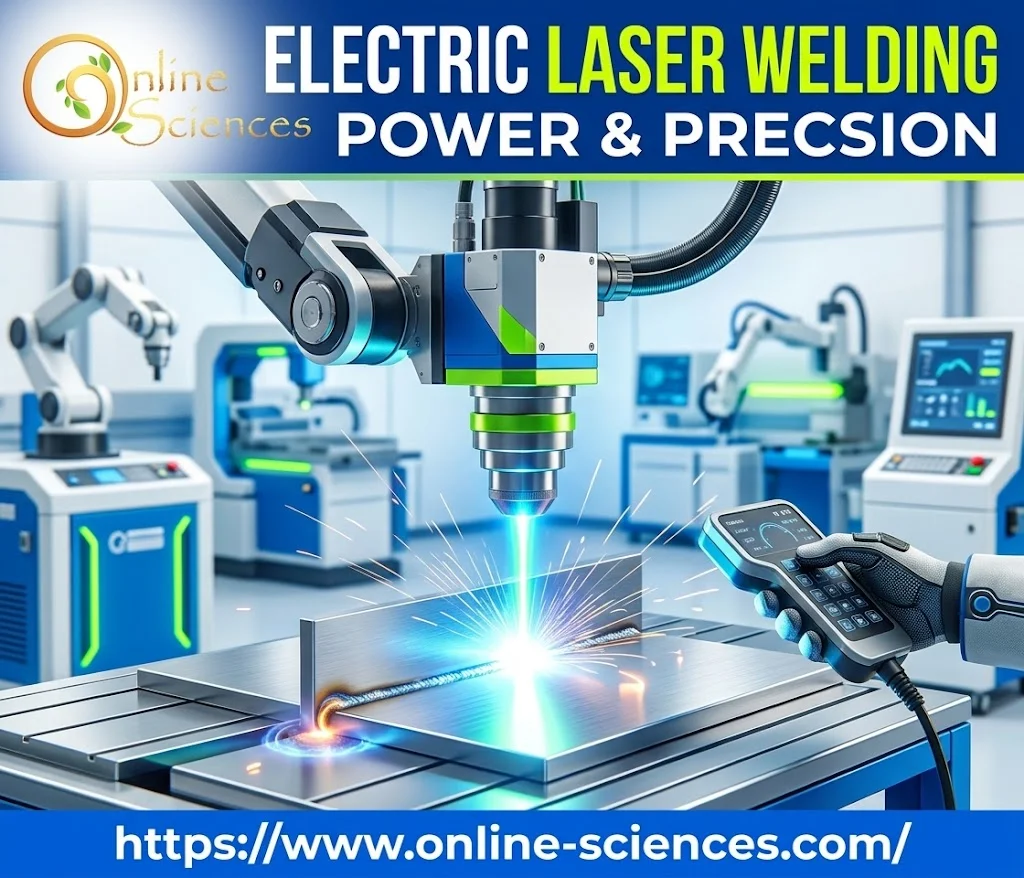
Electric Laser Welding Machine
What is an Electric Laser Welding Machine?
Laser Welding Machine equipment is designed to join metal parts by concentrating high-energy laser light onto the joint between two workpieces. The concentrated energy rapidly heats and melts the material, and the molten metal then cools and solidifies to create a permanent joint.
The term “electric” refers to the machine’s electrical power system and electronic controls rather than the welding process being identical to conventional arc welding. Modern fiber laser welding systems convert electrical power into laser energy and deliver the beam through an optical fiber to a welding head.
Fiber laser systems are particularly popular because they provide efficient beam delivery, precise control, and excellent welding performance. They can be configured as handheld machines for fabrication and repair or integrated into automated and robotic production systems.
How Does a Laser Welding Machine Work?
The working process can be divided into several important stages:
1. Laser Generation: The machine’s laser source generates a concentrated beam of light. Fiber laser systems commonly operate around the near-infrared wavelength range, where the beam can efficiently deliver energy to many engineering metals.
2. Beam Delivery: The laser beam travels through an optical fiber toward the welding head. This provides flexibility and allows the operator or automated system to position the welding head accurately over the joint.
3. Beam Focusing: Optical components inside the welding head focus the laser beam into a very small spot. The high power density rapidly heats the metal.
4. Melting and Fusion: When the focused beam reaches the workpiece, the metal absorbs the laser energy and forms a molten weld pool. At higher power densities, a keyhole can form, allowing the laser to create deep and narrow penetration.
5. Solidification: As the welding head moves along the joint, the molten metal cools and solidifies behind the laser beam, producing the finished weld. Shielding gas such as argon or helium may be used to protect the molten area from atmospheric contamination and oxidation.
Advantages of an Electric Laser Welding Machine
High Welding Speed: One of the biggest attractions of laser welding is speed. The concentrated energy source allows rapid heating and cooling, making laser welding suitable for applications where productivity is important.
In suitable applications, laser welding can operate significantly faster than conventional welding techniques, particularly when joining thin and medium-thickness materials.
Excellent Precision: A laser beam can be focused into a very small area, providing excellent control over the welding process. This is especially valuable when manufacturing components with tight dimensional tolerances or small welding areas.
Low Heat Distortion: Laser welding does not eliminate heat, but it concentrates the heat into a relatively small area. As a result, less heat spreads through the surrounding material compared with many conventional processes. The smaller heat-affected zone can help reduce warping, discoloration, and other forms of thermal distortion.
Clean Weld Appearance: Laser welding can produce smooth and precise weld seams with relatively little spatter. Depending on the material, joint design, settings, and application, this can reduce grinding, polishing, and other post-weld finishing work.
Strong and Deep Welds: When the process is correctly configured, laser welding can produce narrow, deep welds with a high depth-to-width ratio. This makes the technology attractive for applications requiring strong joints while minimizing the size of the weld zone.
Automation Compatibility: Laser welding machines can be integrated with CNC equipment, robotic arms, automated production lines, and other manufacturing systems. This allows manufacturers to achieve repeatable welding results and high production rates.
What Materials Can a Laser Welding Machine Weld?
Laser welding is widely used for many metallic materials, although the exact machine configuration and welding parameters must be selected according to the material and thickness.
Common materials include:
- Stainless steel.
- Carbon steel.
- Mild steel.
- Aluminum.
- Titanium.
- Copper and copper alloys.
- Galvanized metals.
- Nickel alloys.
- Some dissimilar-metal combinations.
American Welding Society information notes that laser welding is used with materials such as stainless steel, aluminum, titanium, and certain dissimilar metals. Material reflectivity, thickness, thermal conductivity, joint design, surface condition, laser power, focus position, travel speed, and shielding gas can all influence the final weld quality.
Types of Laser Welding Machines
Handheld Laser Welding Machine
Handheld systems are designed to give operators more flexibility. They can be useful in metal fabrication, repair work, customized production, and workshops where parts vary in size and shape.
However, handheld laser welding equipment can involve serious Class 4 laser hazards and requires appropriate engineering controls, training, protective equipment, and a controlled operating environment.
Automatic Laser Welding Machine
Automatic systems can control movement, laser parameters, and production sequences with limited operator intervention. They are useful for repetitive manufacturing operations.
Robotic Laser Welding Machine
Robotic laser welding combines a laser source with an industrial robot. This configuration can provide high repeatability and is particularly useful in automotive, machinery, and high-volume manufacturing.
CNC Laser Welding Machine
CNC-controlled systems provide programmed movement and precise positioning, making them suitable for components that require repeatable weld paths.
Applications of Electric Laser Welding Machines
Laser welding is used across a wide range of industries.
- Automotive Manufacturing: Automotive manufacturers use laser welding for various vehicle components because the process can provide speed, repeatability, and low thermal distortion.
- Aerospace: Aerospace components can require highly controlled and repeatable joining processes. Laser welding can be valuable when precision and controlled heat input are important.
- Electronics: Small components and precision assemblies can benefit from the focused nature of laser welding.
- Medical Devices: Laser welding is used in manufacturing environments where accurate, clean, and controlled joints are required.
- Sheet Metal Fabrication: Workshops can use handheld or automated laser welders for stainless steel, aluminum, carbon steel, and other sheet-metal applications.
- Battery Manufacturing: Laser welding is also relevant to battery and new-energy manufacturing, where precision joining is important for certain components.
Laser Welding vs. MIG and TIG Welding
Laser welding differs from conventional arc welding in its heat source and process characteristics. Laser welding uses concentrated optical energy and can provide high precision, narrow welds, and a small heat-affected zone.
MIG/GMAW uses an electric arc and a continuously supplied wire electrode. It can be versatile and forgiving, particularly for applications with less-than-perfect joint fit-up.
TIG/GTAW uses an electric arc with a tungsten electrode and is well known for producing high-quality welds with excellent operator control, although it can be slower than laser welding in many applications.
The best process depends on material, thickness, joint design, production volume, required finish, equipment budget, operator skills, and acceptable tolerances. Laser welding is not automatically the best choice for every job.
How to Choose the Right Laser Welding Machine
Before buying an electric laser welding machine, consider the following factors:
- Laser Power: The required power depends heavily on the material, thickness, joint configuration, and desired welding speed. Higher power does not automatically mean better results.
- Material Compatibility: Make sure the machine and laser source are appropriate for the metals you intend to weld.
- Welding Thickness: Determine the minimum and maximum material thickness that you regularly work with.
- Handheld or Automated: A handheld machine may be suitable for flexible workshop production, while an automated or robotic system can be preferable for large-volume repetitive manufacturing.
- Cooling System: Laser welding machines may use air or liquid cooling depending on their design and power level. The cooling system should be matched to the manufacturer’s specifications and operating environment.
- Welding Head: The welding head affects beam focusing, movement, ergonomics, and process control. Some systems also provide beam wobble or scanning functions.
- Wire Feeder: For applications requiring filler material, check whether the machine supports a compatible automatic wire-feeding system.
- Safety Features: Look for appropriate interlocks, emergency stops, key switches, workpiece sensing, and other safeguards. The exact safety configuration should comply with applicable regulations and the machine manufacturer’s requirements.
Laser Welding Machine Safety
Safety is one of the most important considerations when operating laser welding equipment. Industrial and handheld laser welding systems can present Class 4 laser hazards. Direct or reflected high-power laser radiation can cause severe eye injuries, skin burns, and fire hazards.
Operators should:
- Never look directly into the laser beam.
- Never point the welding head toward another person.
- Use laser-rated eye and face protection appropriate for the wavelength and application.
- Establish an appropriate controlled laser area.
- Use suitable barriers, curtains, or an enclosure where required.
- Provide adequate fume extraction and ventilation.
- Follow the manufacturer’s operating instructions.
- Use emergency-stop and interlock systems correctly.
- Restrict operation to properly trained personnel.
- Keep combustible materials away from the work area.
The American Welding Society specifically recommends appropriate laser safety controls, qualified operators, engineering safeguards, and proper ventilation for handheld laser welding. Safety requirements should always be determined for the specific laser system, wavelength, power, workplace, and applicable local regulations rather than relying on generic PPE recommendations.
Is an Electric Laser Welding Machine Worth It?
For businesses that perform frequent precision metal welding, a laser welding machine can provide major productivity and quality benefits. Its combination of speed, precision, low heat distortion, and reduced finishing requirements makes it attractive for modern manufacturing.
However, consider the initial investment, safety infrastructure, operator training, maintenance, material requirements, and production volume before purchasing one.
For occasional welding jobs or applications with poor joint fit-up, a conventional MIG or TIG system may remain more practical. The right technology is ultimately determined by the specific production requirements.
Conclusion
An electric laser welding machine is an advanced metal-joining system that uses concentrated laser energy to create precise and strong welds. Fiber laser technology has made laser welding increasingly practical for workshops, fabrication companies, and automated manufacturing environments.
Its major advantages include high speed, precise energy delivery, small heat-affected zones, reduced distortion, clean weld appearance, and excellent automation potential. At the same time, laser welding requires proper machine selection, operator training, ventilation, and rigorous laser safety controls.
As manufacturing continues moving toward automation, precision, and higher productivity, laser welding machines are likely to remain an important technology for modern metal fabrication.
Frequently Asked Questions about electric laser welding machine
1. What is an electric laser welding machine?
An electric laser welding machine is a welding system powered by electricity that generates a concentrated laser beam to melt and join metal components. Fiber laser systems are among the most common modern configurations.
2. Is laser welding better than MIG welding?
Not in every application. Laser welding can provide higher precision, faster processing, and lower heat distortion in suitable applications, while MIG welding can be more versatile and forgiving for certain joints and materials.
3. Can a laser welding machine weld stainless steel?
Yes. Stainless steel is one of the common materials used with laser welding systems. Correct power, focus, speed, shielding gas, and joint preparation are important for achieving good results.
4. Can laser welding weld aluminum?
Yes. Laser welding can be used for aluminum, but aluminum’s thermal properties and reflectivity can make process optimization particularly important.
5. Is laser welding safe?
Laser welding can be performed safely when appropriate engineering controls, controlled access, training, protective equipment, ventilation, and operating procedures are used. High-power laser systems can present serious eye, skin, fire, and fume hazards.
6. Does laser welding require shielding gas?
Many laser welding applications use shielding gas to protect the molten weld area from atmospheric contamination and oxidation. The appropriate gas depends on the material and process.
7. What is a fiber laser welding machine?
A fiber laser welding machine generates laser energy using a fiber laser source and delivers the beam to the welding head through optical fiber. It is widely used for precision metal welding.
8. Can a laser welding machine be automated?
Yes. Laser welding systems can be integrated with CNC machines, robots, and automated production lines for repeatable high-volume manufacturing.
9. Does laser welding cause distortion?
Laser welding generally produces less thermal distortion than many conventional welding methods because the energy is concentrated into a small area and the surrounding material receives less heat.
10. What should I consider before buying a laser welding machine?
Consider laser power, materials, welding thickness, production volume, handheld versus automated operation, cooling requirements, welding head, wire feeder, available safety systems, ventilation, maintenance, and total operating cost.
11. Can a handheld laser welding machine replace TIG welding?
It can replace TIG for some suitable fabrication tasks, particularly where productivity and reduced heat distortion are priorities, but TIG remains advantageous for many applications requiring its specific arc characteristics and process flexibility.
12. What is the main advantage of laser welding?
The main advantage is the ability to deliver highly concentrated energy to the joint, enabling precise, fast welding with a relatively small heat-affected zone and reduced distortion in suitable applications.
You can follow Science Online on YouTube from this link: Science Online
🔥 Electric Laser Welding Machine: Powerful Benefits, Uses & Buying Guide 🚀
Electric Laser Welding Machine Review 2026: Features, Pros, Cons, Price & Buying Guide
Robot welding advantages over manual welding
Industrial robot ( Auto industry ) uses, advantages and disadvantages
Laser Metal Deposition uses, types, advantages and disadvantages
Health risks of laser & Safety precautions to avoid biological hazards of laser radiation
Laser Metal Deposition uses, types, advantages and disadvantages
The importance of lasers in communication and advantages of fiber optics cables