
Importance of Measuring Temperature: 12 Powerful Benefits of Using a Medical Thermometer for Better Health
Importance of measuring temperature is one of the most essential aspects of maintaining good health. A medical thermometer allows you to detect fever early, monitor infections, evaluate treatment effectiveness, and identify potential health problems before they become serious. Whether at home, in hospitals, or clinics, accurate temperature measurement plays a vital role in protecting both children and adults.

Importance of Measuring Temperature
Importance of measuring temperature
We need to measure body temperature to help us know our body’s temperature and help us know the weather temperature, which affects our life skills. Some processed food industries require a certain temperature, and measuring temperature helps the doctor to prescribe suitable medicine, where the normal temperature of a healthy person is 37 degrees Celsius.
We can not measure the temperature by touching only because the sense of touch helps us find out if the object is hot or cold, but it can not measure the temperature. We need a certain device that can measure the temperature accurately; this device is called the thermometer.
Thermometer
The thermometer is a device that is used to measure the temperature, and the main idea of making the thermometer is changing the volume of liquids by changing the temperature, where the liquids expand by heating and contract by cooling.
Medical thermometer or clinical thermometer
The medical thermometer is the thermometer that is used to measure the temperature of a human being. It consists of a transparent thick glass tube, a capillary tube closed from one of its ends, and a mercury bulb that is filled with mercury and connected to the other end of the capillary tube.
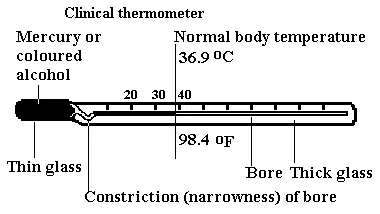
Clinical thermometer
In the mercury bulb, there is a constriction in the capillary tube which prevents the mercury from going back to the bulb quickly in order to read the measurement easily.
The scale of the medical thermometer starts from 35 degrees Celsius to 42 degrees Celsius; each degree is divided into 10 parts, so each part equals 0.1 degrees. The medical thermometer must be kept out of the reach of children because the liquid inside the thermometer (mercury) is toxic.
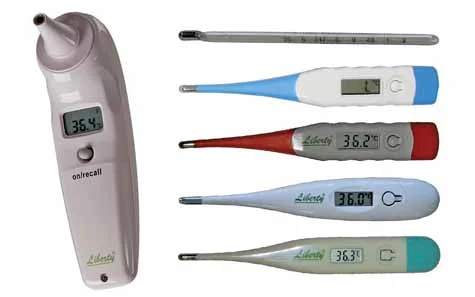
Digital thermometers
Some modern digital thermometers display the body temperature digitally and are used especially for children.
How can you use the medical thermometer to measure your body temperature?
Use the medical thermometer with ethyl alcohol, and dry it thoroughly with tissue paper. You should shake the thermometer vigorously until the mercury returns to the bulb, then hold it under your tongue for a minute.
Take the thermometer out of your mouth, then record the temperature reading, then sterilize the thermometer using ethyl alcohol and put it in its box. You should not seize the thermometer firmly with your teeth so as not to be broken because mercury is toxic.
12 Powerful Benefits of Using a Medical Thermometer for Better Health
A medical thermometer is one of the most essential healthcare tools for every home, clinic, school, and hospital. Here are 12 important facts that highlight its benefits:
- Detects Fever Early: A medical thermometer helps identify fever before symptoms become severe, allowing for faster treatment and reducing the risk of complications.
- Monitors Illness Progress: Regular temperature checks help determine whether an illness is improving or worsening, making it easier to decide when medical attention is needed.
- Supports Accurate Diagnosis: Body temperature is a key vital sign that helps healthcare professionals diagnose infections, inflammation, heat-related illnesses, and other medical conditions.
- Evaluates Treatment Effectiveness: Monitoring temperature during treatment shows whether medications such as fever reducers or antibiotics are working effectively.
- Protects Children and Older Adults: Infants, young children, and older adults are more vulnerable to fever-related complications. Frequent temperature monitoring allows for timely medical intervention.
- Reduces the Risk of Serious Complications: Early detection of abnormal body temperature can prevent dehydration, seizures caused by high fever, heatstroke, and other health emergencies.
- Helps Prevent the Spread of Infectious Diseases: Checking body temperature can identify individuals with fever, encouraging early isolation and reducing the transmission of contagious illnesses.
- Provides Quick and Accurate Results: Modern digital and infrared thermometers deliver reliable temperature readings within seconds, making them ideal for home and clinical use.
- Encourages Better Home Healthcare: Families can monitor illnesses without frequent hospital visits, making home care safer and more convenient for common infections.
- Improves Emergency Response: Healthcare providers rely on temperature measurements to quickly assess patients in emergencies and prioritize appropriate treatment.
- Essential for Managing Chronic Medical Conditions: People with weakened immune systems, cancer, diabetes, or other chronic illnesses benefit from regular temperature monitoring to detect infections early.
- Promotes Better Overall Health Awareness: Routine temperature checks help people become more aware of changes in their health, encouraging early medical consultation and better preventive care.
Quick Facts
- A normal adult body temperature generally ranges from 36.5°C to 37.5°C (97.7°F–99.5°F).
- A temperature of 38°C (100.4°F) or higher is generally considered a fever in adults.
- Digital thermometers are among the most accurate and commonly recommended devices for home use.
- Infrared thermometers provide fast, non-contact readings, making them useful for screening large groups.
- Body temperature naturally changes throughout the day and may vary with age, physical activity, hormones, and environmental conditions.
- Every household should keep a reliable medical thermometer as part of its basic first-aid kit.
Frequently Asked Questions (FAQ)
1. Why is measuring body temperature important?
Measuring body temperature helps identify fever, infections, inflammation, and other health conditions early. It also helps healthcare professionals monitor treatment progress.
2. What is a medical thermometer?
A medical thermometer is a device designed to accurately measure human body temperature. It is available in digital, infrared, ear, forehead, and traditional mercury-free models.
3. What is the normal body temperature?
The normal body temperature for most adults is around 36.5°C to 37.5°C (97.7°F–99.5°F), although it can vary slightly depending on age, activity, and the measurement method.
4. Which thermometer is the most accurate?
Digital oral and rectal thermometers are generally considered among the most accurate for home use. Infrared thermometers provide quick readings but should be used correctly for reliable results.
5. How often should body temperature be checked during illness?
People with fever or infection should check their temperature several times a day or as recommended by their healthcare provider to monitor changes.
6. Can stress affect body temperature?
Yes. Stress, intense exercise, hormonal changes, and environmental conditions can cause temporary changes in body temperature.
7. What temperature is considered a fever?
For most adults, a temperature of 38°C (100.4°F) or higher is generally considered a fever.
8. Which thermometer is best for babies?
Digital rectal thermometers are typically the most accurate for infants, while forehead and ear thermometers are convenient for older babies and children when used properly.
9. How can I get accurate temperature readings?
Follow the manufacturer’s instructions, keep the thermometer clean, measure at the correct body site, and avoid eating or drinking hot or cold beverages before oral measurements.
10. Why is temperature monitoring important in hospitals?
Continuous temperature monitoring helps detect infections early, evaluate patient recovery, guide treatment decisions, and improve patient safety.
You can follow Science Online on YouTube from this link: Science Online
Celsius thermometer and importance of mercury in making thermometers
Laser thermometers uses, advantages and disadvantages
Infrared thermometers (IR thermometers) features, types, cons and pros