What Does the Large Intestine Really Do? 5 Powerful Functions You Need to Know for Better Digestion
The large intestine plays a vital role in maintaining digestive health by absorbing water and essential electrolytes from undigested food. Unlike the small intestine, which focuses on nutrient absorption, the large intestine is responsible for forming and storing waste before elimination. It also contains beneficial bacteria that produce important vitamins and protect the body from harmful microorganisms.
Large intestine
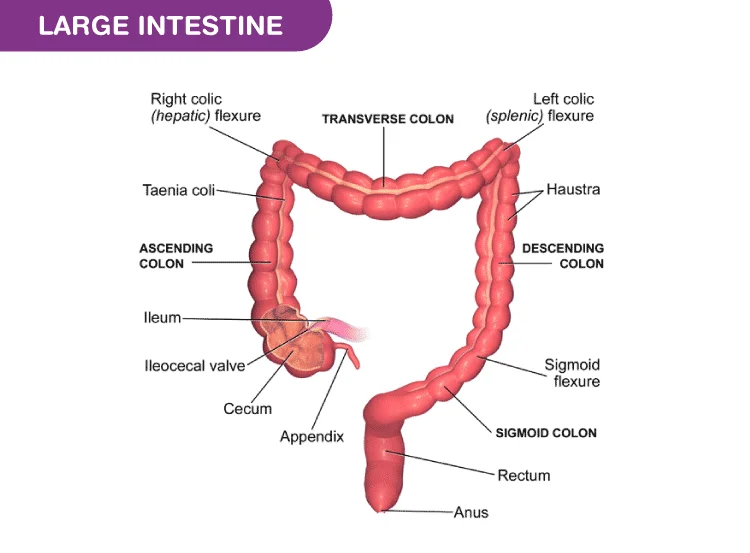
The large intestine is a tube that starts from the end of the small intestine and ends with the anus, which is located at the end of the rectum. It is shorter than the small intestine in length, the large intestine is considered thicker in diameter, and it is about 5 feet (1.5 m) in length. Understanding how the large intestine works can help improve digestion, prevent common issues like constipation, and support overall gut health.
The large intestine is connected to the ileum of the small intestine via the ileocecal sphincter. From the ileocecal sphincter, the large intestine forms a sideways T extending both superiorly and inferiorly. The large intestine wraps around the border of the abdominal cavity from the right side of the body, across the top of the abdomen, and finally down the left side.
Large intestine
The large intestine stores the wastes (the food remains), then ejects them outside the body through the anus. The large intestine is the final section of the gastrointestinal tract that performs the vital task of absorbing water and vitamins, and it converts the digested food into feces.
Functions of the Large Intestine
- Absorption of Water and Electrolytes: The large intestine absorbs excess water and important salts (like sodium and potassium) from the remaining undigested food. This helps prevent dehydration and maintains the body’s internal balance.
- Formation and Storage of Feces: As water is removed, the leftover waste becomes more solid. The large intestine compacts this material into feces and stores it in the rectum until it is ready to be expelled.
- Support from Beneficial Bacteria: The large intestine contains trillions of helpful bacteria that break down undigested food, especially fiber. These bacteria also produce essential vitamins.
- Vitamin Production and Absorption: Gut bacteria in the large intestine produce vitamins such as vitamin K and some B vitamins, which are then absorbed into the bloodstream.
- Protection and Immune Support: The large intestine plays a role in the immune system by housing beneficial microbes that protect against harmful pathogens.
How It Works with Other Organs
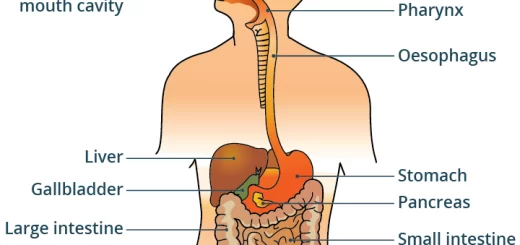
After digestion and nutrient absorption occur in the small intestine, the remaining material moves into the large intestine, where these final processes take place before waste is eliminated.
Why It’s Important
If the large intestine doesn’t function properly, it can lead to issues like constipation, diarrhea, or irritable bowel syndrome, affecting overall health and comfort.
Function of the rectum
The rectum absorbs the water from the food remains (the wastes). The water absorption by the large intestine does not help only to condense and solidify the feces, but it also allows the body to retain the water to be used in other metabolic processes.
The ions and the nutrients released by gut bacteria and dissolved in the water are also absorbed in the large intestine and used by the body for metabolism.
The dried, condensed fecal material is finally stored in the rectum and sigmoid colon until it can be eliminated from the body through the process of defecation.
FAQ about the large intestine
1. What is the main function of the large intestine?
The primary function of the large intestine is to absorb water and electrolytes from the remaining undigested food. This process helps convert liquid waste into solid stool and maintains the body’s fluid balance.
2. How does the large intestine help in digestion?
While most digestion occurs in the small intestine, the large intestine plays a supporting role by breaking down some remaining substances with the help of beneficial bacteria.
3. Does the large intestine absorb nutrients?
Yes, the large intestine absorbs certain vitamins produced by gut bacteria, such as vitamin K and some B vitamins, which are essential for blood clotting and energy production.
4. What role do bacteria play in the large intestine?
The large intestine contains millions of helpful bacteria that ferment undigested food, produce vitamins, and protect against harmful microbes, contributing to overall gut health.
5. How does the large intestine form feces?
As water is absorbed, the leftover material becomes more solid. The large intestine compacts this waste into feces, which is then stored in the rectum until it is eliminated.
6. What happens if the large intestine does not function properly?
Problems in the large intestine can lead to conditions like constipation, diarrhea, or irritable bowel syndrome, affecting digestion and overall health.
7. Why is water absorption important in the large intestine?
Water absorption prevents dehydration and ensures that the body retains enough fluids for normal functions like circulation, temperature control, and waste elimination.
8. How does the large intestine support the immune system?
The large intestine houses beneficial bacteria that help defend the body against harmful pathogens and support immune responses.
You can follow science online on YouTube from this link: Science online
Small intestine, Absorption of digested food, Metabolism, Large intestine, and defecation
Digestion in man, Buccal digestion and Gastric digestion (digestion in the stomach)