What Are the Components of Soil? Full Guide to Soil Composition & Importance
The soil is a thin, non-compacted superficial layer that covers the Earth’s crust, and it is a very important part of the environment. Different types of soil are different in color and texture. Where the color of the soil helps the scientists to identify the elements and the minerals inside it, and the texture of the soil is smooth, granular, or rocky rough.
Soil
Soil is a fundamental natural resource that supports life on Earth by providing nutrients, water, and stability for plants. It is not just dirt but a complex mixture of different components that work together to create a healthy environment for plant growth. Understanding soil composition helps farmers, gardeners, and students improve crop production and protect the environment.
The main components of soil include mineral particles, organic matter, water, and air. Each of these elements plays a crucial role in maintaining soil fertility and structure. The balance between these components determines how well the soil can support plant life and retain nutrients.
Mineral particles come from the weathering of rocks and form the largest portion of soil. These particles vary in size, including sand, silt, and clay, and they influence the soil’s texture and drainage ability. Different combinations of these particles create different soil types.
Organic matter is made up of decomposed plants and animals, which enrich the soil with nutrients. Along with water and air, organic matter helps improve soil structure, supports microorganisms, and ensures that plants receive the essential elements they need to grow properly.
Soil components
Soil components
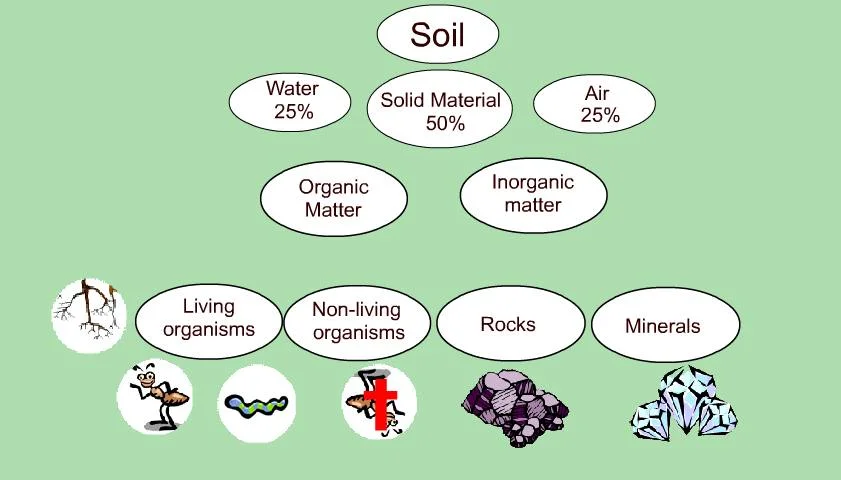
The soil is made of many components such as water, air, silt, humus, and pieces of rocks (which are composed of sand, clay, minerals and gravels).
The main components of the soil are the sand, the humus, and the clay. The variation in the types of soil depends on the type of rocks and minerals.
The rocks are the main source of the sand and the clay, which are the main components of the soil, The humus is the decayed remains of the animals and the plants mixed with the soil components, and its color is dark brown or black.
How is the humus formed?
When the living organisms (the plants or the animals) die, their bodies decay, forming the humus, So, the animals and the plants affect the soil composition.
The humus adds nutrients to the soil, and it affects the color of the soil. So, the color of the soil is dark brown or black. The soil is composed of minerals mixed with different microorganisms and the decayed materials of the dead organisms.
FAQ about Components of Soil
1. What are the main components of soil?
Soil consists of four main components: mineral particles, organic matter, water, and air.
2. What are mineral particles in soil?
Mineral particles are small pieces of rock, such as sand, silt, and cla,y that form the basic structure of soil.
3. Why is organic matter important in soil?
Organic matter provides nutrients, improves soil fertility, and supports microorganisms that help plants grow.
4. What role does water play in soil?
Water helps dissolve nutrients so that plant roots can absorb them easily.
5. Why is air important in soil?
Air allows plant roots and soil organisms to breathe and function properly.
6. How does soil composition affect plant growth?
The balance of soil components determines how well plants can access water, nutrients, and oxygen.
7. Can soil components change over time?
Yes, soil composition can change due to weathering, decomposition, and human activities.
You can follow science online on YouTube from this link: Science online