Best Water Heaters Review 2026: Save Energy, Cut Costs & Choose the Perfect System
Water heaters in 2026 combine advanced technology, energy efficiency, and durability to meet the needs of modern households. Whether you prefer a tankless system for instant heating or a solar unit to cut electricity costs, selecting the right water heater ensures long-term savings and comfort. In regions like Egypt, energy-efficient models are becoming increasingly popular due to rising electricity prices and environmental awareness.
Water heaters
A water heater is a system that converts energy into heat to supply hot water whenever needed. Water heaters are no longer just basic home appliances—they are essential for comfort, hygiene, and energy efficiency. In 2026, modern water heaters come with smart controls, eco-friendly features, and faster heating technologies that suit every lifestyle.
Whether you live in an apartment or a large house, choosing the right system can help you save money and enjoy consistent hot water all year round. Leading brands like Rheem, Ariston, and A.O. Smith continue to dominate the market with reliable and innovative products.
Water Heaters
What is a water heater?
A water heater is a device used to heat water for domestic or industrial use, such as bathing, cooking, cleaning, and space heating. It takes cold water and raises its temperature using energy sources like electricity, gas, solar power, or heat pumps.
How Does a Water Heater Work?
A water heater operates by transferring heat to water stored in a tank or passing through the unit. In traditional tank systems, water is heated and stored until needed, while in tankless systems, water is heated instantly as it flows through the device.
Water heating is typically the second largest expense in an average household, accounting for approximately 14% to 18% of utility bills. With hundreds of dollars spent annually just to keep the water warm, choosing the right water heater is a crucial decision for any homeowner. Whether you’re replacing a broken unit or looking to upgrade to a more energy-efficient model, understanding the different types of water heaters is the first step.
Types of Water Heaters
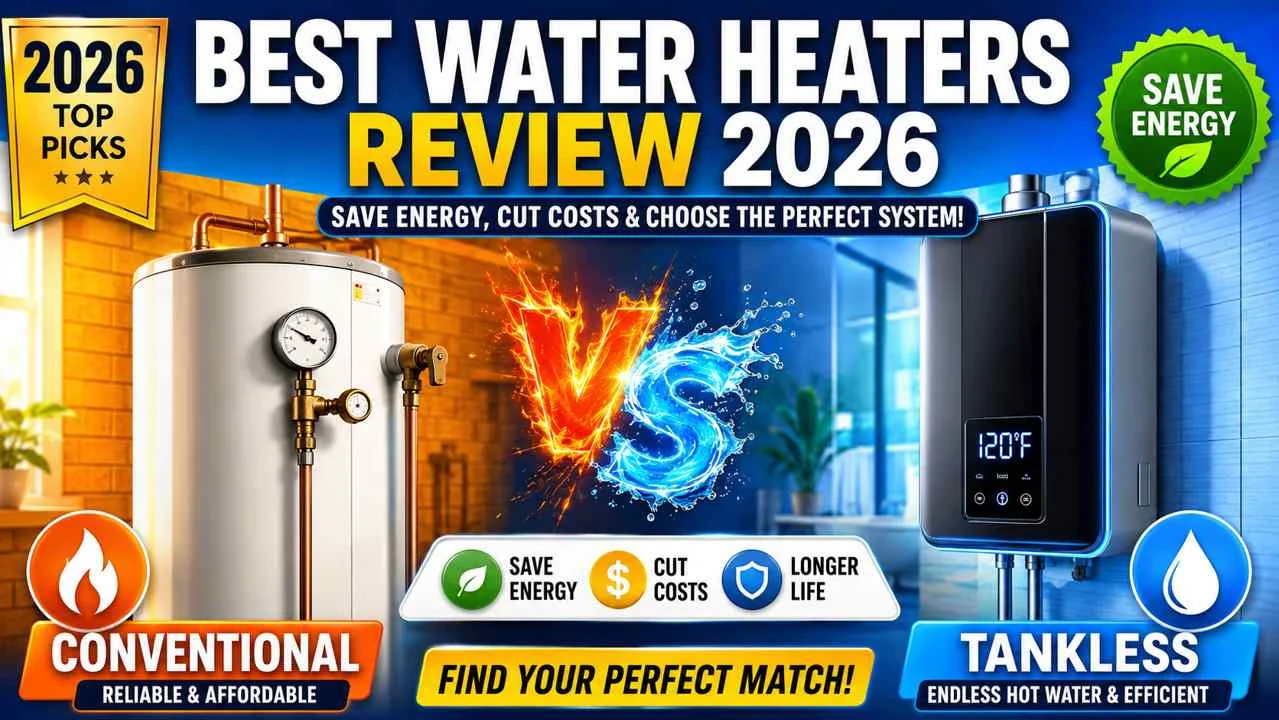
1. Conventional Storage Tank Water Heaters
This is the most common type of water heating system. It stores hot water in a tank and keeps it ready for use. It operates by holding a reservoir of water (typically 40 to 80 gallons) and constantly heating it so that hot water is ready whenever you need it. Cold water enters the bottom of the tank, is heated by gas burners or electric coils, and is then released from the top when a hot water tap is turned on.
These are the most common and affordable options. They store a fixed amount of hot water and are suitable for families with moderate usage. However, they may run out of hot water during peak times.
- Pros: Lower initial purchase and installation costs; allows for simultaneous use of hot water across multiple taps.
- Cons: Subject to “standby heat loss” (energy is wasted keeping water hot even when you aren’t using it); physically large and takes up space.
2. Tankless (On-Demand) Water Heaters
It heats water only when needed, saving energy. As the name suggests, tankless water heaters don’t store hot water. Instead, they use powerful heating elements (gas or electric) to rapidly heat water on demand as it flows through the unit. Because there is no tank, there is no standby heat loss.
Tankless heaters provide hot water instantly whenever needed. They are energy-efficient and compact, making them ideal for modern homes. Companies like Stiebel Eltron specialize in high-performance tankless systems.
- Pros: Endless hot water supply; highly energy-efficient (can save you $100+ annually); compact, space-saving design; longer lifespan (up to 20 years).
- Cons: Higher upfront cost for both the unit and installation; hot water output is limited by flow rate, meaning running a shower and dishwasher simultaneously might overwhelm a smaller unit.
3. Heat Pump (Hybrid) Water Heaters
It transfers heat from the surrounding air to warm water efficiently. Instead of generating heat directly, heat pump water heaters use electricity to move heat from the surrounding air to the water tank, much like a refrigerator working in reverse. They are incredibly efficient and can often be combined with standard electric heating elements for times of high demand (hence “hybrid”).
These heaters transfer heat instead of generating it, offering excellent energy efficiency. They are ideal for environmentally conscious users but require more space.
- Pros: Extremely energy-efficient; can help dehumidify the space they are installed in; lower operating costs over time.
- Cons: Significant upfront investment; requires specific installation environments (they need adequate space and perform best in warmer areas); regular maintenance of air filters is required.
4. Solar Water Heaters
Solar water heaters use sunlight to heat water, making it eco-friendly. Solar water heaters use roof-mounted panels (collectors) to absorb energy from the sun, which is then transferred to a fluid and used to heat water in a storage tank. Most systems include a backup gas or electric heater for cloudy days or periods of high demand.
Solar systems use sunlight to heat water, making them perfect for sunny regions like Egypt. Although the initial installation cost is higher, they significantly reduce electricity bills over time.
- Pros: Uses renewable, free energy from the sun; environmentally friendly; very low operating costs.
- Cons: Highest upfront installation cost; heavily dependent on your local climate and sun exposure.
Which One is Right for You?
Choosing the right water heater comes down to your budget, your household’s hot water usage, the amount of space available, and the fuel types accessible to your home. While storage tank models are the most affordable upfront, investing in a tankless or heat pump model can yield significant savings on your utility bills over the next 10 to 15 years.
Why Is a Water Heater Important?
- It provides hot water instantly for daily use.
- It improves comfort and hygiene.
- It is essential for homes, hotels, and industries.
Features of Water Heaters
- Energy Efficiency: Look for high efficiency ratings.
- Capacity: Choose based on family size and usage.
- Heating Speed: Faster recovery time is better.
- Durability: Stainless steel tanks last longer.
- Smart Features: Wi-Fi control and automation.
- Safety Systems: Overheat protection and pressure valves.
Top Water Heater Brands in 2026
- Rheem – Durable and energy-efficient.
- Ariston – Stylish and innovative.
- A.O. Smith – Advanced technology.
- Bosch – Premium tankless systems.
- Stiebel Eltron – High-end electric heaters.
Water heaters Advantages
- Continuous hot water supply.
- Improved comfort and hygiene.
- Energy-efficient options available.
- Smart home integration.
Water heaters Disadvantages
- Higher initial installation cost.
- It requires regular maintenance.
- Tank models may consume more energy.
- Solar systems depend on sunlight.
FAQ about Water Heaters
1. What is the best type of water heater for home use?
Tankless water heaters are best for energy efficiency and unlimited hot water, while storage tanks are more affordable.
2. How long does a water heater last?
Most water heaters last between 8 and 15 years, depending on maintenance and usage.
3. Are solar water heaters worth it?
Yes, especially in sunny areas, they offer significant long-term savings.
4. How can I reduce electricity consumption?
Use energy-efficient models, insulate pipes, and set moderate temperatures.
5. What size water heater do I need?
A family of four typically needs a 50–60 gallon tank or an equivalent tankless system.
Conclusion
Choosing the right water heater depends on your budget, home size, and energy needs. With trusted brands like Rheem and Ariston, you can find reliable and efficient options for every household. Investing in a high-quality water heater improves daily comfort while reducing long-term energy costs, making it a smart and future-proof decision.
You can subscribe to Science Online on YouTube from this link: Science Online
Solar panels in lakes, where not to put solar panels?, Can a solar panel work underwater?
The importance and uses of solar cells (photovoltaic cells)