Haru Social Robot by Honda Research: Definition, Features, Advantages, Disadvantages & FAQ
Social robots are becoming an important part of modern technology, helping humans communicate, learn, and receive emotional support. One of the most interesting developments in this field is Haru, a social robot developed by Honda Research Institute Japan.
Haru Social Robot
Haru was designed to interact naturally with humans, understand emotions, and provide companionship or support in environments such as hospitals, schools, and homes. The robot represents Honda’s vision of creating technologies that enhance human well-being and social connection.
What is Haru Social Robot?
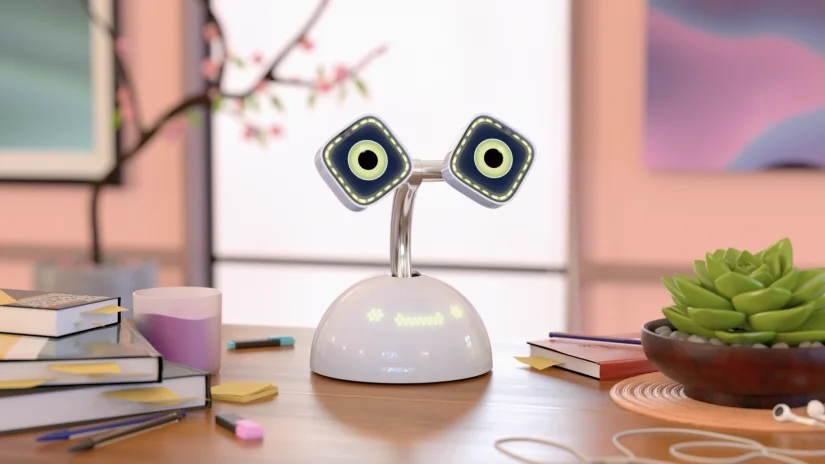
Haru is a compact AI-powered social robot designed to communicate with humans through expressive movements, sounds, and conversation. It acts as a “tangible AI system” that can form empathetic relationships and encourage meaningful human interaction. Honda designed Haru to make people smile, build emotional connections, and explore the future of human-robot communication.
The robot is a small tabletop device about 30 cm tall that can be placed on a desk or table to interact with users. It uses sensors, microphones, and cameras to analyze facial expressions, voice tones, and behavioral cues, allowing it to understand the person’s emotional state.
Haru Social Robot
Features of Haru Robot
- Emotion Recognition: Haru can detect human emotions by analyzing facial expressions and voice tones through its sensors and cameras.
- Expressive Communication: The robot communicates through Eye movement, Body gestures, Light signals, Voice and sounds. These features allow it to express emotions and create natural interactions with people.
- Artificial Intelligence Integration: Haru uses AI to interpret human behavior and respond appropriately with supportive or empathetic reactions.
- Multimodal Communication: The robot combines language, sound signals, and body movement to communicate with users more naturally.
- Healthcare Support Capabilities: In hospitals, Haru can encourage children during rehabilitation, provide companionship, and assist doctors with emotional and cognitive assessments.
- Wearable Sensor Integration: Haru can connect with wearable devices to analyze a user’s condition more accurately.
- Telepresence Communication: The robot can also act as a telepresence device, allowing remote communication between people.
What Can Haru Social Robot Do?
Haru is designed to perform many interactive and supportive tasks, including:
- Emotional Support: It can comfort patients, especially children undergoing long medical treatments.
- Healthcare Assistance: Haru helps guide patients through rehabilitation programs and encourages participation.
- Education and Learning: The robot can help children stay connected with school while hospitalized.
- Social Interaction: Haru can facilitate group conversations and improve communication between people.
- Human-Robot Interaction Research: Researchers use Haru to study emotional communication between humans and machines.
- Creative Collaboration: Haru can assist in storytelling, gaming, and creative activities.
In clinical trials, 95% of children became more engaged in rehabilitation when interacting with Haru, demonstrating its strong psychological impact.
Advantages of Haru Social Robot
- Improves Emotional Well-Being: Haru helps people feel less lonely and more emotionally supported.
- Enhances Human-Robot Interaction: Its expressive design makes communication more natural.
- Useful in Healthcare: The Haru robot can motivate patients and assist medical staff.
- Encourages Rehabilitation: Children participating in therapy show greater engagement when guided by Haru.
- Neutral Communication: Haru has no gender, race, or nationality, making interactions culturally neutral.
- Research Platform: Haru provides a valuable platform for studying social robotics and AI empathy.
Disadvantages of Haru Social Robot
- Limited Physical Functionality: Haru focuses mainly on communication and does not perform many physical tasks.
- Still in Research Stage: The robot is still under development and not widely available commercially.
- Dependence on AI Accuracy: Its effectiveness depends on the accuracy of emotion recognition systems.
- Privacy Concerns: Sensors and cameras used to analyze human emotions may raise privacy concerns.
- High Development Costs: Advanced robotics technology requires significant investment.
Applications of Haru Social Robot
Haru has potential applications in several areas:
- Healthcare: Emotional support for patients, Pediatric oncology care, and Rehabilitation guidance.
- Education: Interactive learning companion, and Remote classroom participation.
- Elderly Care: Companionship for older adults, Mental stimulation.
- Research: Human-robot interaction studies and AI emotion recognition research.
FAQ about Haru Social Robot
1. What is the purpose of Haru robot?
Haru is designed to improve human well-being by enabling empathetic communication between humans and robots.
2. Who developed Haru robot?
Haru was developed by the Honda Research Institute Japan, a research division of Honda focusing on advanced technologies.
3. How does Haru understand emotions?
It uses cameras, microphones, and AI algorithms to analyze facial expressions, voice tones, and behavioral signals.
4. Where is Haru currently used?
Haru has been tested in hospitals, especially in pediatric oncology units, to support children undergoing long-term treatment.
5. Can Haru replace human caregivers?
No. Haru is intended to assist caregivers and provide emotional support, not replace human professionals.
6. What makes Haru different from other robots?
Its focus on emotional communication and expressive interaction makes it unique among social robots.
7. Is Haru commercially available?
Currently, Haru is mainly a research platform and is not widely available for consumer purchase.
Haru social robot represents an exciting step forward in AI-powered social robotics. By combining emotion recognition, expressive communication, and empathetic interaction, Honda has created a robot designed to enhance human relationships rather than replace them.
Although still under development, Haru shows great promise in healthcare, education, and research environments. As AI and robotics technologies continue to evolve, robots like Haru may become essential companions that support human well-being and social connections.
You can subscribe to Science Online on YouTube from this link: Science Online
Robot teachers use, types, advantages and disadvantages
Educational robotics, Robot teachers, Social robots review, features, advantages and drawbacks
Artificial intelligence in education, AI tutors features, advantages and disadvantages
Pros and cons of technology in education and can technology replace teachers?
Importance and uses of educational robotics for students