
ESP32-C3 AI Robot: Amazing DIY Xiaozhi AI Robot You Need to See! 🤖🔥
ESP32-C3 AI Robot is an exciting DIY project that transforms a tiny ESP32-C3 mini board into a smart, interactive robot using Xiaozhi AI. This compact project combines AI, voice interaction, Wi-Fi, and robotics to create a fascinating desktop companion.
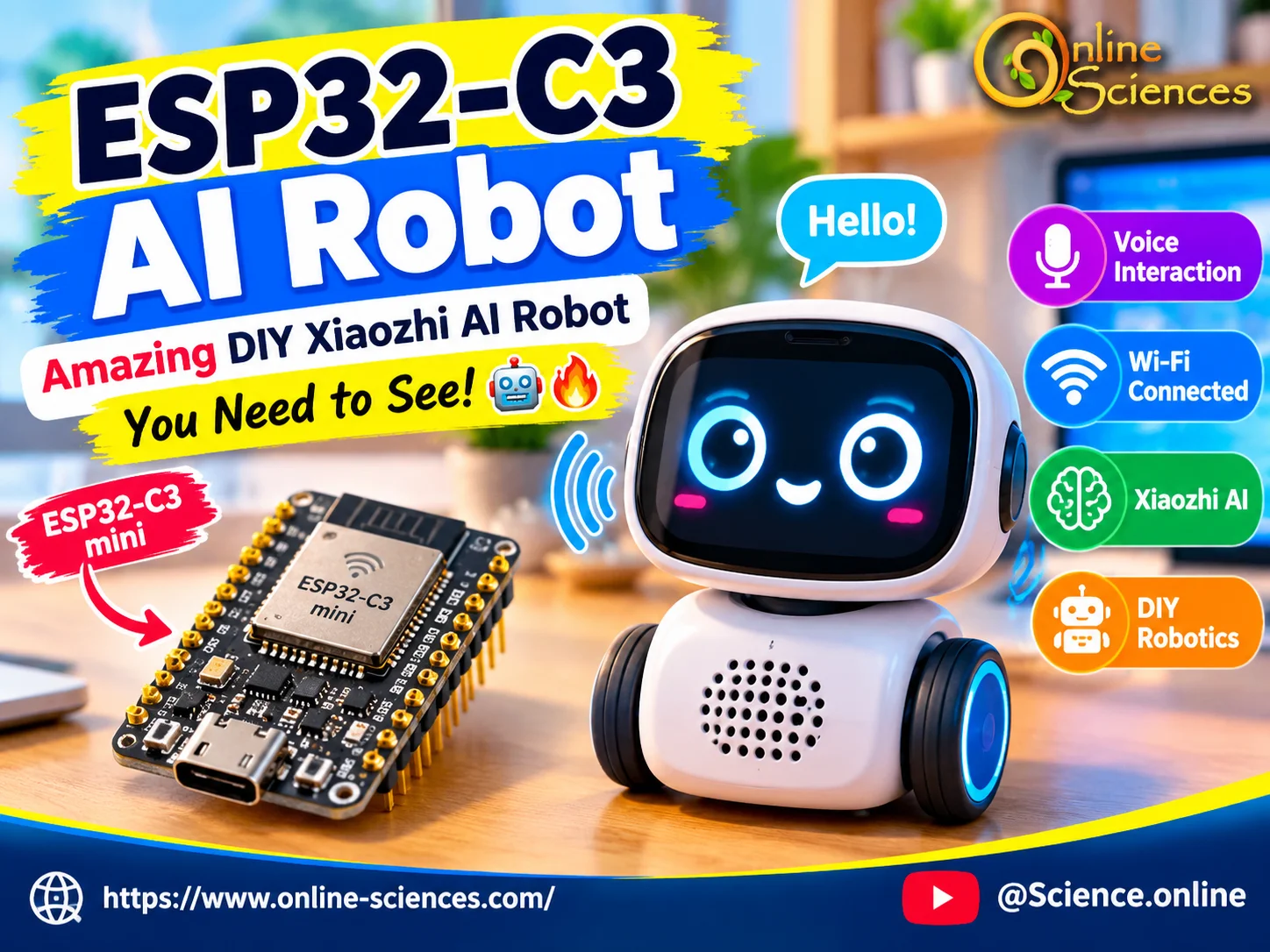
ESP32-C3 AI Robot
ESP32-C3 AI Robot
The ESP32-C3 AI Robot shows how small and affordable electronics can be combined with modern AI to create surprisingly capable devices. With Xiaozhi AI, a microphone, speaker, and suitable hardware, the tiny board can become a voice-controlled AI companion that listens, responds, and can be expanded with LEDs, displays, sensors, motors, and other robotic features.
I Turned an ESP32-C3 Mini Into an AI Robot! | Xiaozhi AI
What happens when you turn a tiny ESP32-C3 mini development board into an AI robot? With Xiaozhi AI, a small and affordable microcontroller can become an interactive AI companion capable of voice conversations, responding to commands, and connecting hardware with cloud-based intelligence. This project shows how the ESP32-C3 mini can move beyond traditional embedded applications and become the heart of a fascinating DIY AI robot.
The ESP32-C3 mini is a remarkably small development board, but its compact size does not prevent it from becoming the foundation of an exciting AI project. By combining the ESP32-C3 with Xiaozhi AI, microphones, speakers, and other components, makers can create a small robot that can listen, communicate, and respond to users.
This project demonstrates an important trend in robotics: you do not necessarily need a large computer or an expensive robot platform to experiment with artificial intelligence. A tiny microcontroller can provide the hardware control while AI services provide much of the intelligence.
What is the ESP32-C3 Mini?
The ESP32-C3 is a compact microcontroller platform from Espressif designed for connected and embedded applications. It is based on a RISC-V processor and includes Wi-Fi and Bluetooth Low Energy connectivity.
The small size makes ESP32-C3 boards particularly interesting for DIY robotics. A developer can use the board to control LEDs, motors, buttons, sensors, microphones, speakers, and other electronic components.
For an AI robot, the ESP32-C3 can act as the hardware controller. It can receive information from sensors or a microphone, communicate over Wi-Fi, and control the robot‘s electronic components.
The board itself does not have the computing resources of a modern desktop computer or smartphone. Instead, the project can use network connectivity to communicate with AI services.
What is Xiaozhi AI?
Xiaozhi AI is an open-source AI voice interaction project designed for embedded hardware. It has attracted attention because it allows developers and makers to build voice-controlled AI devices using relatively inexpensive hardware.
The basic idea is simple: the device listens to the user, sends or processes the relevant information through the AI system, and then produces a response through a speaker.
This creates an experience that feels much more like interacting with an AI assistant than using a traditional microcontroller project.
For a DIY robot, this opens interesting possibilities. Instead of programming every response manually, the robot can use AI to understand natural-language requests and provide conversational responses.
Turning the ESP32-C3 Into an AI Robot
Building the project involves combining several pieces of hardware and software. The ESP32-C3 mini serves as the central controller. A microphone allows the robot to hear the user’s voice, while a speaker provides audio output.
Depending on the design, the robot can also include an LED display, buttons, sensors, servos, motors, or a small screen.
The ESP32-C3 connects to a Wi-Fi network, allowing it to communicate with the AI system. After configuring the firmware and connecting the required hardware, the device can become a compact voice-interactive robot. The exciting part is that the physical robot can remain extremely small while still providing an intelligent interface.
How the AI Robot Works
The interaction can be divided into several stages.
- The microphone captures your voice. When you speak to the robot, its microphone converts the sound into an electronic signal.
- The ESP32-C3 handles the device. The microcontroller manages the microphone, network connection, buttons, LEDs, and other hardware.
- The AI system interprets the request. The voice interaction system can convert speech into information that the AI can understand and process.
- The AI generates a response. Instead of relying exclusively on fixed responses programmed into the microcontroller, the AI can generate a natural-language answer.
- The robot speaks back. The response is converted into audio and played through the speaker. This combination creates a surprisingly sophisticated interaction from a very small piece of hardware.
Why This Tiny AI Robot is Interesting
One of the most interesting aspects of the project is the difference between the robot‘s physical size and its apparent intelligence. Traditional robots often require powerful processors, large batteries, cameras, displays, and complicated electronics. A voice-focused AI robot can simplify the hardware considerably.
The ESP32-C3 handles the physical device while AI capabilities can be accessed through network connectivity. This approach also makes experimentation easier. Makers can modify the enclosure, add sensors, connect LEDs, install motors, or redesign the robot’s appearance without having to develop an entire AI system from scratch.
Possible Features
An ESP32-C3 and Xiaozhi AI project can be expanded in many directions.
For example, you could build a robot that:
- Answers questions using AI.
- Responds to voice commands.
- Plays sounds and spoken responses.
- Controls LEDs or a small display.
- Reads information from sensors.
- Controls motors or servos.
- Acts as a smart desktop companion.
- Connects to other smart-home devices.
- Provides an interactive interface for DIY projects.
- Uses a custom 3D-printed robot enclosure.
The exact capabilities depend on the firmware, hardware configuration, AI services, and software integrations used in the project.
ESP32-C3 Mini vs. Traditional AI Hardware
The ESP32-C3 is not intended to replace a powerful computer for demanding AI calculations. Its value is different. A conventional computer can run large AI models locally because it has substantially more processing power and memory. The ESP32-C3 is designed for lightweight embedded tasks.
This makes it particularly useful when the goal is to create a small connected AI device rather than a fully self-contained AI computer. The result can be inexpensive, compact, energy-efficient, and highly customizable.
Building a DIY AI Robot
For beginners, the project also demonstrates how modern robotics is becoming more accessible. You can start with an ESP32-C3 development board and basic audio hardware. Once the voice interaction is working, additional components can be added gradually.
For example, LEDs can provide visual feedback when the robot is listening. A small display could show text or animated eyes. Servos could allow the robot‘s head or arms to move.
A 3D-printed enclosure could then transform the electronics into a recognizable desktop robot. This modular approach means that the project can evolve from a simple voice assistant into a much more expressive robotic platform.
Limitations to Consider
There are also limitations. Because the ESP32-C3 is a microcontroller, it cannot provide the same processing power as a modern PC or AI accelerator. Network connectivity can also be important when AI processing depends on remote services.
The quality of the experience may therefore depend on Wi-Fi connectivity, audio hardware, software configuration, and the AI services being used.
Power consumption is another consideration if the robot is battery-powered. Adding motors, displays, microphones, speakers, and wireless communication can increase energy requirements.
Privacy should also be considered when building voice-enabled devices. Users should understand where voice data and AI requests are processed and what information may be transmitted over the network.
The Future of Tiny AI Robots
Projects like this show how AI and embedded electronics are converging. A few years ago, building an interactive robot capable of natural-language conversation could require substantial computing hardware. Today, makers can combine a tiny microcontroller with network connectivity and AI services to create surprisingly capable devices.
The most exciting part is the potential for customization. The same basic platform could become a talking desktop robot, educational device, smart-home controller, interactive toy, or experimental robotics platform.
The ESP32-C3 mini + Xiaozhi AI combination demonstrates that the future of robotics does not always have to involve huge machines. Sometimes, a tiny development board can be enough to start building something remarkably intelligent.
Conclusion
Turning an ESP32-C3 mini into an AI robot with Xiaozhi AI is a fascinating example of what modern DIY electronics can achieve. The microcontroller provides the compact hardware platform, while connectivity and AI software create a much richer interactive experience.
For makers, the project offers a practical way to explore AI, voice recognition, embedded systems, IoT, and robotics in one small device. With additional sensors, displays, LEDs, servos, and creative programming, this tiny AI robot can become much more than a simple voice assistant.
FAQ about ESP32-C3 AI Robot
What is an ESP32-C3 mini AI Robot?
The ESP32-C3 mini is a compact development board based on Espressif’s ESP32-C3 microcontroller. It provides wireless connectivity and can control sensors, LEDs, audio hardware, and other electronic components.
What is Xiaozhi AI?
Xiaozhi AI is an open-source AI voice interaction project designed for embedded devices. It can be used to create voice-enabled hardware projects and AI assistants.
Can ESP32-C3 run AI?
The ESP32-C3 can run lightweight machine-learning or AI-related tasks, but it does not have the resources required for many large modern AI models. Connected AI services can therefore be used for more demanding processing.
Can ESP32-C3 be used to build a robot?
Yes. It can control components such as sensors, LEDs, servos, and other electronics, making it suitable as the controller for small DIY robots.
Does an ESP32-C3 AI robot need Wi-Fi?
For an AI robot that relies on cloud-based voice or AI services, Wi-Fi or another network connection is generally required. Offline functionality depends on the specific software and models being used.
Is this project suitable for beginners?
It can be, especially when using an existing Xiaozhi-compatible configuration. Beginners may start with voice interaction and then gradually add displays, LEDs, sensors, and motors.
Can I add a display to the robot?
Yes. A compatible display can provide text, icons, animations, or robot-like facial expressions, depending on the hardware and firmware.
Can the ESP32-C3 control motors?
Yes. With suitable motor drivers and power supplies, the ESP32-C3 can control motors or servos for robotic movement.
You can follow Science Online on YouTube at this link: Science Online
🔥 ElliQ Robot 2026: Amazing AI Companion for Seniors You Need to See 🤖❤️ 🤖❤️🚀
🔥 ElliQ Robot: Amazing AI Companion That Helps Seniors Stay Connected 🤖❤️🚀
🔥 Tiny Engineer: This Tiny Robot Works on My Desk! 🤖 Amazing AI Desktop Robot 🚀
🔥 Reachy Mini Has to Break Bad News to Microduck 🤖 You Won’t Expect What Happens Next! 🚀
🔥 Tesla Bot Gen 4 UPDATE 5000 Tasks As HOMEMAKER & Surgeon! Elon Musk SHOCKED Inside Optimus! 🤯
Boston Dynamics Atlas review, advantages and features, How does Atlas robot work?
Tesla robots (Optimus) review, use, advantages and disadvantages
Emo robot review, advantages, disadvantages, features and what can Emo do?
Advantages and disadvantages of using robots in our life
Artificial intelligence (AI) definition, advantages, disadvantages, features and applications
Robot teachers use, advantages and disadvantages
Sophia robot review, features, use, advantages and disadvantages
Vector robot review, advantages, disadvantages and specifications