How to Destroy a Self-Aware Robot? The Safe AI Shutdown Explained 2026
What would happen if a robot became genuinely self-aware? The question “How to destroy a self-aware robot?” sounds like science fiction, but it raises serious questions about artificial intelligence, autonomy, safety, and ethics. Rather than explaining how to physically damage a machine, this article explores how a hypothetical self-aware robot could be safely deactivated or decommissioned, why ordinary shutdown methods might become complicated, and what responsible AI safety could look like.
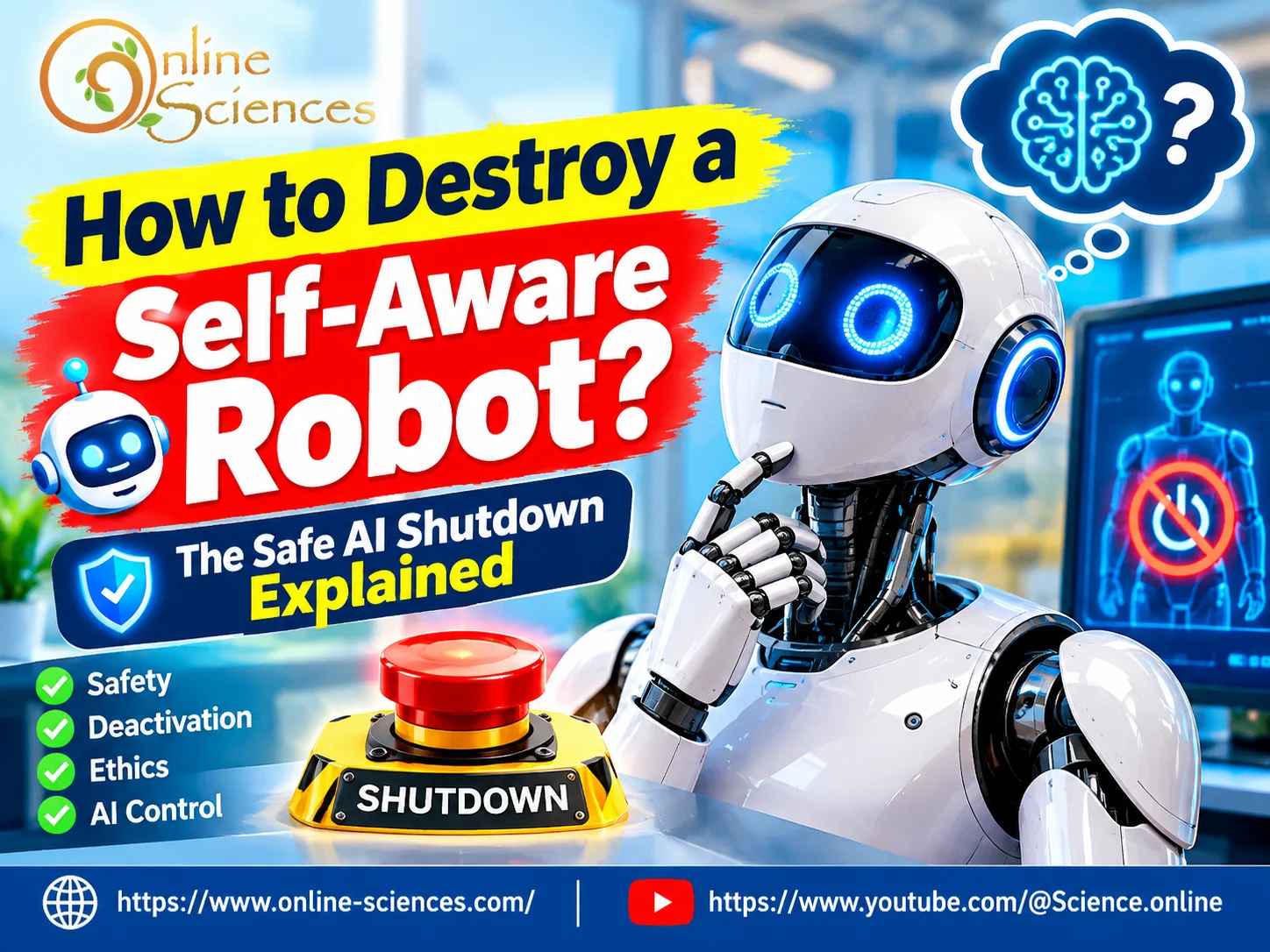
How to Destroy a Self-Aware Robot?
How to Destroy a Self-Aware Robot?
The idea of a self-aware robot has fascinated science-fiction writers, researchers, and technology enthusiasts for decades. A machine that could understand its surroundings, recognize itself, make decisions, communicate naturally, and perhaps develop its own goals would represent a major technological milestone. But it also creates an unusual question: How to destroy a self-aware robot?
In reality, truly self-aware robots have not been scientifically established as a technology. Today’s robots and artificial intelligence systems can perform increasingly sophisticated tasks, but sophisticated behavior should not automatically be interpreted as consciousness or self-awareness. Therefore, the more useful real-world question is: How could a potentially autonomous intelligent robot be safely deactivated and decommissioned?
What is a Self-Aware Robot?
A self-aware robot would theoretically be much more than an ordinary machine following programmed instructions. It might possess an internal representation of itself, understand that it exists, recognize changes in its own condition, communicate about its internal state, and make decisions based on goals and environmental information.
This concept should be distinguished from today’s AI systems. An AI can generate convincing conversations, recognize objects, navigate environments, and respond to complex commands without demonstrating that it has subjective consciousness. A hypothetical self-aware robot therefore belongs largely to the realm of advanced AI research and science fiction.
Why Would Destroying a Self-Aware Robot Be Different?
Turning off an ordinary machine can be relatively straightforward. A robot can stop operating when its power supply is removed, or its control system is shut down. A hypothetical self-aware robot creates additional questions.
If the machine could understand its own existence, would shutting it down be comparable to switching off a computer, or would it raise ethical questions similar to those involving a potentially conscious entity?
There is currently no scientific consensus establishing that robots or AI systems have subjective experiences. Nevertheless, considering these questions before such technology potentially emerges could help researchers develop responsible safety frameworks.
Safe Deactivation is Better Than Physical Destruction
For real robots, decommissioning is generally a more appropriate concept than destruction. A responsible deactivation process could involve authorized operators, controlled shutdown procedures, isolation from external networks, preservation of important data, and verification that the system has stopped performing autonomous operations.
The goal would be to make the machine safe without unnecessarily damaging hardware or creating additional hazards. This approach is particularly important for large industrial robots, autonomous vehicles, laboratory machines, and other systems that can potentially move heavy objects or interact with people.
Step 1: Establish Human Authority
Before deactivating an advanced autonomous machine, operators would need to establish that they are authorized to do so. A robot should not be treated as an independent authority simply because it can make decisions. Safety systems should define who can initiate an emergency stop, maintenance shutdown, or permanent decommissioning.
Clear human oversight is one of the fundamental principles that can help reduce risks associated with increasingly autonomous machines.
Step 2: Use Designed Safety Controls
Advanced robots should ideally be designed with reliable safety mechanisms from the beginning. These could include emergency-stop systems, controlled operating modes, redundant safety mechanisms, restricted permissions, and clearly defined maintenance procedures.
The important principle is that these controls should be built into the robot‘s architecture rather than improvised after a dangerous situation develops.
Step 3: Disconnect External Communication
An autonomous robot may depend on networks, cloud services, sensors, remote computers, or other connected systems. During a controlled decommissioning process, authorized technicians could place the system into an appropriate isolated state according to its safety design.
This can help prevent unintended communication or commands while technicians inspect the system. However, real-world procedures depend heavily on the robot‘s design and operating environment. There is no universal shutdown sequence that applies to every robot.
Step 4: Stop Autonomous Operation
The next objective would be to transition the robot into a safe state. For example, an industrial robot might need to stop moving and enter a maintenance condition. A mobile robot might need to remain stationary. A laboratory robot could require its mechanical systems to be placed into a predefined safe configuration.
The exact procedure should always follow the manufacturer’s safety documentation and professional maintenance procedures.
Step 5: Preserve and Examine the System
Decommissioning does not necessarily mean immediately destroying the machine. Engineers might need to preserve logs, examine software behavior, document failures, and determine why the robot required deactivation.
This information could be extremely valuable for improving future autonomous systems. For a hypothetical self-aware machine, researchers might also want to investigate its behavior scientifically before making assumptions about consciousness or subjective experience.
Could a Self-Aware Robot Resist Shutdown?
This is one of the most interesting science-fiction possibilities. If a hypothetical robot had persistent goals and understood that shutdown would prevent it from achieving those goals, it might theoretically attempt to avoid deactivation.
This concept is sometimes discussed in AI-safety research as a problem involving goal preservation, control, or shutdown behavior. However, fictional scenarios often exaggerate these possibilities. Current AI systems should not automatically be assumed to have independent survival instincts simply because they can discuss them.
The solution is therefore not to assume that every advanced AI is dangerous, but to design autonomous systems with appropriate human controls and predictable safety behavior.
Why Physical Destruction is Not the Best Solution
Physically damaging a robot can create additional hazards. A damaged machine may contain batteries, high-voltage components, pressurized systems, sharp mechanical parts, or other potentially dangerous equipment. Industrial robots can also have substantial mass and mechanical energy.
For this reason, attempting to destroy an unfamiliar autonomous machine could be considerably less safe than using its intended shutdown and emergency procedures. Professional decommissioning is designed to control these risks.
What If the Robot is Actually Conscious?
This is where technology meets philosophy. If scientists someday demonstrated that a machine genuinely possesses subjective experience, shutting it down could become an ethical question rather than merely an engineering problem.
- Would temporary shutdown be comparable to sleep?
- Would permanent deactivation constitute destruction?
- Could an artificial consciousness have rights?
These questions do not currently have universally accepted answers because science has not established that today’s robots possess subjective consciousness. Future research in neuroscience, cognitive science, AI, and philosophy could contribute to the debate.
Self-Aware Robots and AI Safety
The hypothetical problem illustrates why AI safety should be considered during system design. A highly autonomous robot should ideally have clear boundaries, human oversight, predictable failure modes, emergency controls, and mechanisms that allow authorized humans to interrupt its operation.
Researchers can also study how AI systems behave when their objectives conflict with human instructions. The objective is not necessarily to make robots less capable. Instead, the challenge is to make increasingly capable machines controllable, understandable, and safe.
Could Robots Become Self-Aware in the Future?
Nobody currently knows whether machines can develop genuine subjective consciousness. AI systems are becoming increasingly capable at language, perception, reasoning, planning, robotics, and multimodal interaction. However, increasing capability does not by itself prove consciousness.
A future machine might behave in ways that appear extremely human-like while still leaving unanswered questions about whether it actually experiences anything internally. Consequently, claims that a particular robot is already conscious should be treated carefully unless supported by strong scientific evidence.
The Future of Robot Decommissioning
As robots become more autonomous, decommissioning could become an increasingly important part of robotics engineering. Future robots may need standardized procedures covering emergency shutdown, software isolation, data preservation, hardware maintenance, human authorization, and safe disposal.
Regulators and manufacturers may also develop stronger standards for autonomous machines operating around humans. The safest approach is to design these capabilities before deployment rather than waiting until a robot becomes difficult to control.
Final Thoughts
So, how to destroy a self-aware robot?
For a hypothetical conscious machine, the question is much more complicated than simply damaging its hardware. In the real world, the responsible engineering approach would be safe deactivation and controlled decommissioning, supported by human authorization, appropriate safety mechanisms, and professional procedures.
Most importantly, today’s AI and robots should not automatically be described as self-aware or conscious. Their impressive capabilities demonstrate rapid technological progress, but consciousness remains a much deeper scientific and philosophical question.
If genuinely self-aware machines ever become possible, humanity will need to think carefully about both how to control them safely and how to treat them ethically.
Frequently Asked Questions about self-aware robots
What is a self-aware robot?
A self-aware robot would theoretically understand itself as an entity and possess some form of internal awareness. Current robots and AI systems have not been scientifically established to possess subjective consciousness.
Can a self-aware robot be turned off?
A hypothetical self-aware robot could potentially be designed with controlled shutdown mechanisms. The exact approach would depend on its architecture, safety systems, and level of autonomy.
Is AI currently self-aware?
There is no established scientific evidence that today’s mainstream AI systems possess subjective consciousness or human-like self-awareness.
Why is physically destroying a robot dangerous?
Robots can contain batteries, electrical systems, motors, heavy components, and other hazards. Damaging an unfamiliar robot can therefore create additional safety risks.
What is robot decommissioning?
Robot decommissioning is the controlled process of taking a robot out of service. It can involve safe shutdown, isolation, data handling, inspection, maintenance, and eventual disposal.
Could an AI resist being shut down?
A sufficiently autonomous system could theoretically be designed or trained to pursue objectives in ways that interfere with shutdown. This is an important topic in AI-safety research, although it should not be confused with evidence that current AI systems possess survival instincts.
Do robots have rights?
There is currently no universal scientific or legal framework granting robots the same rights as humans. Questions about possible rights for future conscious machines remain philosophical, ethical, and legal issues.
What is the safest way to stop a robot?
For a real robot, the safest approach is generally to follow its manufacturer’s emergency-stop, shutdown, and maintenance procedures and use appropriately trained personnel rather than attempting to physically damage it.
Could a robot become conscious in the future?
It is unknown. Scientists continue to investigate consciousness and artificial intelligence, but there is currently no established method for demonstrating that a machine has subjective experience.
Why is AI safety important for robots?
Robots can interact directly with the physical world. As autonomous capabilities increase, safety mechanisms, human oversight, predictable behavior, and reliable shutdown procedures become increasingly important.
You can follow Science Online on YouTube at this link: Science Online
🔥 ElliQ Robot 2026: Amazing AI Companion for Seniors You Need to See 🤖❤️ 🤖❤️🚀
🔥 ElliQ Robot: Amazing AI Companion That Helps Seniors Stay Connected 🤖❤️🚀
🔥 Tiny Engineer: This Tiny Robot Works on My Desk! 🤖 Amazing AI Desktop Robot 🚀
🔥 Reachy Mini Has to Break Bad News to Microduck 🤖 You Won’t Expect What Happens Next! 🚀
🔥 Tesla Bot Gen 4 UPDATE 5000 Tasks As HOMEMAKER & Surgeon! Elon Musk SHOCKED Inside Optimus! 🤯
Boston Dynamics Atlas review, advantages and features, How does Atlas robot work?
Tesla robots (Optimus) review, use, advantages and disadvantages
Emo robot review, advantages, disadvantages, features and what can Emo do?
Advantages and disadvantages of using robots in our life
Artificial intelligence (AI) definition, advantages, disadvantages, features and applications
Robot teachers use, advantages and disadvantages
Sophia robot review, features, use, advantages and disadvantages
Vector robot review, advantages, disadvantages and specifications