AgiBot Lingxi X2 Review: 9 Incredible Features of the Smart Humanoid Robot
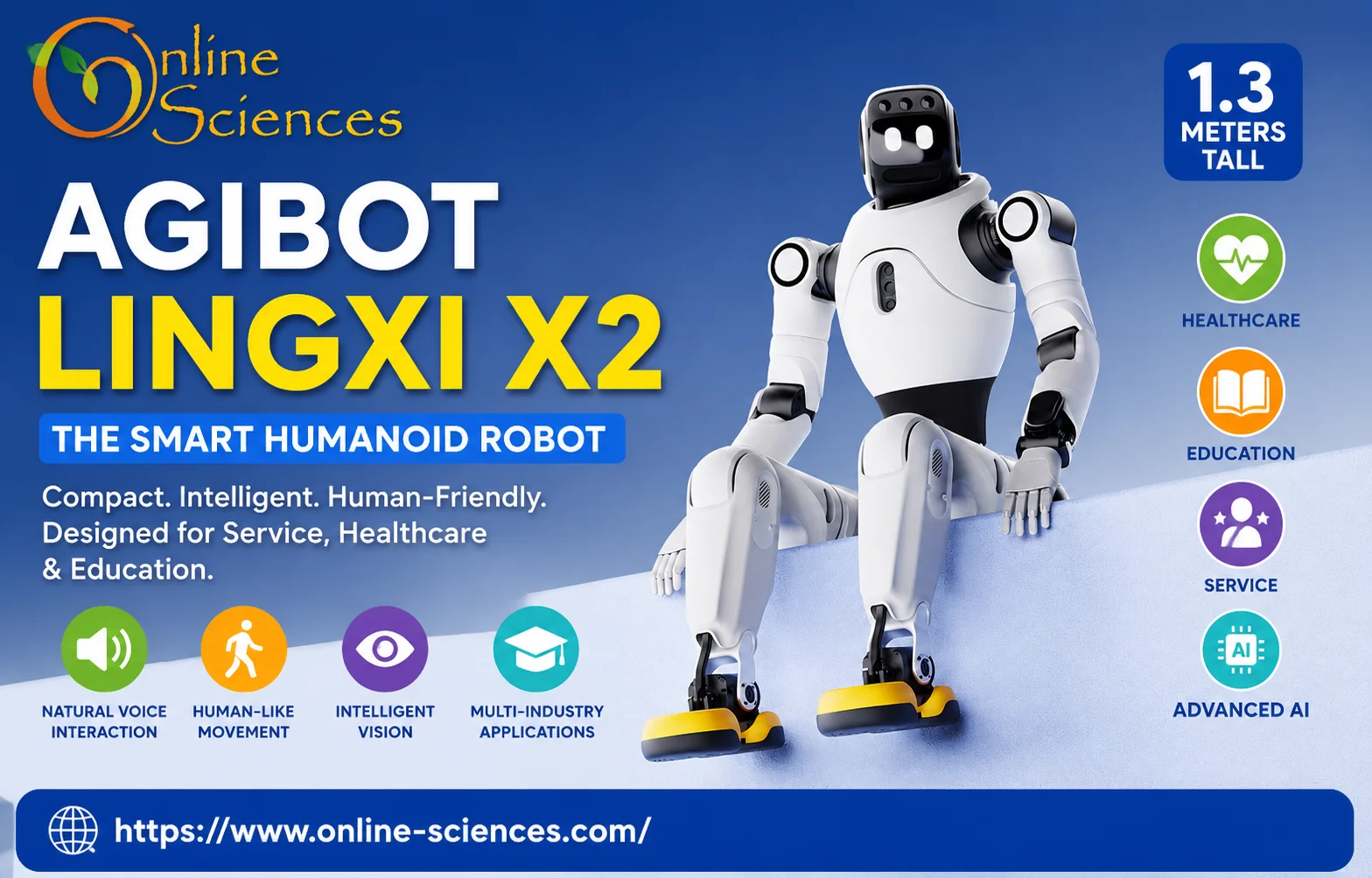
AgiBot Lingxi X2 is a next-generation humanoid robot developed by Shanghai-based AgiBot to revolutionize healthcare, education, and customer service. Standing just 1.3 meters tall, it combines advanced artificial intelligence, human-like movement, multimodal perception, and interactive communication, making it one of the most promising compact humanoid robots for real-world applications.
AgiBot Lingxi X2
What is the AgiBot Lingxi X2?
The AgiBot Lingxi X2 is an intelligent humanoid robot created to work safely alongside humans in everyday environments. Unlike industrial robots that remain behind safety barriers, Lingxi X2 is designed for direct interaction with people.
Its compact size allows it to move easily through hospitals, classrooms, offices, shopping centers, and homes while performing tasks that require communication, navigation, and object handling. Powered by modern AI models, computer vision, speech recognition, and advanced motion control, the robot can understand its surroundings and respond naturally to human requests.
Compact Design for Human Environments
Standing approximately 1.3 meters (4.3 feet) tall, Lingxi X2 is intentionally smaller than many humanoid robots. This compact form provides several advantages:
- Easier indoor navigation.
- Better interaction with seated people.
- Improved safety around children.
- Lower power consumption.
- Reduced manufacturing costs.
- Convenient deployment in hospitals and schools.
Its lightweight body also makes transportation and installation much easier compared to larger humanoid robots.
Advanced Artificial Intelligence
One of Lingxi X2’s strongest features is its AI-powered decision-making system. The robot integrates several AI technologies, including:
- Natural language understanding.
- Large language models.
- Computer vision.
- Facial recognition.
- Gesture recognition.
- Scene understanding.
- Voice interaction.
- Autonomous planning.
Instead of following simple programmed commands, the robot can understand complex conversations and adapt to changing situations.
Human-Like Motion
The AgiBot Lingxi X2 has been engineered with advanced motion control systems that allow smooth and stable movement. Its capabilities include:
- Walking naturally.
- Turning smoothly.
- Maintaining balance.
- Climbing small steps.
- Picking up objects.
- Hand-eye coordination.
- Two-handed manipulation.
- Safe movement around humans.
These capabilities allow it to perform useful daily tasks rather than simple demonstrations.
Intelligent Vision System
Lingxi X2 uses multiple cameras and sensors to understand its environment. Its vision system can:
- Detect people.
- Recognize faces.
- Identify objects.
- Read room layouts.
- Avoid obstacles.
- Track moving objects.
- Estimate distances.
- Monitor workspaces.
This enables the robot to work independently with minimal human supervision.
Natural Voice Interaction
One of the robot‘s biggest strengths is conversational communication.
It can:
- Answer questions.
- Hold conversations.
- Understand spoken commands.
- Recognize different speakers.
- Provide multilingual support.
- Explain information clearly.
- Assist elderly users.
- Guide visitors.
Its AI-powered speech system creates a much more natural user experience than traditional voice assistants.
Healthcare Applications
Healthcare is one of the primary markets targeted by Lingxi X2.
Potential applications include:
- Patient Assistance: The robot can help patients navigate hospitals, answer common questions, and provide basic guidance.
- Elderly Care: Lingxi X2 can remind elderly individuals about medication schedules, monitor daily routines, and offer companionship through conversation.
- Hospital Reception: The robot can welcome visitors, provide directions, and reduce staff workload.
- Medical Education: It can demonstrate procedures, explain anatomy, and support healthcare training.
Education Applications
Schools and universities can benefit significantly from humanoid robots.
Lingxi X2 can serve as:
- Teaching assistant.
- Classroom helper.
- STEM educator.
- Language tutor.
- Interactive science demonstrator.
- Programming instructor.
- Robotics education platform.
Students can learn AI and robotics through direct interaction with the robot.
Customer Service Applications
Businesses increasingly seek intelligent service robots. Lingxi X2 can work in:
- Hotels.
- Shopping malls.
- Airports.
- Museums.
- Libraries.
- Government service centers.
- Banks.
- Exhibition halls.
Its responsibilities may include greeting customers, answering questions, guiding visitors, and delivering information.
Home Assistance
Future versions of Lingxi X2 may become valuable home assistants by helping with:
- Smart home control.
- Daily reminders.
- Household monitoring.
- Entertainment.
- Educational support.
- Elderly assistance.
- Child interaction.
- Remote family communication.
AI Learning Capabilities
Unlike traditional robots, Lingxi X2 continuously improves through machine learning.
Its AI system allows it to:
- Learn new tasks.
- Improve conversations.
- Adapt to environments.
- Recognize user preferences.
- Optimize movement.
- Enhance navigation.
- Increase task accuracy.
Continuous software updates can further expand its capabilities over time.
Safety Features
Safety is essential for robots working near humans.
Lingxi X2 includes features such as:
- Obstacle avoidance.
- Collision detection.
- Emergency stop systems.
- Stable walking algorithms.
- Safe force control.
- Human detection sensors.
These systems help reduce the risk of accidents in crowded environments.
Advantages of AgiBot Lingxi X2
Some of its biggest advantages include:
- Compact 1.3-meter design.
- Human-like movement.
- Powerful AI.
- Intelligent voice interaction.
- Advanced vision system.
- Healthcare applications.
- Education support.
- Customer service automation.
- Continuous learning.
- Safe human collaboration.
Limitations
Although highly capable, Lingxi X2 still faces several challenges:
- Limited heavy lifting ability.
- High development costs.
- Battery life limitations.
- Dependence on AI training.
- Complex maintenance.
- Privacy concerns in sensitive environments.
As robotics technology advances, many of these limitations are expected to improve.
Future of AgiBot Lingxi X2
The future looks promising for compact humanoid robots.
Future upgrades may include:
- Better reasoning capabilities.
- Longer battery life.
- Faster walking speed.
- Improved dexterity.
- Enhanced emotional interaction.
- More autonomous decision-making.
- Expanded healthcare functionality.
- Better home assistance.
As AI continues to evolve, robots like Lingxi X2 may become common in everyday life.
Why AgiBot Lingxi X2 Stands Out
Unlike many humanoid robots that focus on research demonstrations, Lingxi X2 is designed with practical deployment in mind. Its balance of compact size, advanced AI, smooth mobility, and natural communication makes it suitable for environments where people expect safe, intelligent, and helpful interactions. This focus on real-world usability gives it strong potential across healthcare facilities, educational institutions, and customer-facing businesses.
Conclusion
The AgiBot Lingxi X2 represents a significant step toward practical humanoid robotics. Its compact design, advanced artificial intelligence, natural interaction, and versatile applications make it an attractive solution for healthcare, education, and service industries. As AI technology becomes more capable, robots like Lingxi X2 are expected to play an increasingly important role in assisting people, improving productivity, and transforming everyday human-robot collaboration.
Frequently Asked Questions (FAQs) about AgiBot Lingxi X2
1. What is the AgiBot Lingxi X2?
It is a 1.3-meter-tall humanoid robot developed by Shanghai-based AgiBot for service, healthcare, education, and customer interaction.
2. How tall is the AgiBot Lingxi X2?
The robot stands approximately 1.3 meters (4.3 feet) tall.
3. What industries can use Lingxi X2?
It is designed for healthcare, education, hospitality, retail, museums, offices, and public service environments.
4. Can Lingxi X2 communicate naturally with people?
Yes. It supports AI-powered voice interaction, natural language understanding, and conversational assistance.
5. Does the robot use artificial intelligence?
Yes. It combines AI technologies such as computer vision, speech recognition, multimodal perception, and intelligent planning to perform complex tasks.
6. Can AgiBot Lingxi X2 assist elderly people?
Yes. It can provide reminders, companionship, guidance, and support for daily routines in assisted living and healthcare settings.
7. Is Lingxi X2 suitable for classrooms?
Absolutely. It can act as a teaching assistant, STEM education platform, language tutor, and interactive learning companion.
8. What makes AgiBot Lingxi X2 different from industrial robots?
Unlike industrial robots, Lingxi X2 is built for safe, direct interaction with people in everyday environments, emphasizing mobility, communication, and adaptability.
You can subscribe to science online on YouTube from this link: Science Online
Dynamics Atlas review, advantages & features, How does Atlas robot work?
Boston Dynamics Handle robot review, features and importance
Emo robot review, advantages, disadvantages, features & What can Emo do?
Eilik Desktop Companion Robot structure, features, use, advantages & disadvantages
Tesla robots (Optimus) review, use, advantages & disadvantages