Powerful DOGO Tactical Robot Review 2026: Features, Performance & Future of Combat Robotics
The DOGO Tactical Robot represents the next generation of military robotics by combining mobility, surveillance, communication, and tactical engagement into one compact system. With advanced cameras, remote operation, and urban combat capabilities, DOGO has become one of the most talked-about tactical robots in modern defense technology.
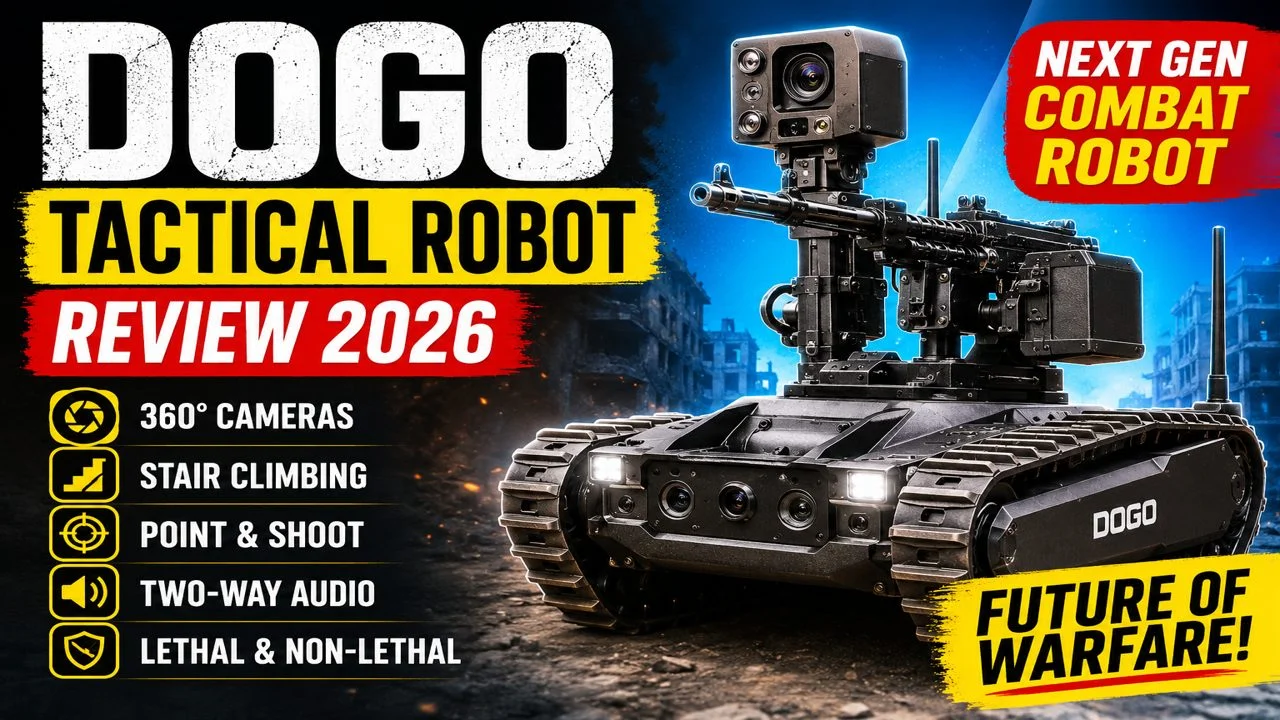
DOGO Tactical Robot
DOGO Tactical Robot Review
The DOGO Tactical Robot is one of the most advanced compact combat robots designed for military, SWAT, and counter-terrorism missions. Developed by General Robotics, the DOGO robot combines surveillance, communication, and armed tactical capabilities in a lightweight platform. Its compact design, stair-climbing ability, and 360-degree cameras make it a unique solution for dangerous close-quarter combat operations.
As robotics and AI continue transforming modern warfare in 2026, the DOGO Tactical Robot has gained worldwide attention for its ability to reduce risks for soldiers and law enforcement teams. The robot is designed for urban warfare, hostage rescue missions, tunnel operations, and reconnaissance tasks where human exposure can be extremely dangerous.
What is the DOGO Tactical Robot?
The DOGO Tactical Robot is an ultra-light unmanned ground vehicle (UGV) created for anti-terror and special operations. Unlike many traditional reconnaissance robots, DOGO can integrate lethal and non-lethal systems while providing live video feeds and remote communication tools. The robot weighs around 11–12 kg and can be carried easily by one operator.
The robot was first unveiled during the Eurosatory defense exhibition and quickly attracted attention due to its “Point & Shoot” remote weapon control system. DOGO can operate in narrow indoor spaces, staircases, underground tunnels, and other high-risk environments where sending personnel would be dangerous.
DOGO Tactical Robot Features
- Lightweight and Portable Design: One of the biggest advantages of the DOGO robot is its compact size and lightweight body. The system can be transported in tactical bags or rugged cases, enabling rapid deployment during emergency missions.
- 360-Degree Situational Awareness: The robot includes eight cameras that provide real-time 360-degree visibility. Operators can monitor multiple video feeds simultaneously and gain full awareness of dangerous areas before entering them.
- Point & Shoot Technology: DOGO’s advanced targeting system allows operators to designate targets directly on a touchscreen interface. This reduces training complexity and improves firing precision during tactical operations.
- Stair-Climbing Capability: Unlike many small tactical robots, DOGO can climb stairs without complicated external mechanisms. This feature is highly useful in urban warfare and hostage rescue situations.
- Two-Way Audio Communication: The robot is equipped with integrated microphones and speakers, allowing operators to communicate remotely with suspects or hostages. This feature can help negotiators avoid direct exposure to danger zones.
- Non-Lethal Modules: Some DOGO variants support pepper spray and dazzling light systems for crowd control and tactical distraction missions.
DOGO Tactical Robot Performance Review
The DOGO Tactical Robot performs exceptionally well in close-quarter tactical scenarios. Its tracked mobility system helps it move silently across indoor environments and rough terrain. The real-time video transmission provides operators with accurate situational awareness, improving mission planning and reducing risks.
Battery life typically supports several hours of operation, depending on mission intensity. The robot’s communication system is designed for secure remote control, making it suitable for military and law enforcement operations.
One of the most impressive aspects of DOGO is its balance between compact size and advanced functionality. Many larger military robots are difficult to transport indoors, while DOGO focuses specifically on tactical urban engagement and reconnaissance.
Advantages of the DOGO Tactical Robot
- Lightweight and portable tactical robot.
- Advanced 360-degree camera system.
- Remote communication and negotiation tools.
- Stair-climbing mobility.
- Supports lethal and non-lethal modules.
- Designed for anti-terror and SWAT missions.
- Reduces risk for soldiers and officers.
Disadvantages of the DOGO Tactical Robot
- Extremely expensive for widespread deployment.
- Limited battery duration during intensive operations.
- Ethical concerns regarding armed robotics.
- Requires secure communication systems to avoid interference.
- Primarily designed for specialized units rather than general infantry.
DOGO Tactical Robot and the Future of Warfare
Combat robotics is becoming increasingly important in modern military strategy. Systems like DOGO demonstrate how unmanned technology can improve safety and operational efficiency in dangerous environments. Many experts believe tactical robots will become standard equipment for special operations teams over the next decade.
Online discussions in robotics communities often debate the advantages of wheeled and tracked tactical robots compared to robotic dogs. Many users argue that tracked systems like DOGO remain more practical for indoor combat due to better stability and lower energy consumption.
As AI-powered navigation and autonomous systems improve, future versions of tactical robots may gain enhanced decision-making abilities, longer battery life, and better obstacle handling.
DOGO Tactical Robot Specifications
- Weight: Approximately 11–12 kg.
- Cameras: 8 integrated cameras.
- Mobility: Tracked system with stair climbing.
- Communication: Two-way audio.
- Weapon Support: Lethal and non-lethal modules.
- Main Use: Counter-terrorism & tactical operations.
- Operation: Remote-controlled.
- Environment: Urban warfare, tunnels, indoor combat.
FAQ About DOGO Tactical Robot
1. What is the DOGO Tactical Robot used for?
The DOGO robot is mainly used for counter-terrorism operations, hostage rescue, urban warfare, surveillance, and dangerous tactical missions.
2. Can the DOGO robot climb stairs?
Yes, DOGO features an integrated stair-climbing mechanism designed for indoor tactical missions.
3. Does the DOGO Tactical Robot carry weapons?
The robot can integrate both lethal and non-lethal systems depending on mission requirements.
4. How many cameras does DOGO have?
DOGO includes eight cameras for real-time 360-degree situational awareness.
5. Is the DOGO robot autonomous?
The robot is primarily remotely operated, though future versions may include more advanced AI-assisted capabilities.
You can subscribe to Science Online on YouTube from this link: Science Online
The importance and uses of military robots
Military Artificial Intelligence (Military robots) Advantages, Disadvantages, and Applications
Remotely-operated underwater vehicles (ROVs) Features, types, advantages and disadvantages
Unmanned ground vehicle (UGV) advantages and disadvantages
Unmanned Aerial Vehicle (UAV) uses, advantages and disadvantages
Army robot types, advantages, disadvantages and how Artificial soldiers change the future of war?
Wireless bomb disposal robots or explosive ordnance disposal (EOD) uses, types, features & design