🔥 Elon Musk’s Tesla Bot Gen 3 Amazing UPDATE | The Future of Humanoid Robots, AI, and Human-Like Automation
Tesla Bot Gen 3 is one of the most exciting developments in humanoid robotics, combining artificial intelligence, advanced sensors, human-like movement, and autonomous capabilities to reshape the future of work. Tesla’s Optimus robot aims to perform repetitive, physically demanding, and potentially dangerous tasks, offering a fascinating glimpse into a future where humanoid robots could work alongside humans in factories, homes, and other environments. But what makes Tesla Bot Gen 3 so eye-opening, and can it really transform everyday life?
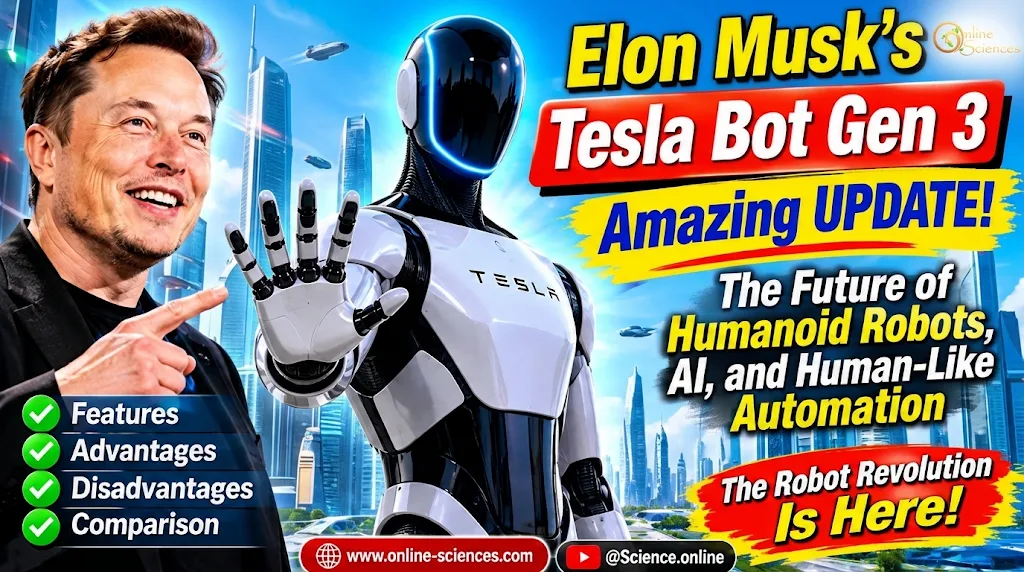
Elon Musk’s Tesla Bot Gen 3 Amazing UPDATE
Elon Musk’s Tesla Bot Gen 3
Elon Musk’s Tesla Bot Gen 3 represents an exciting vision for the future of humanoid robotics, combining artificial intelligence, advanced sensors, human-like movements, and intelligent automation. Tesla Optimus is designed to perform repetitive tasks, handle objects, assist with industrial operations, and potentially help people with everyday activities. This innovative technology could transform factories, workplaces, and homes, bringing humans closer to a future where intelligent robots become part of daily life.
Elon Musk’s Tesla Bot Gen 3 Amazing UPDATE
The latest Tesla Optimus robot developments highlight Tesla‘s ambition to create more capable, flexible, and intelligent humanoid robots. Improvements in robotic hands, movement, balance, AI-powered vision, and autonomous task performance are important areas of development. Tesla aims to make Optimus capable of performing useful real-world tasks, from handling materials in factories to assisting humans in different environments. However, widespread commercial use will depend on further improvements in safety, reliability, performance, and affordability.
What is Tesla Bot Gen 3?
Tesla Bot Gen 3 refers to the next-generation humanoid robot development associated with Tesla’s Optimus project. Tesla aims to create a general-purpose humanoid robot capable of performing tasks that traditionally require human labor. The robot features a human-like body, hands, legs, artificial intelligence, cameras, sensors, and advanced software to help it understand and interact with its surroundings.
Tesla’s humanoid robot development focuses on improving mobility, balance, dexterity, object manipulation, and AI-powered decision-making. The idea is to build robots that can operate in environments designed for humans without requiring major modifications.
Amazing Features of Tesla Bot Gen 3
- AI-powered intelligence: Tesla’s robotics approach combines artificial intelligence, computer vision, neural networks, and machine learning to help robots understand their environment and perform tasks.
- Human-like movement: The humanoid design aims to support walking, bending, reaching, lifting, and interacting with objects in a human-like manner.
- Advanced robotic hands: Dexterous hands are a major focus of humanoid robotics, allowing robots to manipulate tools, handle objects, and perform more complicated tasks.
- Autonomous navigation: Cameras and AI-based perception systems help the robot recognize objects, understand surroundings, and navigate physical environments.
- Designed for repetitive work: Optimus is intended to perform repetitive, physically demanding, and potentially hazardous tasks, particularly in industrial environments.
- Potential home applications: Future humanoid robots could assist with household chores, carrying objects, organizing items, and other everyday activities, although these capabilities still require development.
Advantages of Tesla Bot Gen 3
Tesla Bot Gen 3 could offer several advantages if its capabilities become reliable and commercially practical. One of its biggest benefits is the ability to perform repetitive tasks without becoming physically tired like a human worker. Humanoid robots could potentially work in factories, warehouses, logistics facilities, and other environments where repetitive operations are common.
Another advantage is safety. Robots could eventually handle dangerous materials, work in hazardous areas, and perform physically demanding activities that expose humans to risks. Their human-like structure may also allow them to use existing tools and workspaces.
AI-powered humanoid robots could improve productivity, reduce certain labor-intensive operations, and help businesses automate repetitive processes. In the long term, robots could also assist older adults and people who need help with daily activities.
Disadvantages of Tesla Bot Gen 3
Despite its impressive potential, Tesla Bot Gen 3 faces several challenges. Humanoid robots are expensive to develop, manufacture, maintain, and operate. Their batteries, sensors, mechanical components, and AI systems require continuous improvements.
Safety is another major concern. Robots operating around humans must be able to recognize unpredictable situations, avoid collisions, and respond correctly to unexpected events. Reliability in real-world environments is much more complicated than performing controlled demonstrations.
There are also concerns about job displacement, privacy, cybersecurity, maintenance costs, and the limitations of AI. Humanoid robots may require extensive training, supervision, and software updates before becoming dependable everyday assistants.
Tesla Optimus Gen 3 vs Traditional Robots
Tesla Bot Gen 3 differs from traditional industrial robots because it is designed with a human-like body, flexible movement, AI-powered perception, and the ability to potentially operate in environments built for people. Traditional robots are generally designed for specific tasks, such as welding, assembling parts, packaging, or lifting objects, and often operate in fixed positions or controlled environments.
In contrast, Tesla Optimus aims to move around, interact with objects, use tools, and adapt to different tasks through artificial intelligence and machine learning. While traditional industrial robots are already highly efficient, fast, and reliable for specialized operations, humanoid robots such as Tesla Bot Gen 3 could offer greater flexibility by performing different tasks without requiring major changes to existing workplaces.
However, traditional robots currently have an advantage in many specialized industrial applications because their technology is mature, their performance is predictable, and they are often more cost-effective for specific jobs.
Frequently Asked Questions (FAQ)
1. What is Tesla Bot Gen 3?
Tesla Bot Gen 3 refers to a next-generation humanoid robot concept within Tesla’s Optimus development, focused on AI, human-like movement, and practical automation.
2. What can Tesla Optimus robots do?
They are being developed to perform tasks such as moving objects, handling materials, assisting with repetitive operations, and navigating environments.
3. Can Tesla Bot Gen 3 replace human workers?
It could automate certain repetitive tasks, but robots are unlikely to replace humans across all jobs. Many roles require judgment, creativity, social skills, adaptability, and complex decision-making.
4. Can Tesla Bot Gen 3 work inside homes?
Future versions may be designed to help with household activities, but widespread home use depends on safety, reliability, affordability, and practical capabilities.
5. Is Tesla Bot Gen 3 available for purchase?
Availability, specifications, pricing, and commercial deployment depend on Tesla‘s official announcements. Not every demonstrated capability necessarily represents a commercially available product.
Conclusion
Tesla Bot Gen 3 represents an exciting direction in humanoid robotics, where AI, mechanical engineering, computer vision, and autonomous movement combine to create machines designed to work in human environments. Its potential advantages include automation, improved workplace safety, flexibility, and assistance with repetitive tasks.
However, challenges involving cost, reliability, safety, AI limitations, and employment remain important. The future of Tesla Optimus will depend on how successfully Tesla turns impressive robotic demonstrations into dependable real-world applications.
Explore more science and technology articles on Science Online: https://www.online-sciences.com/
Watch more technology videos on Science Online Channel: https://www.youtube.com/@Science.online
🔥 Elon Musk’s Tesla Bot Gen 3 Amazing UPDATE! The Future of AI Robots Is Eye-Opening! 🤯
🔥 Tesla Bot Gen 3: 1,000 Robots a Week — 7 Powerful Reasons You Still Can’t Buy One 🤯
🔥 Tesla Bot Gen 4 UPDATE 5000 Tasks As HOMEMAKER & Surgeon! Elon Musk SHOCKED Inside Optimus! 🤯
Boston Dynamics Atlas review, advantages and features, How does Atlas robot work?
Tesla robots (Optimus) review, use, advantages and disadvantages
Emo robot review, advantages, disadvantages, features and what can Emo do?
Advantages and disadvantages of using robots in our life
Artificial intelligence (AI) definition, advantages, disadvantages, features and applications
Robot teachers use, advantages and disadvantages
Sophia robot review, features, use, advantages and disadvantages
Vector robot review, advantages, disadvantages and specifications