Robots in Education: Types, Benefits, Best Educational Robots & Real Examples (2026)
Robots in Education are transforming classrooms by making learning more interactive, engaging, and practical for students of all ages. From teaching coding and STEM subjects to enhancing problem-solving, creativity, and teamwork, educational robots help learners gain real-world skills through hands-on experiences. As artificial intelligence continues to evolve, robots are becoming valuable classroom assistants that prepare students for the technology-driven careers of the future.
Robots in Education
Robots in Education
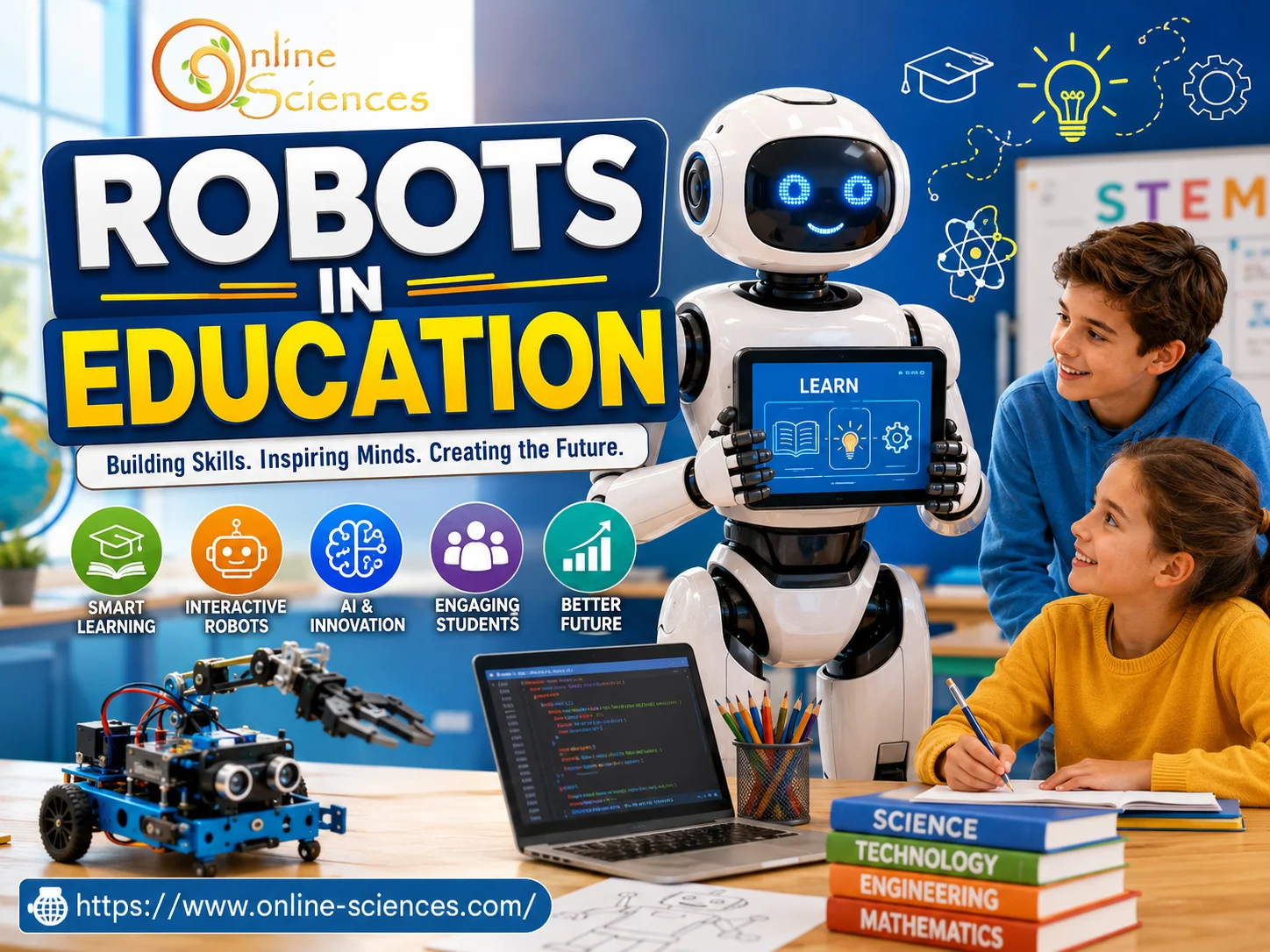
Robots in Education are revolutionizing classrooms by making learning more interactive, engaging, and personalized than ever before. From teaching coding and engineering to helping students with special educational needs, educational robots are becoming essential tools in modern schools and universities. As artificial intelligence continues to evolve, humanoid robots and smart educational platforms are preparing students for the future workforce while making learning enjoyable for learners of all ages.
What are Robots in Education?
Robots in education are programmable machines specifically designed to support teaching and learning. They can assist teachers, demonstrate scientific concepts, teach programming, improve collaboration, and even communicate with students using speech and facial expressions. Educational robots are widely used in:
- Schools.
- Universities.
- STEM laboratories.
- Robotics clubs.
- Coding academies.
- Research centers.
- Special education classrooms.
These robots combine mechanics, electronics, sensors, and artificial intelligence to create hands-on learning experiences.
What is Educational Robotics?
Educational robotics is the practice of teaching students through the design, programming, construction, and operation of robots. Instead of simply reading about technology, students actively build and control robots while learning:
- Programming.
- Artificial Intelligence.
- Electronics.
- Mathematics.
- Engineering.
- Physics.
- Problem-solving.
- Teamwork.
- Creativity.
Educational robotics is one of the fastest-growing fields in STEM education.
Why Robotics in Education Matters
Traditional classrooms often rely heavily on lectures and textbooks. Robotics changes this approach by encouraging active learning. Students learn through experimentation rather than memorization, making lessons more engaging and easier to remember. Major educational benefits include:
- Better problem-solving skills.
- Higher classroom engagement.
- Increased creativity.
- Improved teamwork.
- Stronger coding abilities.
- Greater confidence.
- Practical engineering experience.
- Enhanced logical thinking.
Types of Robots in Education
Educational institutions use various kinds of robots depending on learning objectives.
1. Humanoid Robots
Humanoid robots resemble humans and communicate using speech, gestures, cameras, and AI.
Applications include:
- Language learning.
- Science demonstrations.
- Classroom assistance.
- Autism support.
- Interactive teaching.
Examples include:
2. Coding Robots
Designed for beginners learning programming.
Popular coding robots include:
- Dash.
- Cue.
- mBot.
- Bee-Bot.
Students program movements, lights, sounds, and sensors through visual programming languages.
3. Modular Robotics Kits
These kits allow students to build robots from scratch.
Popular options include:
- LEGO Education SPIKE.
- VEX Robotics.
- Arduino Robotics Kits.
Students learn mechanical engineering alongside programming.
4. Industrial Educational Robots
These robots simulate real manufacturing environments.
Students learn:
- Automation.
- Robotic arms.
- Manufacturing processes.
- PLC programming.
5. AI Educational Robots
Artificial intelligence robots can:
- Answer student questions.
- Recognize speech.
- Detect faces.
- Adapt lessons.
- Analyze learning progress.
6. Drone-Based Educational Robots
Used for:
- Programming.
- Navigation.
- Geography.
- Photography.
- Physics experiments.
Humanoid Robots in Education
Humanoid robots are becoming one of the most exciting educational technologies.
They interact naturally through:
- Speech recognition.
- Facial expressions.
- Eye contact.
- Body movements.
- Artificial intelligence.
Students often feel more motivated when learning with humanoid robots because lessons become interactive conversations rather than passive lectures.
Humanoid robots are especially valuable for:
- Language practice.
- Public speaking.
- STEM education.
- Autism therapy.
- Social skills development.
Humanoid Robot for Education
A humanoid robot for education functions as a teaching assistant rather than replacing educators.
It can:
- Explain concepts.
- Demonstrate experiments.
- Lead classroom games.
- Answer questions.
- Monitor participation.
- Encourage shy students.
- Provide personalized exercises.
Teachers remain responsible for lesson planning while robots enhance classroom engagement.
NAO Robot
One of the world’s best-known educational humanoid robots is the NAO Robot. NAO has become popular in universities, research labs, and schools because it can:
- Walk naturally.
- Speak multiple languages.
- Recognize faces.
- Detect voices.
- Dance.
- Teach programming.
- Demonstrate AI applications.
- Support autism education.
Many universities use NAO to teach robotics, artificial intelligence, computer vision, and machine learning.
Dobot Education
Dobot Education provides robotic arms designed specifically for schools, technical institutes, and universities.
Students learn:
- Robot programming.
- Automation.
- Industrial robotics.
- Artificial intelligence.
- Manufacturing systems.
Dobot educational robots closely resemble industrial robotic arms used in factories, making them ideal for career preparation.
Best Educational Robots & How They Make Learning Better
The best educational robots combine ease of use, programming capabilities, and engaging learning experiences.
1. LEGO Education SPIKE Prime
Perfect for STEM education and engineering projects.
Best for:
- Ages 10+.
- Coding.
- Engineering.
- Robotics competitions.
2. NAO Robot
Ideal for advanced AI education.
Best for:
- Universities.
- Research.
- Human-robot interaction.
- Language learning.
3. Dash Robot
Excellent for elementary school coding.
Features:
- Voice commands.
- Games.
- Sensors.
- Block programming.
4. Bee-Bot
A simple robot for preschool and primary students.
Teaches:
- Sequencing.
- Logic.
- Directions.
- Early coding.
5. mBot
Affordable robot designed for coding beginners.
Supports:
- Scratch.
- Python.
- Arduino.
6. VEX Robotics
Widely used in robotics competitions.
Students develop:
- Mechanical engineering.
- Teamwork.
- Programming.
- Problem-solving.
7. Dobot Magician
Ideal for universities and technical education.
Teaches:
- Industrial automation.
- Robotics.
- AI.
- Machine vision.
Robotics in Education: 7 Examples to Know
Robotics is transforming learning across many subjects. Here are seven practical examples:
- Coding Lessons: Students write programs that control robot movement and sensors.
- STEM Laboratories: Robots demonstrate engineering principles through hands-on experiments.
- Language Learning: Humanoid robots engage in conversations and provide pronunciation practice.
- Mathematics: Robots visualize geometry, measurements, and algorithms.
- Special Education: Robots help children with autism develop communication and social skills.
- Medical Education: Medical students practice robotic surgery concepts using simulation systems.
- Engineering Universities: Students design autonomous robots for research projects and competitions.
Educational Robots: Types, Benefits & 10 Real-World Applications
Educational robots are already making a measurable impact around the world. Common real-world applications include:
- Coding classes.
- AI education.
- STEM competitions.
- Industrial automation training.
- Language learning.
- Autism support.
- University research.
- Engineering laboratories.
- Smart classroom assistants.
- Remote learning and virtual instruction.
These examples show how robotics extends beyond computer science, enriching subjects ranging from mathematics and engineering to healthcare and language education.
Benefits of Robots in Education
Robotics offers significant advantages for students and educators alike:
- Increases classroom engagement.
- Makes abstract concepts easier to understand.
- Encourages collaboration.
- Builds critical thinking.
- Develops coding skills.
- Enhances creativity.
- Supports personalized learning.
- Provides hands-on STEM experience.
- Improves communication skills.
- Prepares students for future careers.
Challenges of Educational Robotics
Despite its advantages, implementing robotics in education presents several challenges:
- High initial costs.
- Teacher training requirements.
- Equipment maintenance.
- Limited access in some schools.
- Software updates.
- Technical support needs.
- Internet connectivity for cloud-based systems.
As technology becomes more affordable, these barriers are gradually decreasing.
The Future of Robots in Education
Future educational robots are expected to become more intelligent through advances in artificial intelligence and machine learning.
Emerging capabilities include:
- Emotion recognition.
- Personalized tutoring.
- AI-generated lesson plans.
- Multilingual teaching.
- Real-time performance analytics.
- Augmented Reality integration.
- Virtual Reality collaboration.
- Digital twin classrooms.
These innovations will support teachers by automating routine tasks while creating richer learning experiences for students.
Best Robot Websites for Learning Robotics
Students and educators can expand their knowledge through trusted robotics resources, including manufacturer sites, educational platforms, coding communities, open-source robotics projects, university research labs, and STEM competition organizations. These websites provide tutorials, programming tools, lesson plans, and hands-on project ideas that help learners progress from beginner to advanced robotics concepts.
Conclusion
Robots in education are reshaping how students learn by making lessons interactive, collaborative, and skill-focused. Whether through humanoid robots like the NAO Robot, industrial platforms such as Dobot Education, or beginner-friendly coding robots, educational robotics equips learners with the technical and creative abilities needed for tomorrow’s careers. As AI continues to advance, robots will become even more capable classroom partners, enhancing—not replacing—the vital role of teachers.
FAQ about robots in education
1. What are robots in education?
Robots in education are programmable machines used to teach coding, STEM subjects, engineering, artificial intelligence, and problem-solving through interactive, hands-on learning.
2. What is educational robotics?
Educational robotics is a teaching approach where students build, program, and operate robots to learn science, technology, engineering, mathematics, and computational thinking.
3. What are the main types of robots in education?
The primary categories include humanoid robots, coding robots, modular robotics kits, industrial training robots, AI educational robots, and drone-based educational robots.
4. What is a humanoid robot for education?
A humanoid educational robot resembles a human and interacts through speech, movement, cameras, and AI to support teaching, language practice, and student engagement.
5. Why is the NAO Robot popular in schools?
NAO Robot is popular because it supports programming education, AI research, language learning, and social interaction while providing realistic human-robot communication.
6. What is Dobot Education?
Dobot Education offers robotic arm platforms that help students learn industrial automation, robotics programming, artificial intelligence, and manufacturing technologies.
7. What are the best educational robots?
Some of the most popular educational robots include LEGO Education SPIKE Prime, NAO Robot, Dash, Bee-Bot, mBot, VEX Robotics, and Dobot Magician.
8. How do educational robots improve learning?
They increase student engagement, encourage hands-on learning, strengthen coding and problem-solving skills, foster teamwork, and make complex concepts easier to understand.
9. Are robots replacing teachers?
No. Educational robots are designed to assist teachers by enhancing lessons, providing interactive demonstrations, and supporting personalized learning—not replacing human educators.
10. What skills do students gain from educational robotics?
Students develop programming, engineering, mathematics, artificial intelligence, creativity, collaboration, communication, and critical-thinking skills that prepare them for future careers.
You can follow Science Online on YouTube from this link: Science Online
Telepresence robots use, advantages & disadvantages
Robot teachers use, advantages and disadvantages
Artificial intelligence in education, AI tutors features, advantages & disadvantages
The importance and uses of educational robotics for students
Humanoid robots use, risks, advantages and disadvantages
Pros and cons of technology in education and Can technology replace teachers?
Educational robotics, Robot teachers, Social robots review, features, advantages, and drawbacks