Tiny Engineer 2026: This Tiny Robot Works on My Desk! 🤖 Amazing AI Desktop Robot
Tiny Engineer is a tiny 3D-printable robot that brings robotics directly to your desk. Powered by an ESP32 microcontroller, this compact machine combines programming, electronics, wireless connectivity, and 3D-printed engineering in an exciting DIY robotics project. Could this tiny robot become your next smart desktop companion?
Tiny Engineer: Amazing AI Desktop Robot
Tiny Engineer
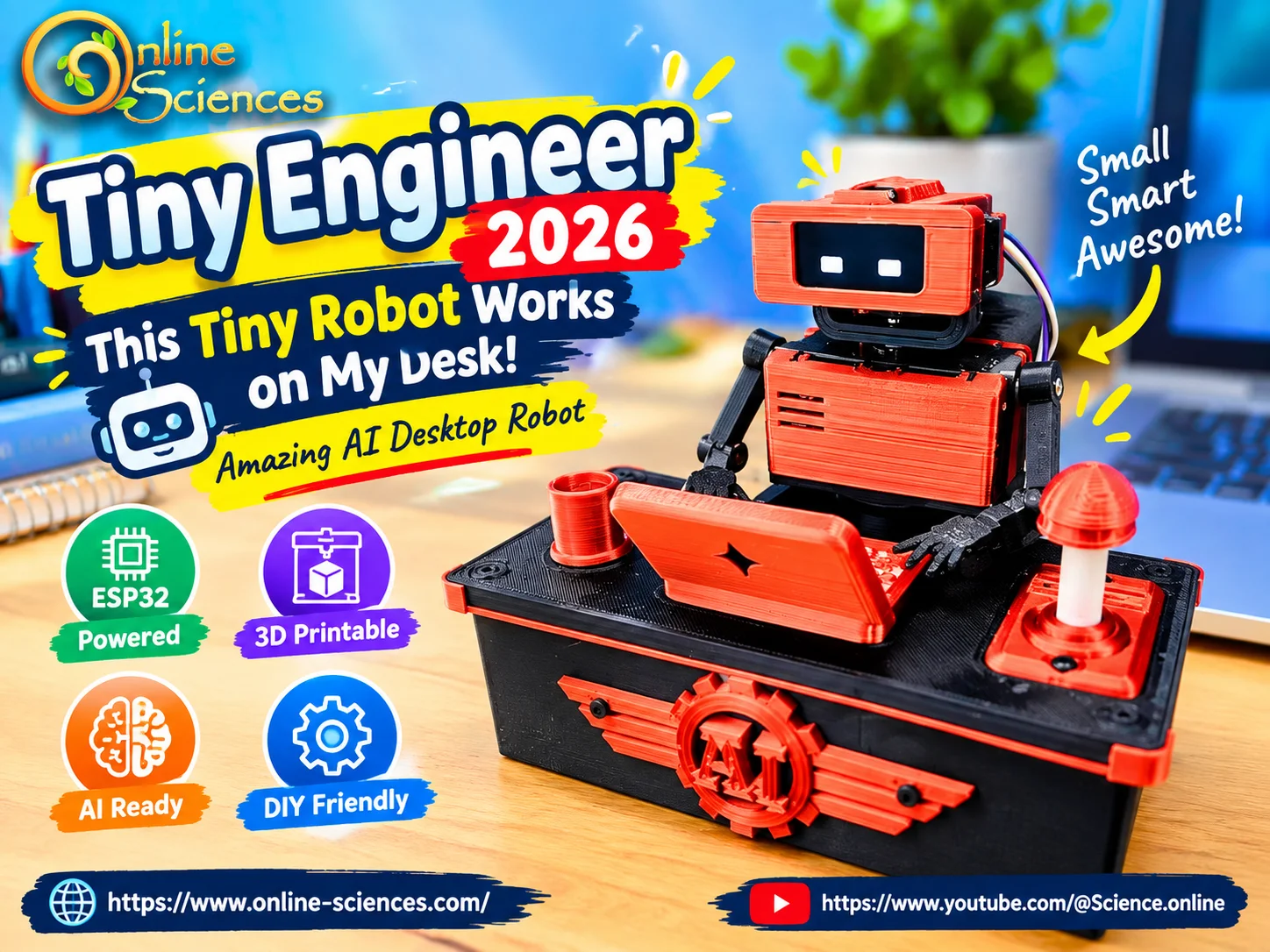
Tiny Engineer is a small 3D-printable desktop robot powered by an ESP32 microcontroller. Despite its tiny size, this fascinating robotics project demonstrates how inexpensive electronics, 3D printing, programming, and artificial intelligence can come together to create a miniature robot designed to live and work directly on a desk.
Unlike large humanoid robots designed for factories or homes, Tiny Engineer focuses on something much smaller: bringing robotics experimentation to your desktop. Its compact design makes it an interesting project for students, makers, hobbyists, engineers, and anyone interested in building their own smart robot.
What is Tiny Engineer?
Tiny Engineer is a small desktop robot designed around an ESP32 microcontroller. The ESP32 is widely used in DIY electronics and robotics because it combines processing capabilities with wireless connectivity in a relatively inexpensive microcontroller platform.
The robot uses a 3D-printable mechanical structure, allowing makers to produce many of its physical components using a 3D printer. This approach can make experimentation easier because users can modify, redesign, and print individual parts rather than depending entirely on commercially manufactured components.
The result is a miniature robotic platform that can sit on a desk while providing an opportunity to explore electronics, robotics, programming, automation, and potentially AI-powered interactions.
How Does Tiny Engineer AI Robot Work?
At the heart of Tiny Engineer is the ESP32 microcontroller. It can receive information from connected components, process programmed instructions, and control electronic or mechanical elements. A typical system like this can combine several important components:
- ESP32 microcontroller for processing and control.
- 3D-printed parts for the robot’s physical structure.
- Motors or servos for movement.
- Sensors for detecting environmental information.
- LEDs or displays for visual feedback.
- Wireless connectivity through the ESP32.
- Software that controls the robot’s behavior.
The exact configuration can depend on the particular Tiny Engineer build and the features implemented by its creator. This modular approach is particularly useful for robotics education because users can experiment with individual systems and gradually add new capabilities.
Why Use an ESP32?
The ESP32 is an especially interesting choice for a tiny robot because it provides a powerful combination of computing and connectivity in a compact package. It can communicate wirelessly using technologies such as Wi-Fi and Bluetooth, depending on the specific ESP32 variant and software configuration.
For a desktop robot, wireless connectivity can open the door to interesting possibilities. For example, a robot could potentially communicate with a computer, smartphone, local network, or another device. Developers could also create software that allows the robot to receive commands remotely. This means a tiny physical robot doesn’t have to operate as an isolated machine.
3D Printing Makes Tiny Engineer More Accessible
One of the most exciting aspects of Tiny Engineer is its 3D-printable design. Traditional robots can require specialized manufacturing equipment and expensive mechanical components. A 3D-printable robot changes this equation by allowing makers with access to a suitable 3D printer to manufacture many structural components themselves.
3D printing also makes customization possible. A user could potentially modify:
- The robot‘s body.
- Mounting points.
- Sensor locations.
- Decorative elements.
- Mechanical components.
- External accessories.
This makes Tiny Engineer more than just a finished robot. It can become a robotics platform for experimentation.
Tiny Robot, Big Learning Opportunities
Small robots can provide an excellent way to learn robotics because their systems are easier to understand than those of large machines.
A beginner can start with a simple task, such as controlling a motor. Then they can add sensors, wireless communication, automated movements, or more sophisticated software. Tiny Engineer can therefore serve as a practical introduction to several technical fields, including:
- Electronics: Users can learn how microcontrollers, sensors, motors, and circuits interact.
- Programming: Users can program the ESP32 to execute specific behaviors and respond to inputs.
- Mechanical engineering: 3D-printed components provide opportunities to learn about dimensions, tolerances, movement, and mechanical design.
- Robotics: Combining software, electronics, and mechanical components demonstrates the interdisciplinary nature of robotics.
- Artificial intelligence: With suitable external software and hardware integration, small robots can potentially become interfaces for AI systems.
Could Tiny Engineer Become an AI Robot?
The ESP32 itself is not equivalent to a powerful modern AI computer. However, its connectivity can potentially allow a small robot to communicate with more capable computing systems. This creates an interesting architecture for future desktop robots.
Instead of placing all computationally intensive AI processing directly inside the tiny robot, the ESP32 could handle local control while another computer or online service performs more demanding tasks. For example, a future configuration could allow a tiny desktop robot to:
- Receive voice commands.
- Send information to an AI system.
- Respond through movement or lights.
- Display information.
- Monitor sensors.
- Execute automated routines.
- Interact with other smart devices.
The exact capabilities depend on the software, hardware, and integrations implemented by the developer.
What Could Tiny Engineer Be Used For?
A miniature robot like Tiny Engineer could have several potential applications.
- Education: Schools and universities could use small robots to demonstrate programming, electronics, and mechanical engineering.
- DIY Robotics: Makers could modify the robot and create their own versions with additional sensors, motors, or accessories.
- Prototyping: Engineers can use small robotic platforms to experiment with concepts before developing larger systems.
- STEM Projects: Tiny Engineer could inspire students to explore science, technology, engineering, and mathematics through hands-on projects.
- Desktop Automation: With additional hardware and software, future versions of small desk robots could potentially perform simple automated tasks or provide information.
Tiny Engineer vs. Large Humanoid Robots
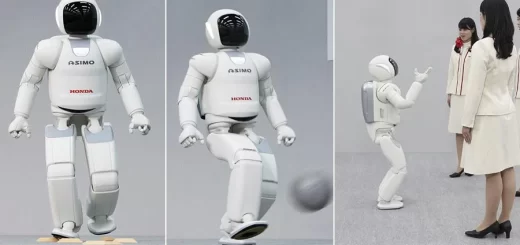
The biggest difference between Tiny Engineer and large humanoid robots is the design philosophy. Humanoid robots are generally built to interact with environments designed for humans and can involve sophisticated mechanical systems, sensors, actuators, and AI computing. Tiny Engineer takes a different approach.
Instead of attempting to replicate a human-sized machine, it focuses on compactness, accessibility, customization, and experimentation. That makes the project particularly interesting for people who want to explore robotics without starting with a huge and expensive machine.
The Future of Desktop Robots
The development of tiny robots could become an important part of personal robotics. As microcontrollers, sensors, wireless technologies, and AI systems become increasingly accessible, robots may become smaller and more specialized. Instead of one enormous machine performing every task, people could eventually use different small robots for different purposes.
A desktop robot might act as a physical interface for an AI assistant, educational tool, notification device, programmable companion, or experimental robotics platform. Tiny Engineer represents the kind of project that demonstrates how advanced robotics concepts can be explored at a very small scale.
Final Thoughts
Tiny Engineer shows that you do not need a giant humanoid machine to explore the fascinating world of robotics. Its combination of an ESP32 microcontroller, 3D-printable components, electronics, programming, and compact mechanical design creates an accessible platform for experimentation.
For makers and robotics enthusiasts, the most interesting part may not be the robot‘s size, but what can be built around it. With additional sensors, software, wireless communication, and AI integrations, tiny desktop robots could become increasingly capable. The idea is simple but powerful: a tiny robot sitting on your desk can become a hands-on laboratory for learning and experimenting with the future of robotics.
Frequently Asked Questions about Tiny Engineer
What is Tiny Engineer?
Tiny Engineer is a small, 3D-printable desktop robot powered by an ESP32 microcontroller and designed for robotics experimentation and development.
What microcontroller does Tiny Engineer use?
Tiny Engineer is powered by an ESP32 microcontroller, a popular platform for connected electronics and robotics projects.
Is Tiny Engineer 3D printable?
Yes. Tiny Engineer is designed as a 3D-printable desktop robot, allowing makers to manufacture and potentially customize its physical components.
Can Tiny Engineer use AI?
The ESP32 can provide control and connectivity, while more demanding AI processing could potentially be handled by an external computer or online AI service, depending on the implementation.
Is Tiny Engineer suitable for beginners?
Its small scale and use of widely available electronics can make this type of project useful for beginners learning about programming, electronics, 3D printing, and robotics.
Can Tiny Engineer be modified?
A 3D-printable design can provide opportunities for customization. Makers may be able to modify mechanical components and add compatible electronics or software features.
What can an ESP32 do in a robot?
An ESP32 can control electronic components, communicate with sensors, manage motors or servos, and provide wireless connectivity for suitable robotics projects.
Is Tiny Engineer a humanoid robot?
No. Tiny Engineer is a small desktop robot, rather than a full-sized humanoid robot.
You can follow Science Online on YouTube at this link: Science Online
🔥 Reachy Mini Has to Break Bad News to Microduck 🤖 You Won’t Expect What Happens Next! 🚀
🔥 Tesla Bot Gen 4 UPDATE 5000 Tasks As HOMEMAKER & Surgeon! Elon Musk SHOCKED Inside Optimus! 🤯
Boston Dynamics Atlas review, advantages and features, How does Atlas robot work?
Tesla robots (Optimus) review, use, advantages and disadvantages
Emo robot review, advantages, disadvantages, features and what can Emo do?
Advantages and disadvantages of using robots in our life
Artificial intelligence (AI) definition, advantages, disadvantages, features and applications
Robot teachers use, advantages and disadvantages
Sophia robot review, features, use, advantages and disadvantages
Vector robot review, advantages, disadvantages and specifications