
Shocking Truth About Bioplastics review 2026: Can biodegradable Plastics Save the Environment?
Bioplastics are used in packaging, agriculture, medicine, and consumer products as part of the global movement toward sustainable and eco-friendly materials. You can also learn more about renewable energy, environmental technology, sustainable materials, recycling systems, and green innovations that help reduce pollution and support a cleaner future for modern industries and smart cities.
Bioplastics
Bioplastics are a type of plastic made from renewable biological materials such as cornstarch, sugarcane, potato starch, algae, and vegetable oils rather than traditional petroleum-based resources. Some bioplastics are biodegradable and can break down naturally under specific environmental conditions, while others are designed to reduce carbon emissions and dependence on fossil fuels.
You can also explore more about biodegradable materials, sustainable packaging technologies, renewable energy solutions, recycling innovations, green manufacturing systems, and environmentally friendly products that help reduce pollution and support a cleaner, healthier future for the coming generations.
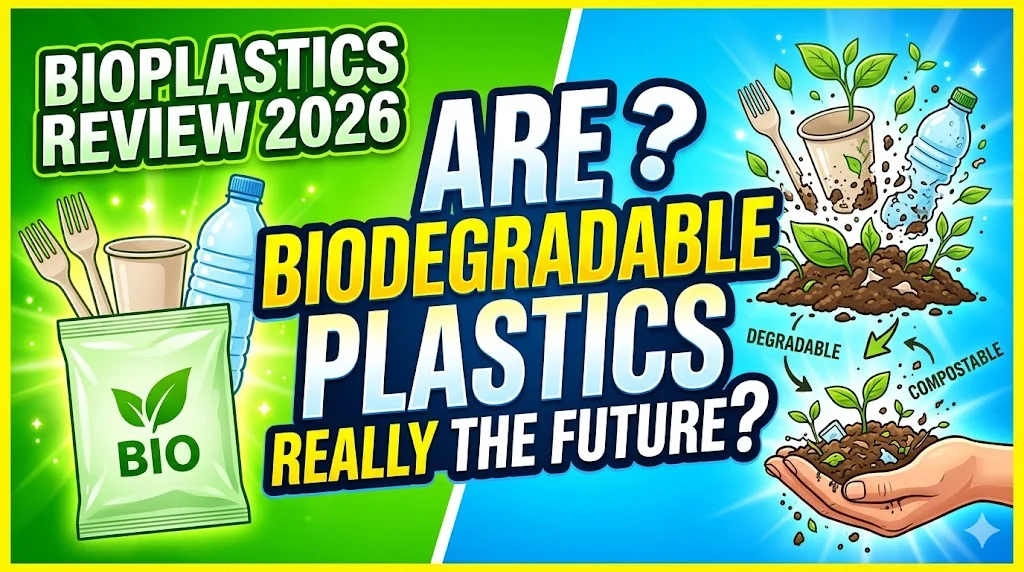
Bioplastics Review 2026
Bioplastics Review
Plastic pollution has become one of the biggest environmental challenges facing the world today. Millions of tons of plastic waste enter oceans and landfills every year, creating serious risks for wildlife, ecosystems, and human health. Because of this growing problem, bioplastics have emerged as an innovative alternative that promises a more sustainable future.
Bioplastics are materials made from renewable biological sources such as corn starch, sugarcane, potato starch, algae, and vegetable oils. Some bioplastics are biodegradable, while others are designed to reduce dependence on fossil fuels, even if they do not completely decompose naturally. In 2026, bioplastics are gaining attention in industries including packaging, agriculture, medicine, automotive manufacturing, and consumer electronics.
What Are Bioplastics?
Bioplastics are a category of plastic materials derived partly or entirely from biological resources instead of petroleum. They are designed to reduce carbon emissions and decrease environmental damage caused by conventional plastics.
Bioplastics can be divided into two major categories:
- Bio-based plastics: These plastics are produced from renewable resources like corn or sugarcane.
- Biodegradable plastics: These plastics can break down naturally through microorganisms under specific environmental conditions.
Some products combine both characteristics, meaning they are bio-based and biodegradable at the same time.
Types of Bioplastics
- PLA (Polylactic Acid): PLA is one of the most common biodegradable plastics used in food packaging, disposable cups, medical implants, and 3D printing. It is produced mainly from fermented plant starch such as corn.
- PHA (Polyhydroxyalkanoates): PHA is created by microorganisms and is fully biodegradable. It is commonly used in agriculture, medical products, and packaging applications.
- Starch-Based Plastics: These plastics are mixed with biodegradable polymers and are widely used in shopping bags and food containers.
- Bio-PET: Bio-PET is partially made from renewable materials but behaves similarly to traditional PET plastic. It is frequently used in beverage bottles.
Advantages of Bioplastics
- Reduced Carbon Footprint: Bioplastics can significantly lower greenhouse gas emissions because they rely on renewable resources instead of fossil fuels.
- Less Dependence on Petroleum: Using plant-based materials helps reduce global dependence on oil production and supports renewable industries.
- Biodegradability: Certain bioplastics can decompose naturally under industrial composting conditions, reducing landfill waste.
- Safer Medical Applications: Bioplastics are increasingly used in medicine for biodegradable sutures, implants, and drug delivery systems because of their compatibility with the human body.
- Innovation in Sustainable Packaging: Many global companies are investing in bioplastic packaging to improve sustainability and reduce environmental pollution.
Disadvantages of Bioplastics
- Higher Production Costs: Bioplastics are often more expensive to manufacture than conventional plastics due to limited production capacity and advanced technologies.
- Limited Recycling Infrastructure: Many recycling systems are not yet fully prepared to separate and process bioplastics efficiently.
- Composting Requirements: Some biodegradable plastics require industrial composting facilities with controlled temperature and humidity conditions to decompose properly.
- Agricultural Concerns: Large-scale production of plant-based plastics may increase demand for agricultural land, water, and crops.
- Performance Limitations: Certain bioplastics may not tolerate high heat or extreme pressure as effectively as petroleum-based plastics.
Applications of Bioplastics in 2026
- Food Packaging: Bioplastics are widely used in disposable food containers, bottles, cups, and wrapping materials to reduce environmental waste.
- Agriculture: Farmers use biodegradable mulch films and plant pots that naturally decompose after use.
- Medical Industry: Bioplastics play an important role in surgical tools, tissue engineering, and controlled drug-release technologies.
- Automotive Industry: Car manufacturers are introducing eco-friendly interior components made from plant-based plastics.
- Consumer Electronics: Bioplastics are increasingly appearing in smartphone accessories, laptop components, and electronic packaging.
Are Bioplastics Truly Environmentally Friendly?
Bioplastics offer important environmental advantages, but they are not a perfect solution. Their sustainability depends on factors such as raw material sourcing, production methods, disposal systems, and recycling infrastructure.
When managed correctly, bioplastics can help reduce pollution and carbon emissions. However, improper disposal may still contribute to environmental waste. Experts believe that combining bioplastics with improved recycling systems and reduced plastic consumption is the best long-term strategy.
What Material Is Bioplastic Made Of?
Bioplastics are made from renewable natural materials instead of petroleum. Common raw materials include:
- Corn starch.
- Sugarcane.
- Potato starch.
- Vegetable oils.
- Cellulose from plants.
- Algae and seaweed.
- Microorganisms and bacteria.
These materials are processed into polymers that can be shaped into products like packaging, bottles, containers, and medical devices.
Bioplastics Examples
There are several popular types of bioplastics used in modern industries:
- PLA (Polylactic Acid): Used in food packaging, disposable cups, and 3D printing.
- PHA (Polyhydroxyalkanoates): Used in medical products and biodegradable packaging.
- Starch-based plastics: Commonly used in shopping bags and compostable products.
- Bio-PET: Used in beverage bottles and packaging materials.
- Cellulose-based plastics: Used in films, coatings, and textiles.
How Are Bioplastics Made?
Bioplastics are manufactured through biological and chemical processes that transform renewable materials into polymers.
Main Steps in Bioplastic Production:
- Collect renewable raw materials such as corn or sugarcane.
- Extract natural sugars or starches.
- Ferment the sugars using microorganisms to produce organic compounds like lactic acid.
- Convert these compounds into polymers through polymerization.
- Shape the material into products using industrial manufacturing techniques.
Advanced technologies in 2026 are making bioplastic production more efficient and environmentally friendly.
Are Bioplastics Biodegradable?
Some bioplastics are biodegradable, while others are not. Biodegradable bioplastics can decompose naturally through microorganisms under suitable environmental conditions.
For example:
- PLA and PHA are biodegradable under industrial composting conditions.
- Bio-PET is bio-based but not fully biodegradable.
The biodegradability of a product depends on its chemical structure rather than whether it comes from biological materials.
Bioplastics Products
Bioplastics are used in many everyday products, including:
- Food containers and cups.
- Water bottles.
- Shopping bags.
- Medical implants.
- Agricultural films.
- Disposable cutlery.
- Smartphone accessories.
- Cosmetic packaging.
- 3D printing materials.
Many companies are investing heavily in sustainable bioplastic products to meet environmental goals.
Bioplastics Research
Bioplastics research is expanding rapidly as scientists search for better sustainable materials. Researchers are working on:
- Fully compostable plastics.
- Algae-based bioplastics.
- Heat-resistant biodegradable materials.
- Faster decomposition technologies.
- Improved recycling systems.
- Reduced production costs.
Universities and environmental organizations worldwide are focusing on creating stronger and cheaper alternatives to traditional plastics.
What Are Bioplastics Used For?
Bioplastics are used across multiple industries because they can reduce environmental impact and support sustainability.
Common Uses of Bioplastics:
- Packaging industry.
- Agriculture and farming.
- Medical devices and implants.
- Automotive interiors.
- Electronics packaging.
- Textile manufacturing.
- Disposable consumer products.
- 3D printing technology.
As environmental awareness grows, bioplastics are becoming increasingly important in modern green technology and sustainable manufacturing.
The Future of Bioplastics
The future of bioplastics looks promising as governments, companies, and environmental organizations continue investing in sustainable technologies. Researchers are working to create stronger, cheaper, and fully compostable materials that can replace traditional plastics in more industries.
Innovations involving algae-based plastics, seaweed packaging, and carbon-neutral materials may revolutionize manufacturing over the next decade. As public awareness grows, demand for eco-friendly packaging and sustainable products is expected to rise rapidly worldwide.
FAQ about Bioplastics
1. What are bioplastics made from?
Bioplastics are commonly made from renewable materials such as corn starch, sugarcane, algae, vegetable oils, and cellulose.
2. Are all bioplastics biodegradable?
No, not all bioplastics are biodegradable. Some are bio-based but behave similarly to traditional plastics.
3. Why are bioplastics important?
Bioplastics help reduce dependence on fossil fuels, lower carbon emissions, and support sustainable manufacturing.
4. Can bioplastics replace normal plastics completely?
Currently, bioplastics cannot fully replace conventional plastics in every application because of cost and performance limitations, but their use is growing rapidly.
5. Are bioplastics safe for food packaging?
Yes, many bioplastics are approved for food packaging and are commonly used in cups, containers, and wrapping materials.
6. What is the biggest challenge facing bioplastics?
One of the main challenges is developing effective recycling and composting systems that can handle biodegradable materials efficiently.
7. Is Bioplastic Eco-Friendly?
Bioplastics are considered more eco-friendly than traditional petroleum-based plastics because they are made from renewable biological resources such as corn starch, sugarcane, algae, and vegetable oils. Many bioplastics can reduce carbon emissions and decrease dependence on fossil fuels. Some types are biodegradable or compostable, helping reduce long-term plastic pollution. However, their environmental impact also depends on how they are produced, recycled, and disposed of after use.
Not all bioplastics are completely environmentally friendly. Some require industrial composting facilities to break down properly, while others may still contribute to waste if not managed correctly. Researchers continue improving bioplastics to make them more sustainable, affordable, and easier to recycle in 2026.
Conclusion
Bioplastics represent an important step toward reducing environmental pollution and building a greener future. Although challenges such as cost, recycling infrastructure, and industrial composting remain, technological advancements continue to improve the performance and availability of biodegradable materials.
In 2026, bioplastics are becoming a key part of sustainable innovation across packaging, healthcare, agriculture, and manufacturing industries. While they may not completely replace traditional plastics immediately, they are helping move the world toward cleaner and more environmentally responsible solutions.
You can subscribe to Science Online on YouTube from this link: Science Online
Dangers and bad effects of burning plastics and rubber on humans & global warming
Thermosets use, features, advantages, and disadvantages
Thermoplastics properties, types, uses, advantages and disadvantages
The importance and uses of polyesters
Polycarbonate roofing sheets uses, types & properties