
15 Essential Facts About Joints and Their Significance to Movement: Complete Guide 2026
Joints and their significance to movement are among the most important topics in human anatomy because joints connect bones and allow the body to perform a wide range of movements. From walking and running to writing and lifting objects, joints provide flexibility, stability, and support. Different types of joints enable varying degrees of movement, making them essential for daily activities and overall physical function. Understanding how joints work helps explain the remarkable mobility of the human skeletal system.
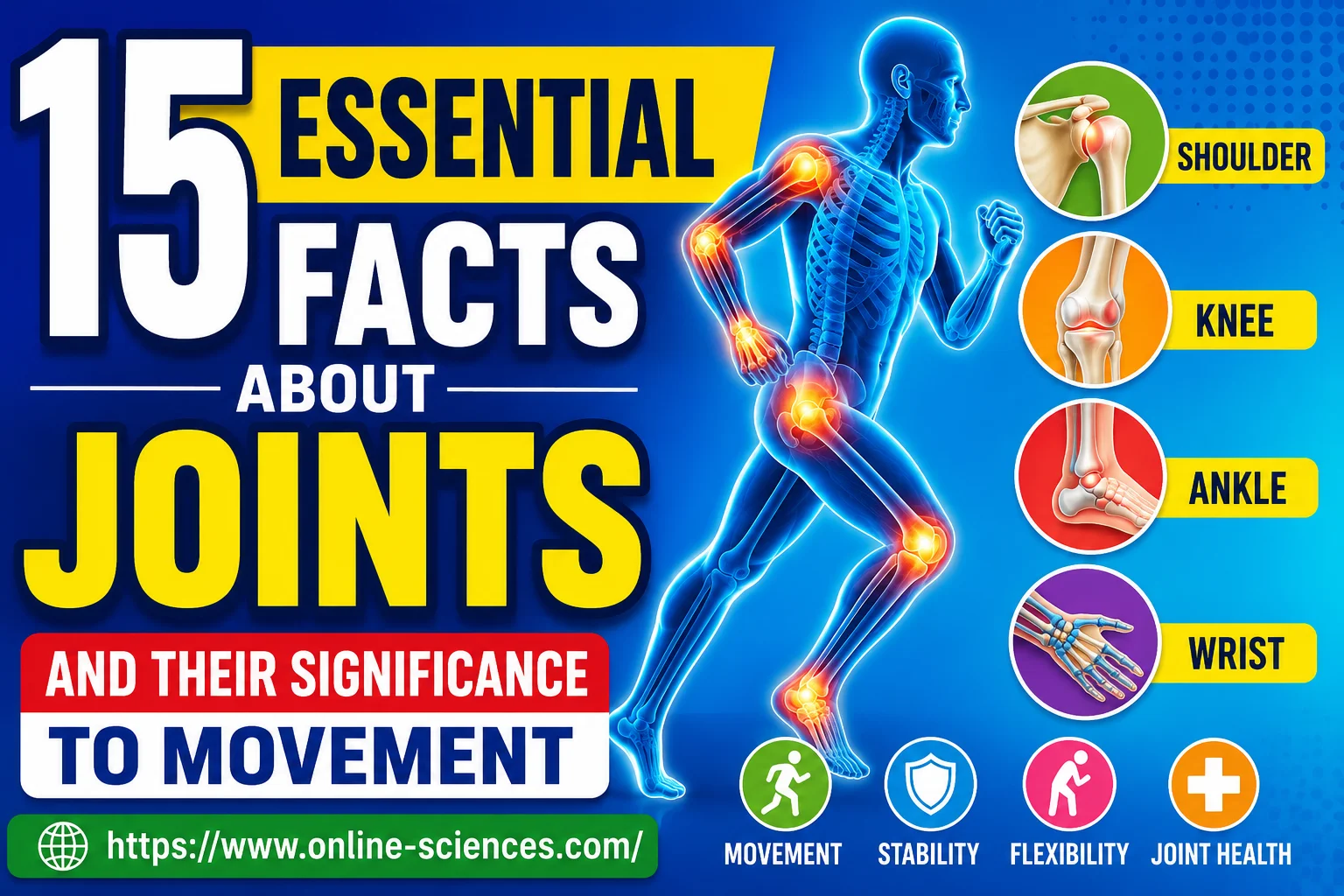
Joints and their significance to movement
The joint
The joint is the location at which the bones meet each other, and they allow the movement between the bones. It is the point where two bones meet. The joints hold the bones together; they give stability, and at the same time, they give the skeleton mobility.
The bones act as the levers that can be moved by the skeletal muscle to which they are attached. The human skeleton is made up of differently shaped bones that align with each other. The point where the bones align is called a joint.
Joints
The joints provide the mechanism that allows the body to move. They allow the movement to occur, so that we can sit, walk, run, ……………..etc, The joint moves when the muscles crossing it contract. It facilitates the motion and allows flexibility.
The joints are classified according to their degree of movement. There are three types of joints, which are the immovable joints, the slightly movable joints, and the freely movable joints. The immovable joints do not allow any movement, such as the joints between the bones of the skull.
The slightly movable joints allow movement in one direction only, such as the knee and elbow joints. The freely movable joints allow movement in all directions, such as the shoulder, the wrist, and the thigh (hip) joints.
The bones that are in contact with these joints are covered with a delicate layer of a transparent, smooth cartilaginous substance, which allows the movement of the bones easily with less friction. They contain synovial fluid, which facilitates the sliding of the cartilages that cover the tips of the bones.
Types of Joints
- Fibrous Joints: Fibrous joints are connected by dense fibrous connective tissue and allow little or no movement. These joints provide strength and stability. Examples include the sutures found between the bones of the skull.
- Cartilaginous Joints: Cartilaginous joints are connected by cartilage and permit limited movement. They help absorb shock and provide flexibility. Examples include the joints between the vertebrae of the spinal column and the connection between the ribs and sternum.
- Synovial Joints: Synovial joints are the most common and movable joints in the human body. They contain a synovial cavity filled with lubricating fluid that reduces friction during movement.
Types of Synovial Joints
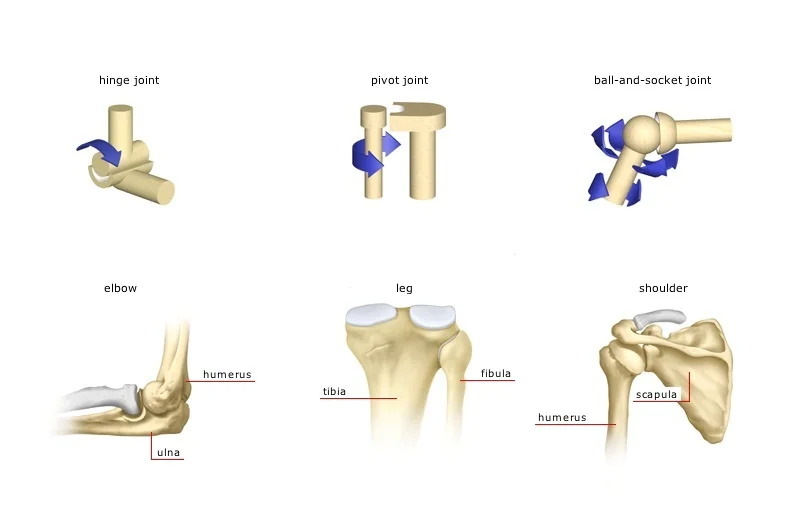
- Ball-and-Socket Joints: These joints allow movement in all directions, including rotation. Examples include the shoulder and hip joints.
- Hinge Joints: Hinge joints permit movement in one plane, similar to a door hinge. Examples include the elbow and knee joints.
- Pivot Joints: Pivot joints allow rotational movement around a central axis. An example is the joint between the first two cervical vertebrae in the neck.
- Saddle Joints: Saddle joints allow movement in two planes. The thumb joint is a common example.
- Condyloid Joints: Condyloid joints permit movement in multiple directions without rotation. Examples include the wrist joints.
- Gliding Joints: Gliding joints allow bones to slide past one another. They are found in the wrists and ankles.
Importance of Joints in Movement
- Connect bones together to form the skeleton.
- Enable body movement and flexibility.
- Maintain posture and balance.
- Absorb shocks during physical activities.
- Reduce friction between bones through cartilage and synovial fluid.
- Support weight-bearing functions.
- Protect bones from excessive wear and damage.
15 Essential Facts About Joints
Joints are the structures where two or more bones meet in the body. They are essential components of the skeletal system because they connect bones and allow movement. Without joints, the human body would be rigid and unable to perform everyday activities such as walking, running, writing, or lifting objects.
One essential fact about joints is that they provide both movement and stability. While some joints are highly mobile, others are designed to limit movement and protect delicate structures. This balance between mobility and stability enables the body to function efficiently and safely.
Joints are classified into three main categories based on their structure: fibrous, cartilaginous, and synovial joints. Fibrous joints are connected by dense connective tissue and allow little or no movement. Cartilaginous joints are joined by cartilage and permit limited movement, while synovial joints are freely movable and are the most common type in the human body.
Synovial joints are responsible for most body movements. They contain a cavity filled with synovial fluid, which lubricates the joint and reduces friction between bones. This fluid helps ensure smooth and painless movement during daily activities.
Another important fact is that cartilage covers the ends of bones within many joints. Cartilage acts as a cushion that absorbs shock and prevents bones from rubbing directly against each other. This protective layer helps maintain joint health and supports efficient movement.
The human body contains several types of synovial joints, each designed for specific movements. Ball-and-socket joints, such as those in the shoulder and hip, allow movement in multiple directions. Hinge joints, such as the elbow and knee, permit movement mainly in one plane.
Pivot joints allow rotational movement, enabling actions such as turning the head from side to side. Saddle joints, condyloid joints, and gliding joints each contribute unique movement patterns that increase the body’s flexibility and range of motion.
Ligaments are strong bands of connective tissue that connect bones to other bones within a joint. They help stabilize joints and prevent excessive movement that could lead to injury. Healthy ligaments are essential for maintaining proper joint function.
Tendons also play a crucial role in joint movement. These tough connective tissues attach muscles to bones, allowing muscle contractions to move the joints. Without tendons, muscles would not be able to move the skeleton effectively.
Joints work closely with muscles to produce coordinated movement. When muscles contract, they pull on bones through tendons, causing joints to move. This partnership between the muscular and skeletal systems enables a wide variety of physical activities.
Many joints are designed to absorb shock during movement. The joints of the knees, hips, and spine help distribute forces generated during walking, running, and jumping. This shock-absorbing function protects bones and surrounding tissues from damage.
Joint health is influenced by factors such as age, physical activity, nutrition, and body weight. Regular exercise strengthens the muscles surrounding joints, while a balanced diet provides nutrients necessary for maintaining healthy cartilage and connective tissues.
One of the most common joint disorders is arthritis, a condition characterized by inflammation, pain, and stiffness in the joints. Arthritis can affect mobility and quality of life, making joint care an important aspect of overall health.
Maintaining a healthy body weight is another key factor in preserving joint function. Excess body weight places additional stress on weight-bearing joints such as the knees and hips, increasing the risk of joint wear and degeneration over time.
Modern medical research continues to improve our understanding of joints and joint diseases. Advances in treatments, rehabilitation techniques, and preventive care are helping people maintain mobility and joint health for longer periods.
Understanding these 15 essential facts about joints highlights their critical role in movement, flexibility, stability, and overall physical well-being. Healthy joints allow people to remain active, independent, and capable of performing the countless movements required in everyday life.
Frequently Asked Questions (FAQ) about Joints
1. What are joints?
Joints are points where two or more bones meet. They allow movement and provide stability to the skeletal system.
2. Why are joints important for movement?
Joints act as pivot points that enable muscles and bones to work together, allowing movements such as walking, running, bending, and lifting.
3. What are the three main types of joints?
The three main types are fibrous joints, cartilaginous joints, and synovial joints.
4. Which joints allow the greatest range of motion?
Ball-and-socket joints, such as the shoulder and hip, provide the greatest range of movement.
5. What is the function of synovial fluid?
Synovial fluid lubricates the joint, reduces friction between bones, and helps nourish the cartilage.
6. What are hinge joints?
Hinge joints allow movement in one direction, mainly flexion and extension, as seen in the elbow and knee.
7. How do joints contribute to body stability?
Some joints limit movement and provide structural support, helping maintain posture and protect internal organs.
8. What happens when joints become damaged?
Damaged joints can cause pain, stiffness, reduced mobility, inflammation, and conditions such as arthritis.
9. Which joint is the most movable in the human body?
The shoulder joint is considered the most movable joint in the human body.
10. How can healthy joints be maintained?
Regular exercise, proper nutrition, maintaining a healthy weight, and avoiding injuries help keep joints healthy and functional.
Conclusion
Joints play a crucial role in connecting bones and enabling movement throughout the body. Their various types provide different levels of mobility and stability, allowing humans to perform complex activities efficiently. Understanding the structure and function of joints is essential for appreciating how the skeletal and muscular systems work together to support everyday life.
You can subscribe to Science Online on YouTube from this link: Science Online
Joints types & function, Nerve supply of joints & general features of Synovial Joints
Skeletal system, Axial skeleton (vertebral column, Skull & thoracic cage)
Skeletal system, Appendicular skeleton structure and importance
Skeletal system, Importance of Cartilages, Joints, Ligaments & Tendons





Nice
Thank you