
10 Amazing Facts About the Reproduction Process and Male Reproductive (Genital) System
Reproduction process and male reproductive (genital) system are essential topics in human biology. The male reproductive system produces sperm and male sex hormones, transports sperm during ejaculation, and plays a vital role in fertilization and the continuation of human life.
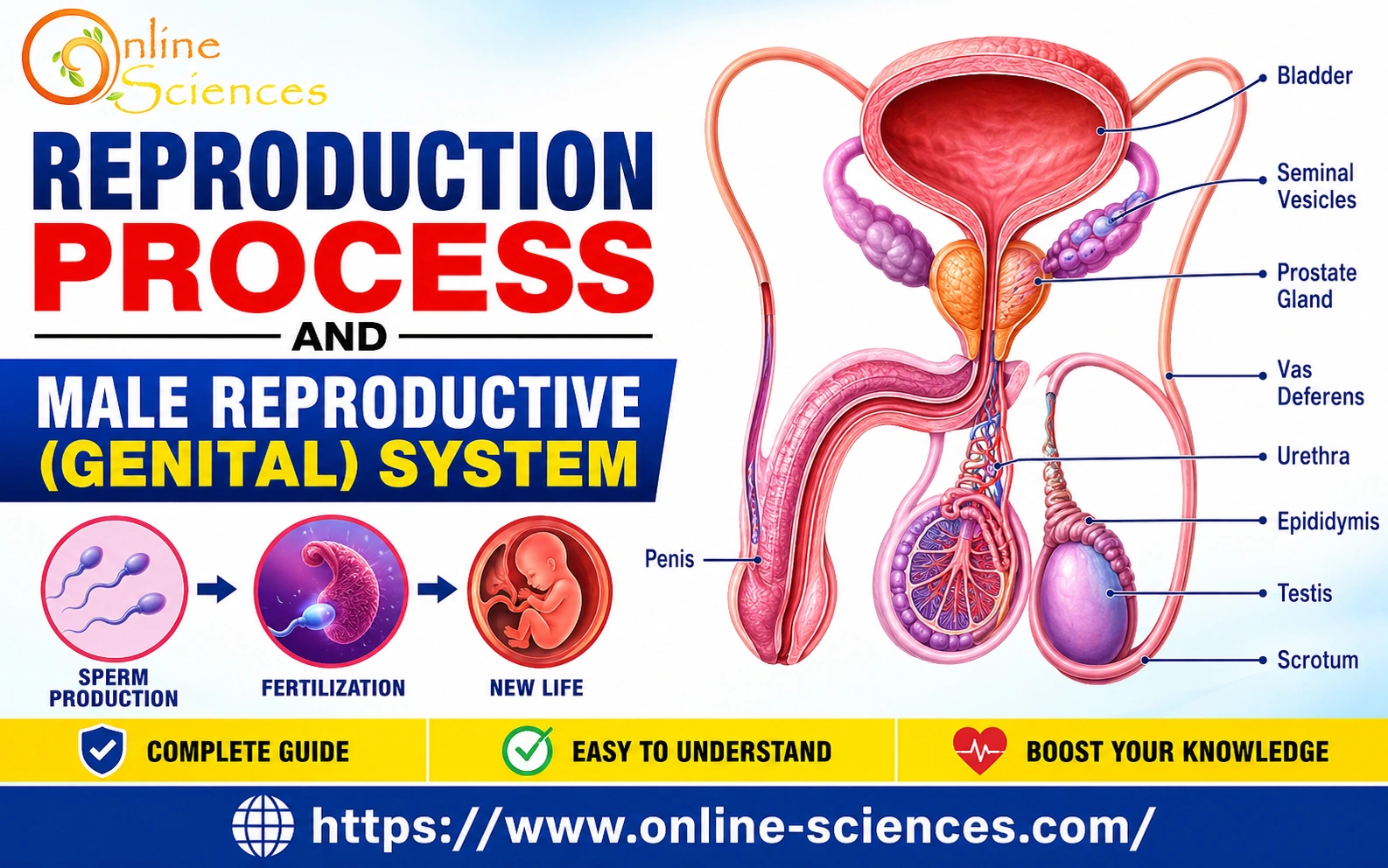
Reproduction Process and Male Reproductive (Genital) System
Reproduction process
The reproduction process is a process that aims to secure the existence and continuity of living organisms species and to prevent them from extinction. Humans reproduce sexually when two different persons mate and the female uses a special system called the reproductive (genital) system.
Man can not reproduce asexually, as the individuals (offspring) that come from the asexual reproduction are identical to their parents, while in humans, each individual differs from the others.
Male reproductive (genital) system
The male reproductive system consists of two testes, the vas deferens, the genital associated glands, and the penis.
Two testes
The two testes are two glands of an oval shape, and they lie outside the body in a sac-like structure called the scrotal sac (scrotum), which is hanged between a man’s thighs.
Function of the testes
The testes produce the sperms (after puberty), and they produce the male sex hormone known as “testosterone,” which is responsible for the appearance of the secondary sex characteristics (the signs of puberty) in males.
If the testes are present inside the body and do not come out during the development of the embryo, then the sperms do not grow or develop, and the individual becomes infertile (sterile).
Function of the scrotal sac
The scrotal sac regulates and keeps the temperature of the testes two degrees below the normal body temperature, which is a suitable temperature for the growth and development of sperm.
What are the signs of puberty in male?
The growth of hair in certain body areas (like the face and the mustache) and the harshness of the voice are from signs of puberty. The development of the genital organs, the growth of the bones, and the enlargement of the muscles are from signs of puberty.
Vas deferens
Each testis is connected to a group of fine convoluted (highly looped) tubes known as the epididymis, which extends in the form of a single tube known as the vas deferens.
The function of the Epididymis is to store the sperms, and the final stages of the growth and development of the sperms take place in the Epididymis. The function of the Vas deferens is transferring the sperms from the testis to the urinogenital duct (the urethra).
Genital associated glands
There are three kinds of genital glands connected to the male reproductive system, which are the seminal vesicles, the prostate gland, and the Cowper’s gland. The prostate is a muscular gland surrounding the urethra at the site of the connection with the urinary bladder, and might be enlarged in some men above forty years. When the prostate is enlarged, this leads to an increase in pressure on the urethra, which eventually causes difficulty in urination and needs to be removed surgically.
Function of the genital glands
The genital glands secrete a seminal fluid (alkaline fluid) which feeds the sperms (as it contains the nutrients), and they facilitate the flow of the sperms. The genital glands neutralize the acidity of the urethra (so the sperms do not die during passing through the urethra.
The penis
The penis is a sponge-like tissue. The urethra passes through it and ends in a urinogenital (urosexual) opening, through which the semen and the urine go out of the body, but never at the same time.
Reproduction Process and Male Reproductive (Genital) System
The human reproductive system ensures the production of offspring by combining genetic material from both parents. The male reproductive (genital) system is responsible for producing, storing, nourishing, and delivering sperm cells, while also producing the hormone testosterone, which regulates male reproductive development and secondary sexual characteristics. Understanding how the male reproductive system works helps explain fertility, puberty, reproduction, and overall reproductive health.
What is the Reproduction Process?
Reproduction is the biological process through which new individuals are produced. In humans, reproduction is sexual, meaning it requires the fusion of male and female reproductive cells (gametes).
The basic steps of reproduction include:
- Production of sperm in the testes.
- Production of eggs (ova) in the ovaries.
- Transfer of sperm into the female reproductive tract during intercourse.
- Fertilization is when a sperm cell unites with an egg.
- Formation of a zygote.
- Cell division and embryo development.
- The growth of the fetus inside the uterus until birth.
Main Functions of the Male Reproductive System
The male reproductive system performs several important functions:
- Produces sperm cells.
- Produces testosterone and other male hormones.
- Stores mature sperm.
- Transports sperm through the reproductive ducts.
- Mixes sperm with gland secretions to form semen.
- Delivers semen into the female reproductive tract during ejaculation.
Parts of the Male Reproductive (Genital) System
- Testes: The testes are the primary male reproductive organs. Functions include: Producing sperm through spermatogenesis, producing testosterone, and supporting male sexual development.
- Scrotum: The scrotum is a skin-covered sac that holds the testes outside the body. Its main functions are protecting the testes, maintaining a temperature about 2–3°C lower than body temperature for efficient sperm production.
- Epididymis: The epididymis is a long, coiled tube attached to each testis. Functions include sperm maturation, temporary sperm storage, and transporting sperm to the vas deferens.
- Vas Deferens: The vas deferens is a muscular tube that carries mature sperm from the epididymis to the ejaculatory ducts.
- Seminal Vesicles: The seminal vesicles produce a nutrient-rich fluid containing fructose. This fluid: Nourishes sperm, provides energy, and makes up a large portion of semen.
- Prostate Gland: The prostate secretes a slightly alkaline fluid that protects sperm, improves sperm motility, and neutralizes acidity in the female reproductive tract.
- Bulbourethral (Cowper’s) Glands: These glands produce a clear lubricating fluid before ejaculation. Functions include: lubricating the urethra and neutralizing acidic urine residues.
- Penis: The penis is the external reproductive organ responsible for delivering semen, urination, and sexual intercourse.
- Urethra: The urethra serves as the passageway for urine and Semen (at different times).
How is Sperm Produced?
Sperm production (spermatogenesis) occurs inside tiny seminiferous tubules within the testes.
The process includes:
- Stem cells divide.
- Cells undergo meiosis.
- Immature sperm are formed.
- Sperm mature in the epididymis.
- Mature sperm are stored until ejaculation.
A complete cycle of sperm production takes approximately 64–74 days.
Hormonal Control of the Male Reproductive System
Several hormones regulate reproduction:
- Testosterone: Promotes sperm production, muscle growth, a deep voice, and male characteristics.
- Follicle-Stimulating Hormone (FSH): Stimulates sperm production.
- Luteinizing Hormone (LH): Stimulates testosterone production by Leydig cells.
- Gonadotropin-Releasing Hormone (GnRH): Controls the release of FSH and LH.
Journey of Sperm During Reproduction
The pathway of sperm is: Testes → Epididymis → Vas deferens → Ejaculatory duct → Urethra → Penis → Female reproductive tract.
Fertilization Process
Fertilization occurs when:
- A sperm reaches the fallopian tube.
- One sperm penetrates the egg.
- Their nuclei fuse.
- A zygote forms.
- Embryonic development begins.
Importance of the Male Reproductive System
The male reproductive system is essential because it:
- Enables human reproduction.
- Produces healthy sperm.
- Maintains hormone balance.
- Supports puberty and sexual maturity.
- Contributes to fertility.
Factors Affecting Male Fertility
Several factors may reduce fertility, including:
- Smoking.
- Excessive alcohol consumption.
- Drug abuse.
- Obesity.
- Hormonal disorders.
- High scrotal temperature.
- Poor nutrition.
- Certain infections.
- Environmental toxins.
- Stress.
Common Disorders of the Male Reproductive System
Examples include:
- Infertility.
- Erectile dysfunction.
- Varicocele.
- Prostatitis.
- Benign prostatic enlargement.
- Testicular torsion.
- Testicular cancer.
- Sexually transmitted infections (STIs).
Tips for Maintaining Male Reproductive Health
- Eat a balanced diet rich in vitamins and minerals.
- Exercise regularly.
- Maintain a healthy body weight.
- Avoid smoking and excessive alcohol.
- Practice safe sex.
- Get regular medical checkups.
- Protect the testes during sports.
- Manage stress effectively.
- Stay hydrated.
- Get adequate sleep.
Frequently Asked Questions (FAQ) about the reproductive system
1. What is the main function of the male reproductive system?
Its primary functions are producing sperm, secreting testosterone, and transporting sperm for fertilization.
2. Where are sperm produced?
Sperm are produced in the seminiferous tubules of the testes.
3. What is semen?
Semen is a mixture of sperm cells and fluids from the seminal vesicles, prostate gland, and bulbourethral glands.
4. Why is the scrotum located outside the body?
The scrotum keeps the testes cooler than body temperature, which is necessary for normal sperm production.
5. Which hormone controls male reproductive development?
Testosterone is the primary hormone responsible for male reproductive development and secondary sexual characteristics.
6. What is spermatogenesis?
Spermatogenesis is the process by which sperm cells are produced and mature in the testes.
7. What is the role of the prostate gland?
The prostate produces an alkaline fluid that protects sperm and improves their movement.
8. How long does sperm production take?
The complete process generally takes about 64–74 days.
9. Can lifestyle affect male fertility?
Yes. Healthy habits such as proper nutrition, regular exercise, avoiding smoking, limiting alcohol, managing stress, and maintaining a healthy weight can significantly improve reproductive health.
10. What is fertilization?
Fertilization is the fusion of a sperm cell and an egg cell to form a zygote, marking the beginning of a new human life.
You can subscribe to Science Online on YouTube from this link: Science Online
Organs of male genital system, Structure of the testis, Functions of Sertoli cells & Leydig cells
Reproduction in Humans, Structure of Male & Female reproductive (genital) system
Reproduction, Types of sexual reproduction (Conjugation, Reproduction by sexual gametes)
Reproduction in Human being, Structure of Male genital system & sperm
Structure of Female genital system & ovum, Oogenesis stages & Menstrual cycle