The structure and function of the heart in the circulatory system, How can you keep your heart healthy?
The circulatory system is the system that transports the digested food, oxygen gas, and water to all the body cells and carries the wastes away from the body cells to special organs to get rid of them.
Circulatory system
The circulatory system helps maintain the body’s health and consists of the heart, blood vessels, and blood.
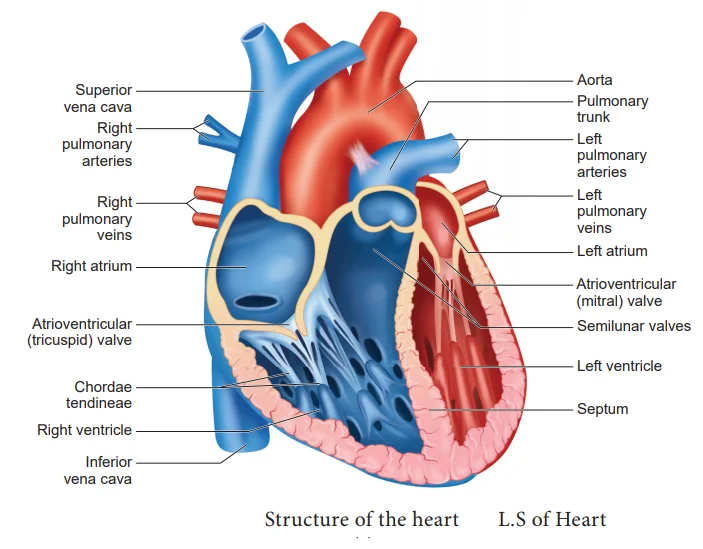
Heart structure
Heart
The heart is a muscular hollow organ equals to about the size of your fist, and it is located inside the chest cavity between the two lungs. The heart pumps blood continuously throughout the body; the four chambers of the heart are always full of blood, and connected to the blood vessels.
The heart consists of four chambers located on two sides (the right side and the left side). The upper chamber on each side is called the “atrium”, and the lower chamber is called the “ventricle”.
There is a wall that separates the right side of the heart and the left side of the heart to prevent the mixing of the blood on both sides.
There is a valve between each atrium and ventricle to allow the blood to flow from the atrium to the ventricle and prevent its returning back.
The heart normally pumps 4.5 to 5 liters of blood per minute, and this rate increases up to three times when exercising. The heart is about 350 grams in a man weighing 70 Kg.
FAQ about the structure and function of the heart
1. What is the main function of the heart?
The heart is a muscular organ that pumps blood throughout the body. Its main function is to deliver oxygen and nutrients to tissues and remove carbon dioxide and waste products.
2. Where is the heart located in the body?
The heart is located in the chest (thoracic cavity), slightly to the left of the center, between the lungs and behind the breastbone (sternum).
3. What are the main parts of the heart?
The heart consists of four chambers:
- Right atrium.
- Right ventricle.
- Left atrium.
- Left ventricle.
It also includes valves, blood vessels, and muscular walls.
4. What is the difference between the right and left sides of the heart?
- The right side pumps deoxygenated blood to the lungs for oxygenation.
- The left side pumps oxygenated blood to the rest of the body.
5. What are heart valves, and what do they do?
Heart valves regulate blood flow and prevent backflow. The four main valves are:
- Tricuspid valve.
- Pulmonary valve.
- Mitral (bicuspid) valve.
- Aortic valve.
6. How does blood flow through the heart?
Blood flows in this sequence:
- Body → Right atrium.
- Right atrium → Right ventricle.
- Right ventricle → Lungs.
- Lungs → Left atrium.
- Left atrium → Left ventricle.
- Left ventricle → Body.
7. What is the circulatory system?
The circulatory system is a network of the heart, blood, and blood vessels that transports oxygen, nutrients, hormones, and waste products throughout the body.
8. What are the types of blood vessels?
There are three main types:
- Arteries (carry blood away from the heart).
- Veins (carry blood toward the heart).
- Capillaries (tiny vessels for the exchange of substances).
9. What controls the heartbeat?
The heartbeat is controlled by electrical signals generated by the sinoatrial (SA) node, often called the heart’s natural pacemaker.
10. What is the cardiac cycle?
The cardiac cycle is the sequence of events in one heartbeat, including contraction (systole) and relaxation (diastole) of the heart muscles.
11. Why is the left ventricle thicker than the right ventricle?
The left ventricle has a thicker wall because it must pump blood to the entire body, requiring more force than the right ventricle, which only pumps blood to the lungs.
12. What is the role of oxygen in heart function?
Oxygen is essential for producing energy in heart muscle cells, allowing the heart to contract and pump blood effectively.
13. What happens if the heart does not function properly?
If the heart fails to pump efficiently, it can lead to conditions such as heart failure, reduced oxygen supply, and damage to organs.
14. How can you keep your heart healthy?
- Eat a balanced diet.
- Exercise regularly.
- Avoid smoking.
- Manage stress.
- Maintain a healthy weight.
15. What is the difference between pulmonary and systemic circulation?
- Pulmonary circulation: Blood flow between the heart and lungs.
- Systemic circulation: Blood flow between the heart and the rest of the body.
You can follow science online on YouTube from this link: Science online
Heart function, structure, Valves, Borders, Chambers & Surfaces
Human Transport System, Structure of human circulatory system (heart, blood vessels and blood)
Blood pressure, structure, functions & Mechanism of blood clotting
The types and functions of the blood vessels in the circulatory system