Structure and function of blood in the circulatory system, Why is blood considered a connective tissue?
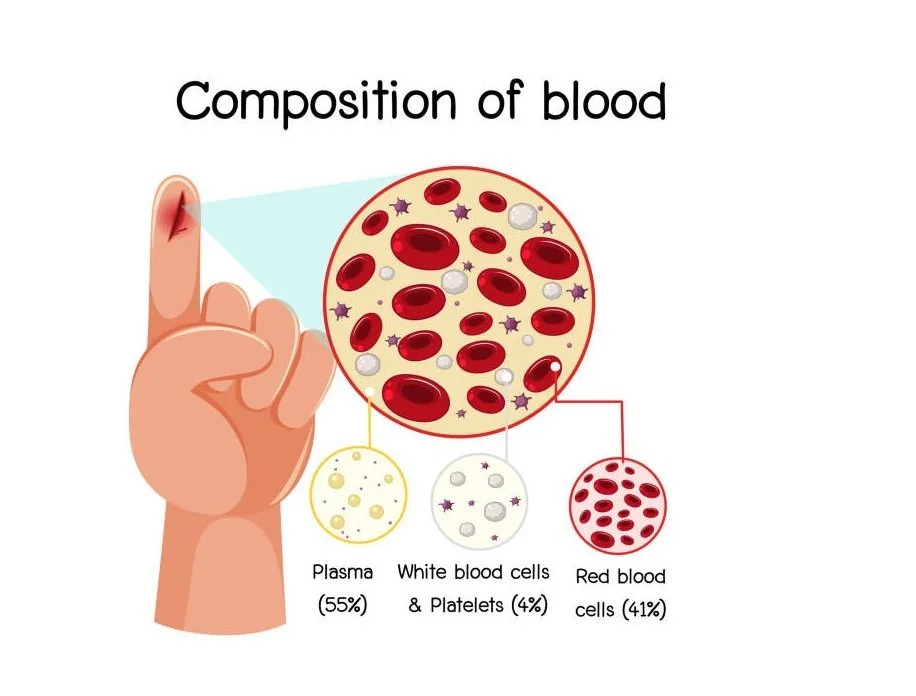
Blood is a red liquid. It consists of the plasma, the blood platelets, the red blood cells (the corpuscles), and the white blood cells (The corpuscles).
Functions of the blood
The blood transfers the materials to all the body cells, where the red blood cells carry oxygen and carbon dioxide, and plasma transports the food, vitamins, salts, and harmful wastes.
The blood protects the body, where the white blood cells attack the microbes that cause diseases to the human, The blood platelets help in healing wounds, and the blood keeps the temperature of the body constant.
Blood structure
Plasma
The plasma is a yellow watery fluid in which all the blood components are suspended. It carries the needed food substances to the body cells, and it carries the harmful wastes that are formed in the cells to get rid of them. The blood is fluid due to the presence of plasma, which is a watery fluid.
Blood platelets
The blood platelets are the small cell fragments. It helps in the coagulation of the blood (the formation of the blood clot), So they help in healing the wounds.
When the body is wounded, and the blood is exposed to the air, the platelets stick to prevent bleeding, and they heal the wounds.
Red blood cells (RBC’S)
The red blood cells are the red cells without nuclei. They carry oxygen gas from the lungs to all the body cells, and they carry carbon dioxide gas from all the body cells to the lungs.
White blood cells (WBC’S)
The white blood cells are the white cells with different forms of nuclei, and they defend the body against microbes by attacking them.
FAQ about Structure and Function of Blood
1. What is blood?
Blood is a fluid connective tissue that circulates through the body within the circulatory system. It transports essential substances and helps maintain overall body balance.
2. What are the main components of blood?
Blood consists of four main components:
- Plasma (liquid part).
- Red blood cells (RBCs).
- White blood cells (WBCs).
- Platelets.
3. What is plasma and its function?
Plasma is the yellowish liquid portion of blood (about 55%). It carries water, nutrients, hormones, proteins, and waste products throughout the body.
4. What is the function of red blood cells?
Red blood cells transport oxygen from the lungs to body tissues and carry carbon dioxide back to the lungs. They contain hemoglobin, a protein that binds oxygen.
5. What is the function of white blood cells?
White blood cells are part of the immune system. They protect the body against infections and fight harmful microorganisms.
6. What are platelets and their function?
Platelets are small cell fragments that help in blood clotting. They prevent excessive bleeding by forming clots at injury sites.
7. What is hemoglobin?
Hemoglobin is a protein found in red blood cells that binds to oxygen and gives blood its red color.
8. How does blood help maintain homeostasis?
Blood helps maintain homeostasis by:
- Regulating body temperature.
- Maintaining pH balance.
- Controlling fluid levels.
9. What is the difference between RBCs, WBCs, and platelets?
- RBCs: Carry oxygen.
- WBCs: Fight infection.
- Platelets: Help in clotting.
10. Where are blood cells produced?
Blood cells are produced in the bone marrow, a soft tissue inside bones.
11. What happens if blood does not clot properly?
If blood fails to clot, excessive bleeding may occur, which can be dangerous and life-threatening.
12. How does blood transport nutrients and wastes?
Blood carries nutrients from the digestive system to cells and transports waste products to organs like the kidneys and lungs for removal.
13. Why is blood considered a connective tissue?
Blood is called a connective tissue because it connects different body systems by transporting substances between them.
You can follow science online on YouTube from this link: Science online
Blood constituents & Physical properties, Sources & functions of plasma proteins
Red blood cells (Erythrocytes) structure & function, Myeloid tissue & Bone marrow
Hemoglobin structure, review & Types of normal hemoglobin
Human Transport system, Structure of human circulatory system (Heart, blood vessels and blood)
Blood pressure, structure, functions & Mechanism of blood clotting