
Importance and Properties of Bases (Alkalis) 2026: Powerful Uses and Benefits in Daily Life
The importance and properties of bases (alkalis) play a crucial role in chemistry and everyday life. Bases are substances that can neutralize acids, maintain pH balance, and participate in numerous industrial and biological processes. From household cleaning products and medicines to agriculture and manufacturing, alkalis are essential compounds that help improve health, productivity, and environmental management.
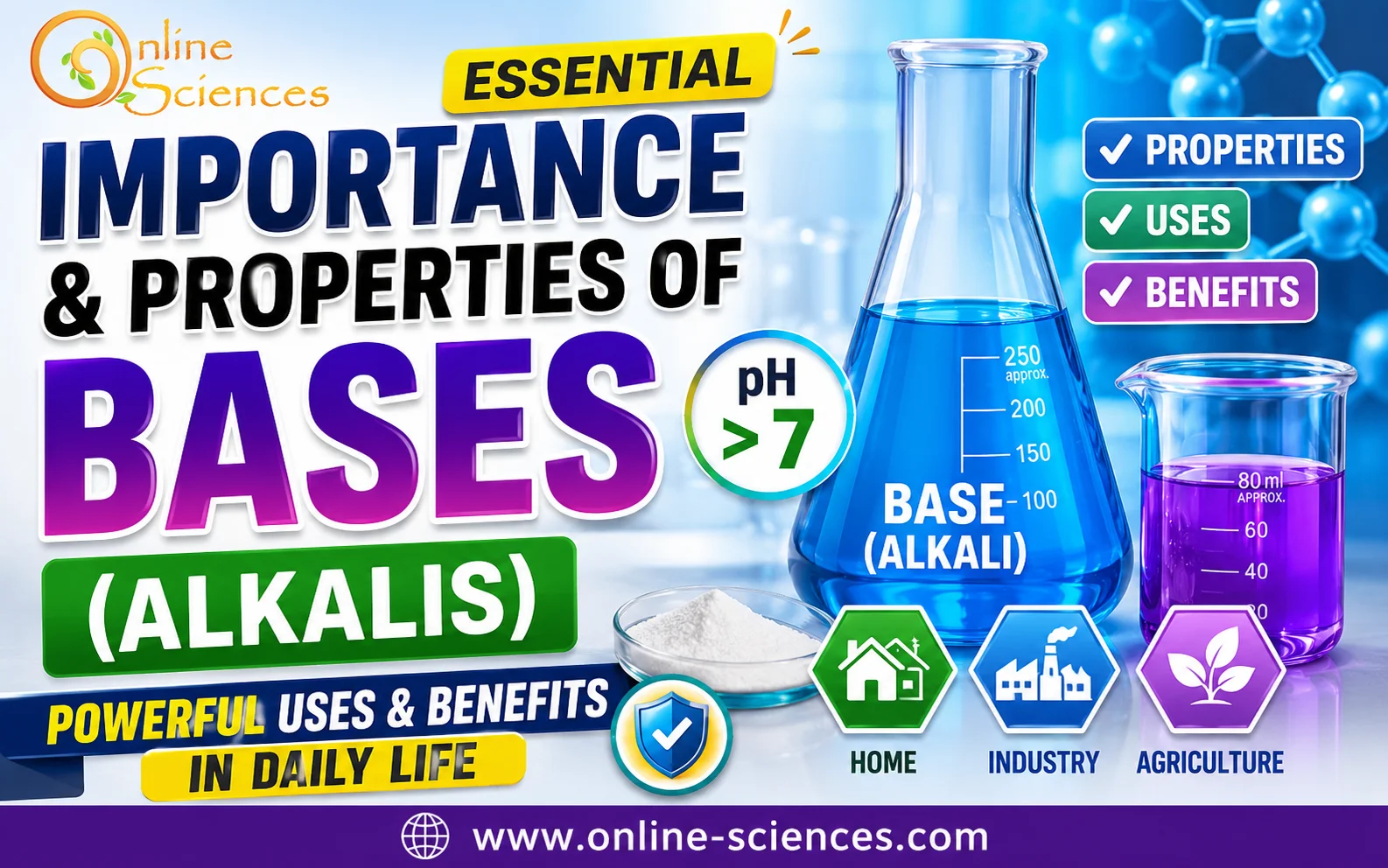
Importance and Properties of Bases (Alkalis)
Bases (alkalis)
The bases are the substances that dissociate in the water, producing the negative hydroxide ions (OH–). Examples of some bases include sodium hydroxide (the caustic soda) NaOH, calcium hydroxide (lime water), and potassium hydroxide (KOH).
The bases change the colour of litmus paper into blue due to the presence of the negative hydroxide ions (OH–). The aqueous solutions of the bases have a bitter taste, and the bases destroy the chemical properties of the acids.
The bases feel slippery and soapy as they dissolve the fatty acids and oils from your skin. The bases are involved in the production of soap. The bases, which are soluble in water, are called the alkalis, and the chemical formula of all alkalis ends with (OH–).
The bases conduct an electric current. This is a common property shared with the salts, the acids, and the bases. The salts are grouped into a category called electrolytes. The bases react with oils and grease to form soap molecules, and they have the tendency to corrode metal surfaces.
The strong bases can burn your skin, so you should not touch the bases and the acids with your bare hands, as they have a corrosive effect on the skin. The bases are good conductors of electricity, and they show a pH value of more than 7.
The reaction between a base and a metal forms the salt and releases hydrogen gas, and this reaction can only occur when a metal is strong enough to displace another metal from its parent constituent.
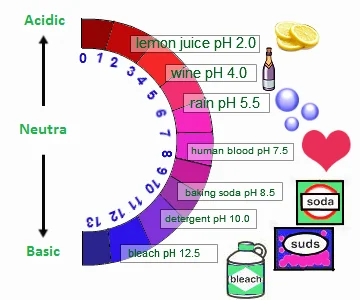
Acids and bases
Types of bases
There are strong bases (They are completely ionized in water to produce hydroxide ions) and the weak bases (They are partially ionized, and the equilibrium lies mostly towards the reactants’ side.
7 Essential Facts About the Importance and Properties of Bases (Alkalis)
- Bases Neutralize Acids: One of the most important properties of bases is their ability to neutralize acids. This reaction produces salt and water, helping maintain chemical balance in many industrial and biological processes.
- Alkalis Have a pH Greater Than 7: Alkalis are water-soluble bases with a pH value above 7. The higher the pH, the stronger the alkaline solution.
- Bases Are Used in Everyday Cleaning Products: Many household cleaners, soaps, detergents, and drain cleaners contain bases because they effectively break down grease, oils, and dirt.
- Bases Help Improve Agricultural Productivity: Farmers use alkaline substances such as lime to reduce soil acidity, improve soil quality, and increase crop yields.
- Bases Play a Vital Role in Medicine: Antacids containing bases like magnesium hydroxide help neutralize excess stomach acid, providing relief from heartburn and indigestion.
- Bases Change the Color of Indicators: Bases can be identified using indicators. They turn red litmus paper blue, phenolphthalein pink, and methyl orange yellow.
- Bases Are Essential in Industrial Manufacturing: Industries use bases in the production of paper, textiles, glass, fertilizers, soaps, and many other products that support modern life.
Quick Summary
The essential importance and properties of bases (alkalis) include acid neutralization, pH regulation, cleaning power, agricultural benefits, medical applications, indicator color changes, and widespread industrial use. These characteristics make bases indispensable in science, industry, and everyday life.
What Are Bases (Alkalis)?
Bases are chemical substances that produce hydroxide ions (OH⁻) when dissolved in water. Alkalis are water-soluble bases that can neutralize acids and form salt and water during a chemical reaction.
Common examples include:
- Sodium hydroxide (NaOH).
- Potassium hydroxide (KOH).
- Calcium hydroxide [Ca(OH)₂].
- Ammonium hydroxide (NH₄OH).
Properties of Bases (Alkalis)
Bases possess several distinctive physical and chemical properties that make them easy to identify.
- Bitter Taste: Most bases have a bitter taste, although tasting chemicals is never recommended for safety reasons.
- Slippery Feel: Bases often feel slippery or soapy because they react with oils on the skin.
- Change Indicator Colors: Bases affect indicators in characteristic ways: turn red litmus paper blue, turn phenolphthalein pink, and turn methyl orange yellow.
- Produce Hydroxide Ions: When dissolved in water, alkalis release hydroxide ions (OH⁻), increasing the solution’s pH.
- Neutralize Acids: Bases react with acids to produce salt and water, a process known as neutralization. Example: Hydrochloric acid + Sodium hydroxide → Sodium chloride + Water
- Conduct Electricity: Aqueous solutions of alkalis conduct electricity because they contain free-moving ions.
- pH Greater Than 7: Base solutions have a pH value above 7 on the pH scale.
Importance of Bases (Alkalis)
Bases are indispensable in many aspects of modern life and scientific applications.
- Household Cleaning Products: Many cleaning agents contain bases because they effectively dissolve grease and dirt. Examples include soap, detergents, and drain cleaners.
- Medicine and Healthcare: Antacids contain mild bases such as magnesium hydroxide to neutralize excess stomach acid and relieve heartburn.
- Agriculture: Farmers use alkaline substances like lime to reduce soil acidity and improve crop growth.
- Water Treatment: Bases help adjust the pH of drinking water and wastewater, ensuring safer and more effective treatment processes.
- Industrial Manufacturing: Alkalis are used in the production of Paper, Textiles, Glass, Soaps, and Chemicals.
- Environmental Protection: Bases can neutralize acidic industrial waste and help reduce environmental pollution.
- Scientific Research: Laboratories frequently use alkalis in chemical experiments, analysis, and product development.
Examples of Common Bases and Their Uses
- Sodium Hydroxide: NaOH, Soap and detergent manufacturing.
- Potassium Hydroxide: KOH, fertilizers, and batteries.
- Calcium Hydroxide: Ca(OH)₂, Soil treatment and construction.
- Magnesium Hydroxide: Mg(OH)₂, Antacid medicines.
- Ammonium Hydroxide: NH₄OH, Household cleaning products.
Strong Bases vs. Weak Bases
- Strong Bases: Strong bases completely dissociate in water. Examples: Sodium hydroxide (NaOH) and Potassium hydroxide (KOH).
- Weak Bases: Weak bases partially dissociate in water. Examples: Ammonia (NH₃) and Ammonium hydroxide (NH₄OH).
Why are Bases Important in Everyday Life?
Without bases, many daily activities would become difficult. They help clean homes, treat water, manufacture essential products, improve agricultural productivity, and support medical treatments. Their ability to neutralize acids makes them particularly valuable in maintaining chemical balance in various environments.
Frequently Asked Questions (FAQ) about Bases
1. What is a base in chemistry?
A base is a substance that produces hydroxide ions (OH⁻) in water and can neutralize acids.
2. What is the difference between a base and an alkali?
All alkalis are bases, but not all bases are alkalis. Alkalis are specifically water-soluble bases.
3. What are the main properties of bases?
Bases are bitter, slippery, turn red litmus paper blue, have a pH greater than 7, conduct electricity in solution, and neutralize acids.
4. Why are alkalis important?
Alkalis are important for cleaning, agriculture, medicine, water treatment, industrial production, and environmental protection.
5. What are examples of bases used at home?
Soap, detergents, baking soda, and some cleaning products contain basic or alkaline substances.
6. How do bases neutralize acids?
Bases react with acids to form salt and water, reducing the acidity of the solution.
7. Are all bases dangerous?
No. Some strong bases can be corrosive, while weak bases such as baking soda are generally safe when used properly.
8. What is the pH range of bases?
Bases have a pH value greater than 7 and can reach up to 14 for very strong alkalis.
Conclusion
Bases (alkalis) are essential chemical substances with unique properties and a wide range of applications. Their ability to neutralize acids, regulate pH, and participate in industrial and biological processes makes them vital in daily life. Understanding the importance and properties of bases helps students and science enthusiasts appreciate their significant role in health, agriculture, industry, and environmental sustainability.
You can subscribe to Science Online on YouTube from this link: Science Online
Types of compounds, Properties of Acids, Bases (alkalis), Oxides and Salts
Classifications of bases according to strength (degree of ionization) & molecular structure
Properties of Acids and Bases & Theories defining acids and bases
Classification of Acids according to its strength (degree of ionization), Its source & Basicity
Elements of s-block, Properties of the first group elements 1A (Alkali metals) in the periodic table




I think it is ok