Unitree 4D LIDAR L2 review, features, advantages and disadvantages
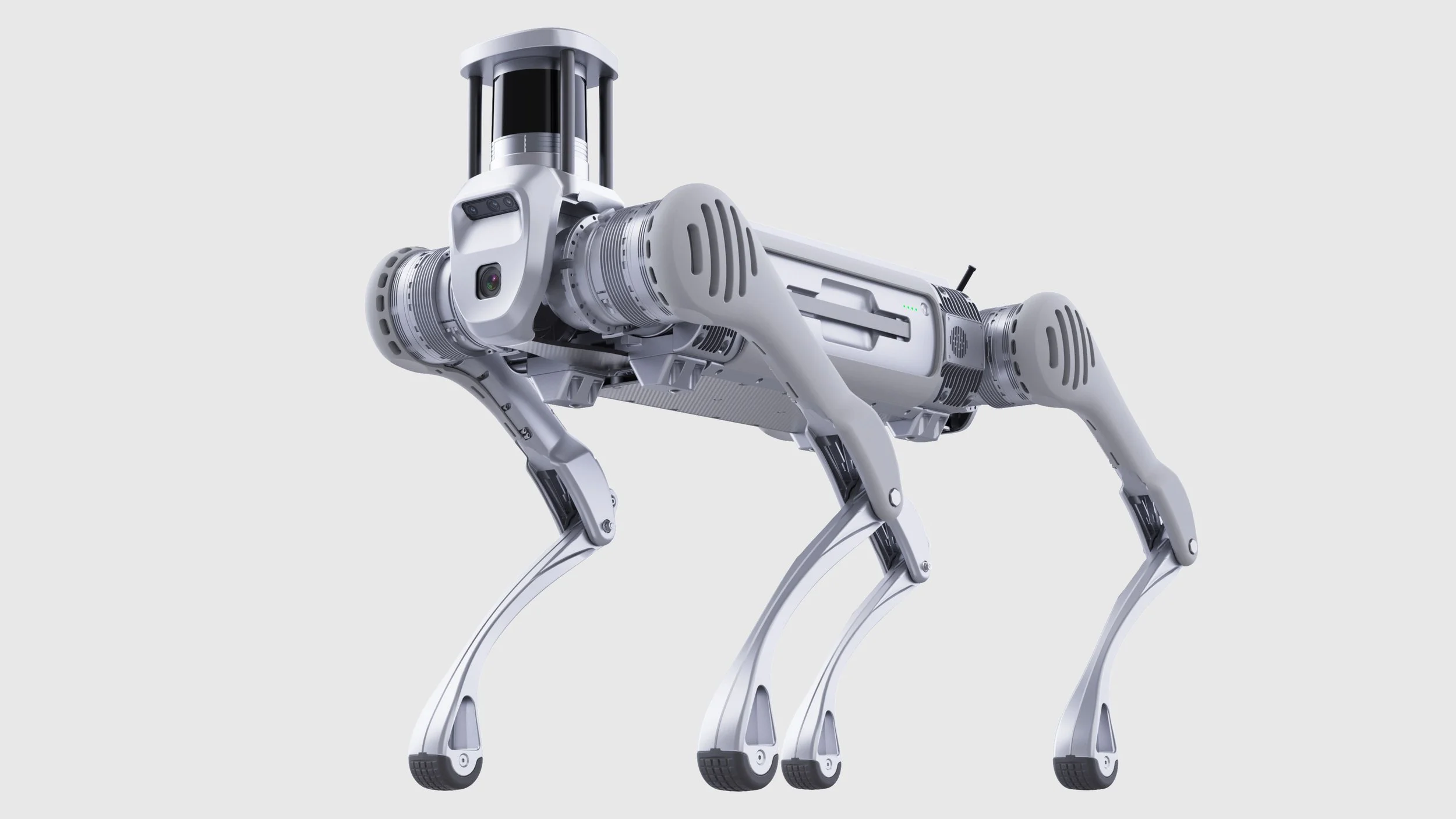
The Unitree 4D LIDAR L2 is a compact, high-precision LiDAR sensor that combines 3D scanning with real-time motion awareness. It enhances robots’ environmental perception, making it ideal for autonomous navigation, mapping, and obstacle avoidance in both research and commercial robotics.
Unitree 4D LIDAR L2
The Unitree 4D LIDAR L2 is a high-performance four-dimensional LiDAR sensor developed by Unitree Robotics. It is designed for advanced robot perception and environment mapping, providing precise 3D spatial data along with real-time motion detection (the “4D” refers to the addition of time or dynamic object tracking).
The Unitree 4D LIDAR L2 captures 3D spatial data plus motion information, enabling robots to perceive moving objects and dynamic environments. It provides a full horizontal field of view for complete environmental awareness. It delivers millimeter-level precision suitable for SLAM (Simultaneous Localization and Mapping) and navigation.
The Unitree 4D LIDAR L2 can detect objects over long distances (typically around 200 meters, depending on model version). It is compact and lightweight. It is optimized for mobile robots, drones, and autonomous systems. It ensures real-time responsiveness for fast-moving robots. It works reliably in complex lighting or reflective conditions.
Unitree 4D LIDAR L2
Applications
- Autonomous mobile robots (AMRs).
- Quadruped robots (like Unitree Go2 or H1).
- Drones and UAVs.
- Smart logistics and warehouse systems.
- Mapping and navigation in robotics research.
Unitree 4D LiDAR L2 Features
- Unitree 4D LiDAR L2 (often just “L2”) is great for robotics, mapping, and navigation tasks
- Ultra-wide field of view (FOV): 360° horizontal × 96° vertical in “negative angle” mode.
- Minimum measurable distance: 0.05 m (50 mm) blind-spot distance.
- Maximum range: Up to 30 m at ~90% target reflectivity.
- Effective point frequency: 64,000 points per second (effective rate) (sampling frequency up to ~128,000 pts/s).
- Distance resolution: ~ 4.5 mm.
- Measurement accuracy: ≤ 2.0 cm under typical conditions.
- Weight: ~ 230 g.
- Dimensions: ~ 75 × 75 × 65 mm.
Additional Capabilities & Integration Features
- “4D” data: Means it provides 3D position + 1D grayscale (intensity) information.
- Built-in IMU: 3-axis accelerometer + 3-axis gyroscope included.
- Interfaces: Supports ENET UDP & TTL UART communication.
- Strong ambient light resistance: >100 kLux for outdoor use in bright conditions.
- Eye‐safe laser class: Class 1 (IEC60825-1).
- Suitable for indoor & outdoor scanning / mobile robot navigation.
Unitree 4D LIDAR L2 Use
Unitree 4D LIDAR L2 is great for mapping, autonomous navigation, obstacle avoidance, and SLAM (Simultaneous Localization and Mapping). The product page notes it works with only the L2 + built-in IMU using the “POINT-LIO” algorithm to build maps (no additional poslaser itioning sensors required).
Due to its wide FOV and high point density, it suits mobile robots that need comprehensive spatial awareness (e.g., logistics robots, indoor/outdoor robots). Because of its compact size (230 g) and moderate power (~10 W typical), it’s usable on smaller platforms, though one should review mounting, vibrations, and power supply carefully.
What can Unitree 4D LiDAR L2 do?
Unitree 4D LIDAR L2 uses time-of-flight (TOF) laser measurements to capture 4D data: 3D positions plus 1D grayscale/intensity information. It scans with a very wide field of view: 360° horizontally × up to ~96° vertically (in its “negative-angle” mode). It has a near blind spot of only ~ 0.05 m (5 cm) and a max nominal range of up to ~ 30 m at ~90% reflectivity.
Unitree 4D LIDAR L2 outputs many points per second (~64,000 effective points/s, up to ~128,000 samples/s), giving dense point clouds. It has a built-in IMU (3-axis accelerometer + 3-axis gyroscope), which can be used for motion compensation or SLAM. It supports multiple interfaces (ENET UDP, TTL UART) and has software/SDK support for ROS/ROS2, etc.
Because of the above capabilities,
- 3D mapping & reconstruction: You can mount it on a moving platform and generate a 3D map of an environment (building interior, warehouse, yard) because it sees all around (360°) and quite up/down (~96°) coverage. The manual mentions “Indoor whole-house dynamic scanning”.
- Robotic navigation & obstacle avoidance: On mobile robots (ground or walking bots), you can use it to detect obstacles, understand scene structure, localize the robot (especially with the built-in IMU), and help with autonomous movement.
- SLAM (Simultaneous Localization & Mapping): According to the manufacturer, you can use only this L2 + its internal IMU (without extra external positioning sensors) with their “POINT-LIO” algorithm to build maps.
- Indoor & outdoor deployment: Because it resists interference from strong ambient light (claims >100 kLux), it is usable outdoors in bright conditions as well as indoors.
- High-resolution point cloud for scene understanding: With its dense point rate and grayscale data, it’s usable for more advanced perception tasks — e.g., identifying structure, surfaces, maybe classifying objects (depending on your software).
- Integration into robotic systems: Lightweight (~230 g) and compact size (75×75×65 mm) make it feasible for smaller robots/drones (within the weight/power constraints) for 360° scanning.
Example Real-World Scenarios
- Unitree 4D LIDAR L2 can be mounted on a warehouse ground robot for autonomous navigation in aisles, obstacle detection, and full-room/aisle mapping.
- Unitree 4D LIDAR L2 is used in a service robot in a building to map entire floors and then navigate through them, avoiding persons/furniture.
- Unitree 4D LIDAR L2 integrates into a smart factory fixed installation (ceiling or pole) for real-time scan of the workspace, detecting intrusions or changes.
- Unitree 4D LIDAR L2 is used on a drone (within weight/power budget) for indoor/outdoor scanning of structures (e.g., inspection), though some users note vibration or speed constraints.
- Unitree 4D LIDAR L2 is used in research as sensor input to build SLAM systems, perception systems for robotics.
Unitree 4D LiDAR L2 advantages
- Very wide field of view: The L2 offers a 360° horizontal × ~96° vertical scan angle (in a “negative-angle” mode), which gives very broad coverage for robots in indoor or outdoor environments. This helps reduce blind spots and makes mapping/navigation tasks easier. Unitree 4D LIDAR L2 is especially useful for mobile robots that need full situational awareness.
- High point-cloud density/resolution: Unitree 4D LIDAR L2 has an effective rate of ~64,000 points per second. Distance resolution is ~4.5 mm. Measurement accuracy ≤ 2 cm in ideal conditions. So the L2 gives relatively fine spatial detail for many robotic/mapping applications.
- Minimal near blind-zone: Near-blind distance reported at about 0.05 m (i.e., 5 cm), which is quite good for a LiDAR of this class. That means it can detect very close obstacles too, which is beneficial for navigation in cluttered environments.
- Compact & reasonably lightweight: Specs: ~75×75×65 mm in size, weight ~230 g. This is good for integration into mobile robots, drones, or other moving platforms where space and weight matter.
- Robust in ambient/bright light conditions: It claims to tolerate strong ambient light (e.g., >100 klux) for outdoor use. It is useful for real-world deployment where lighting isn’t controlled.
- Built-in IMU + support for LIO/SLAM workflows: The L2 includes a 3-axis accelerometer + 3-axis gyroscope and supports a SLAM algorithm (POINT-LIO) using only the L2 + IMU (no extra positioning sensor) according to the documentation. That simplifies system design for robots that need mapping + localization.
Disadvantages of Unitree 4D LIDAR L2
- Range is moderate: Maximum range is cited at ~30 m (under 90% reflectivity) for ideal targets. For low reflectivity targets (e.g., dark/absorbing surfaces), the range will be less (e.g., 15 m for 10% reflectivity reported). Thus, if your application needs long‐range detection (hundreds of meters), this might be limiting.
- Scanning frequency/refresh rate may be lower than some competing sensors: The circumferential scanning frequency is ~5.55 Hz by default. Some users point out that this may be a limitation for very fast-moving platforms or for high-frequency odometry/SLAM demands.“A two-axis single-beam lidar that … 5.5hz is really not much.” So, depending on your speed and environment, this may reduce responsiveness.
- Vibration / mechanical rotating mirror concerns: Because L2 uses a rotating mirror mechanism (non-solid-state), there are some user comments about wobble/vibration: “It does rotate much slower … more stable …” So, on platforms with vibration or high dynamic motion (e.g., drones), care must be taken in mounting and balancing.
- SDK/software support/ecosystem may have quirks: Some users reported integration challenges: “When the lidar is stationary … but as soon as I start moving it, the odometry … gets messed up and becomes inaccurate.” This means that while the hardware is strong, the software/firmware or integration may need extra tuning.
- Power / environmental constraints: In the manual, it notes: when the ambient temperature is between –10 °C and 30 °C, the unit will auto-heat, and peak power can reach ~13 W. So thermal/power management must be considered for embedded systems. Also, while 230 g is modest for very small drones, this could still be a non-negligible weight.
- Cost-benefit vs domain requirements: If your robot needs extremely long range, ultra‐high speed refresh, or solid-state reliability (no moving parts), you might consider other LiDARs tailored for those. Some users voiced that L2 is “hardly relevant to self-driving cars” (which need hundreds of metres). So matching the sensor to your exact requirement is important.
- The maximum range (30 m) is specified under ~90% reflectivity conditions; for lower reflectivity targets the performance will drop. The “negative angle mode” (to get 96° vertical) may slightly reduce the maximum measurable distance for that extra 6°. Users in forums point out issues like vibration and noise (especially when mounted on moving vehicles) and caution calibration/firmware may be required. For example: It does rotate much slower … results are crisper.
The Unitree L2 is a very capable mid-range 4D LiDAR sensor, offering wide FOV, good resolution, and a compact form factor suitable for robotics, indoor/outdoor mapping, mobile robots, etc. Its built-in IMU + SLAM support are strong pluspoints.
You can follow Science Online on YouTube from this link: Science online
Unitree unveils its new R1 humanoid, What Can the Unitree R1 Robot Do?
Unitree G1 humanoid robot advantages and disadvantages, What does Unitree G1 do?
Unitree B2 features, advantages, disadvantages, What can Unitree B2 do?, Is Unitree B2 real?
Sophia robot review, features, use, advantages and disadvantages
Robot teachers use, types, advantages and disadvantages
Advantages and disadvantages of using robots in our life
Automation in manufacturing use, advantages and disadvantages
Humanoid robots use, types, risks, advantages and disadvantages
Pepper robot review, features and What can Pepper do for your business?
Boston Dynamics Atlas review, advantages and features, How does Atlas robot work?